


Civil society actors and political analysts are urging the government of South Sudan to pursue dialogue following reports of a new military-political alliance between opposition groups.
Last week, Gen. Thomas Cirillo, leader of the National Salvation Front (NAS), announced that his movement had joined forces with the SPLM/A-IO, currently headed by Acting Chairman Oyet Nathaniel, while First Vice President Dr. Riek Machar remains in detention in Juba.
Reacting to the development, activist Ter Manyang Gatwech described the alliance as a direct consequence of the government’s failure to uphold the peace agreement, warning that it poses a serious threat to stability.
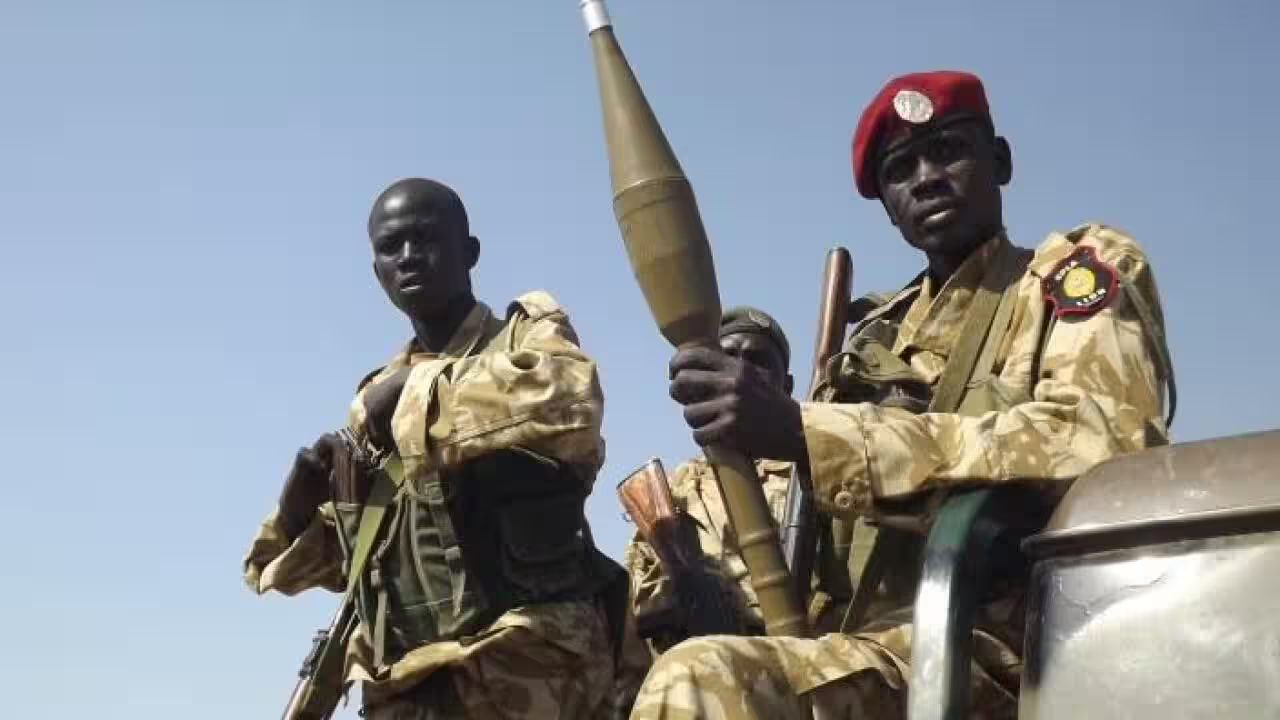
“There is a need for the parties to resolve their differences at the table so the country can have peace. But the SPLM/A-IO–NAS alliance is a challenge to the government, which may either embrace dialogue or reject it,” Manyang said. He argued that with unpaid soldiers and poor morale, the national army is unlikely to have the upper hand, especially during the rainy season.

Manyang further noted that many soldiers are reluctant to risk their lives for a government that fails to support their families, saying: “When a soldier dies in service, that is the end of them. The state does not care for their children.”
Policy analyst James Boboya also called on authorities to create mechanisms to silence the guns and bring opposition groups into the peace process. He warned that the alliance between SPLA-IO and NAS is aimed at strengthening their bargaining position and securing recognition as conflict parties.
“The government has shown little interest in engaging holdout groups, and this is part of the crisis. Even cabinet meetings have stalled since Riek Machar’s arrest. Parliament is not functioning properly, and the national budget has not been tabled,” Boboya said.
He urged leaders to focus on the long-term future of South Sudan instead of clinging to power and perpetuating corruption, nepotism, and resource mismanagement.
“The government must start building a common future by tackling poverty, misery, and disease. Ordinary people in Juba are more malnourished than citizens in neighboring Uganda, Kenya, or Tanzania,” he added.
Boboya stressed that unless the government embraces dialogue and concessions, the cycle of instability will continue for generations. He called on leaders to learn from the devastation of past conflicts and prioritize the welfare of citizens over political power struggles.