

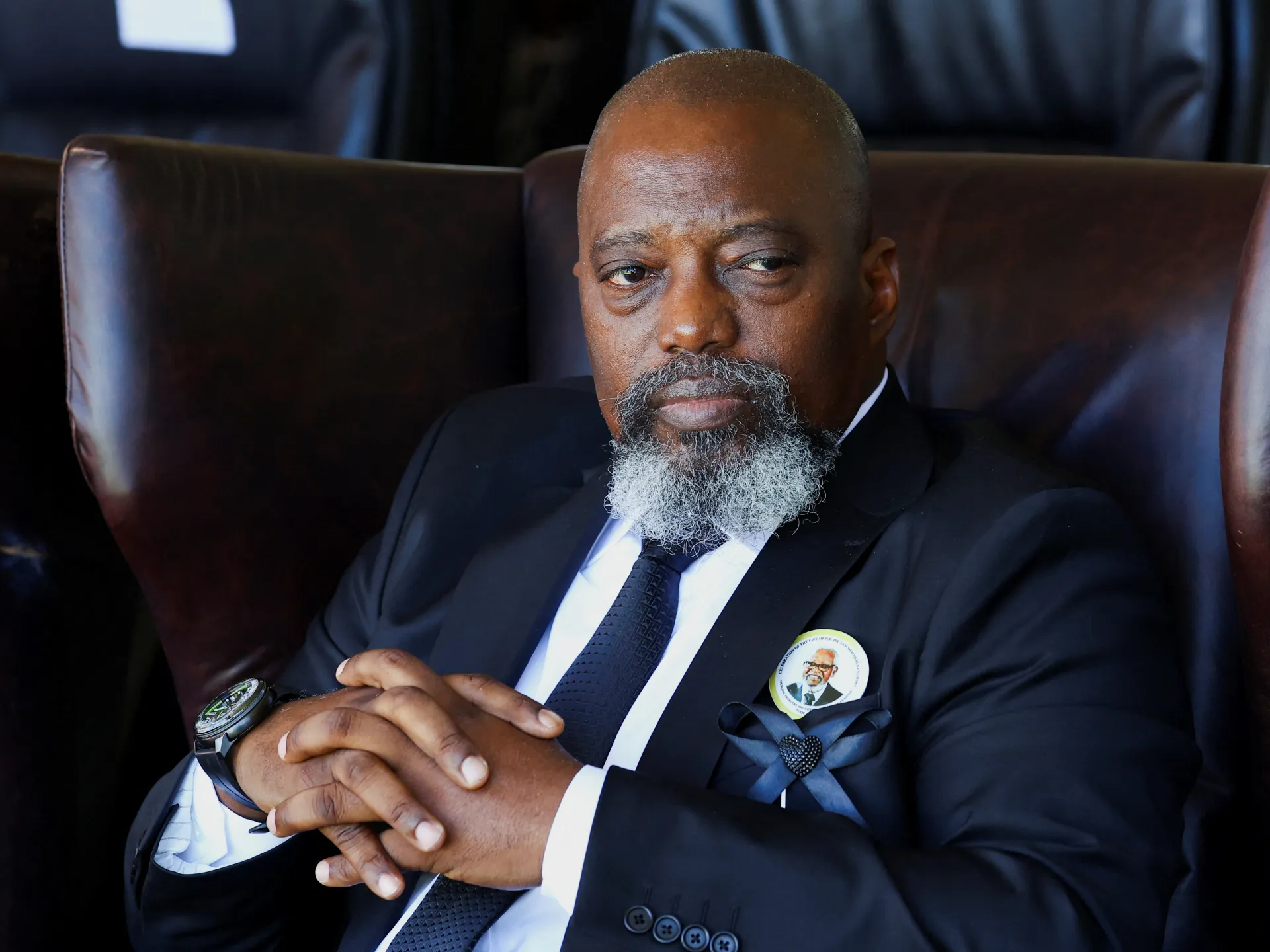
In a landmark ruling, a high military court in the Democratic Republic of Congo (DRC) has sentenced former President Joseph Kabila to death in absentia after convicting him of war crimes, treason and crimes against humanity.
The judgment, delivered on 30 September in Kinshasa, accuses Kabila of a range of grave offences, including murder, sexual assault, torture, insurrection and allegedly collaborating with the M23 rebel movement that has destabilised parts of eastern Congo. The court also ordered Kabila to pay billions of dollars in damages to the state and victims — with some reports placing the sum at nearly US$50 billion.
Kabila, who led the DRC from 2001 to 2019, was neither present in court nor represented by legal counsel during the trial. He has not yet commented publicly on the verdict. His political allies have condemned the ruling, accusing the government of weaponising the judiciary to silence opposition figures.
Legal experts and human rights groups have also raised concerns about due process, noting that trials in absentia often limit the accused’s right to defend themselves. It remains unclear how the death sentence or the financial penalties could be enforced, as Kabila’s current whereabouts are unknown.

The case marks a dramatic turn in Congolese politics and raises fresh questions about the independence of the judiciary and the country’s commitment to transitional justice. While some government officials hailed the ruling as a step toward accountability, critics warned it could deepen political tensions ahead of upcoming elections.
Kabila’s conviction is expected to reverberate across the region, given his once-dominant role in Congolese politics and his longstanding alliances with neighbouring governments. Observers say the verdict could either embolden anti-corruption and war-crimes prosecutions in Africa or be seen as a politically motivated precedent.