


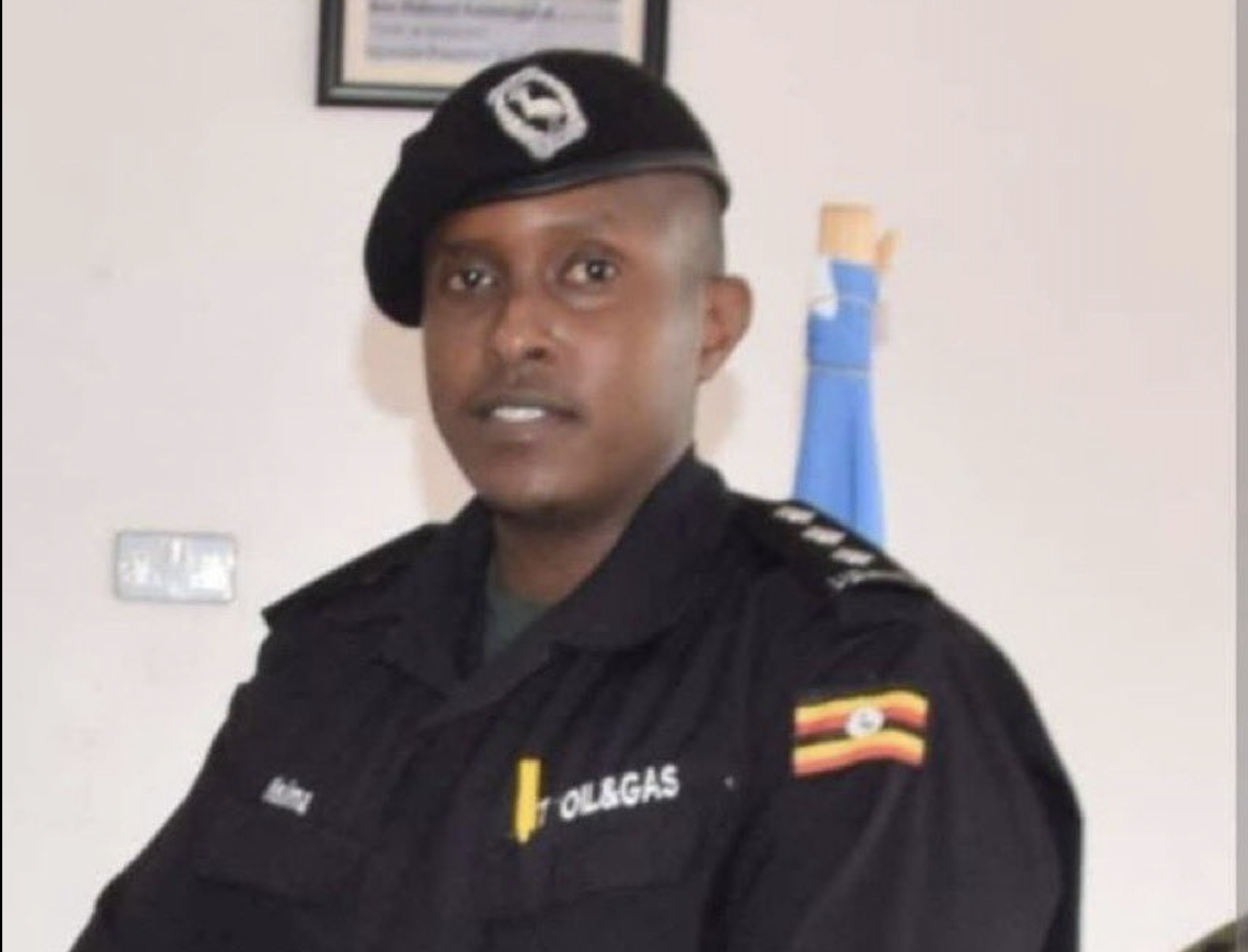
The Uganda Police Force has detained Assistant Superintendent of Police (ASP) Nsiime Clive Barigye after a viral video surfaced showing him allegedly assaulting a female shop attendant at a Shell petrol station, sparking widespread condemnation and calls for accountability.
The incident, which occurred on October 7, quickly spread across social media platform X (formerly Twitter), where users shared footage of the officer striking a female attendant following what appeared to be a disagreement at the counter.
Several posts identified the assailant as ASP Nsiime, igniting outrage and prompting immediate reaction from the police leadership.
Police Confirm Arrest
In a statement issued on Wednesday morning, police spokesperson Kituuma Rusoke confirmed that preliminary investigations point to ASP Nsiime as the suspect in the assault.
“Yesterday, 7th October 2025, a video circulated on social media depicting a male client assaulting a female attendant at a Shell petrol station. Our preliminary investigations point to ASP Nsiime, a police officer, as the suspect,” the statement reads in part.
“The officer has been apprehended and detained in police custody. He will be brought to account as soon as investigations are complete.”
“We have got in touch with the victim and witnesses. We condemn this behaviour as it contravenes our disciplinary code,” Rusoke said in the statement.
Police have not yet disclosed where the officer is being held or the specific disciplinary process underway, but Rusoke emphasized that the force does not condone acts of violence or abuse of authority.

The video has drawn an overwhelming reaction online, with Ugandans expressing anger and frustration over repeated instances of misconduct within the police ranks.
Many social media users demanded that the case be handled transparently and that the suspect face criminal prosecution rather than just internal disciplinary action.
Public attention has now shifted to how the police will handle the case in the coming days.
Observers have questioned whether the institution will set a new precedent by allowing the matter to be tried in court or resort to an internal process that rarely results in public accountability.
The Uganda Police Force has in recent years faced criticism for slow or opaque handling of cases involving misconduct by its officers.
The ASP Nsiime incident has once again placed the institution under pressure to demonstrate that no officer is above the law.
If handled decisively and transparently, the case could help restore some public trust in the force.
However, should it follow the familiar pattern of internal inquiries without tangible outcomes, it risks deepening skepticism among citizens about the police’s willingness to hold its own accountable.