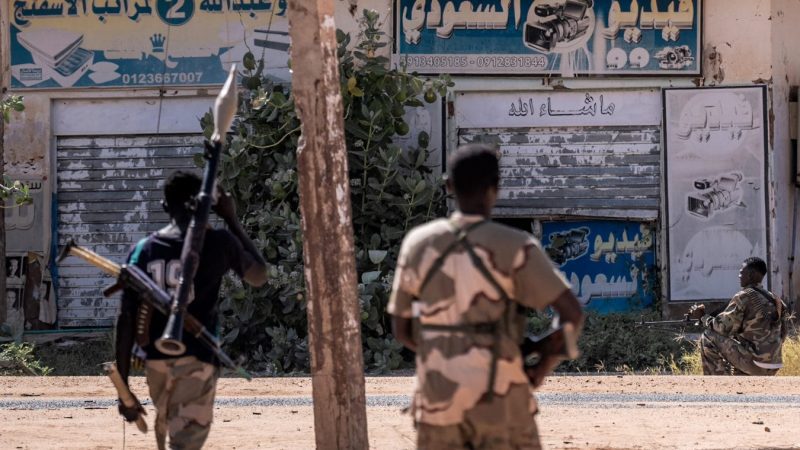




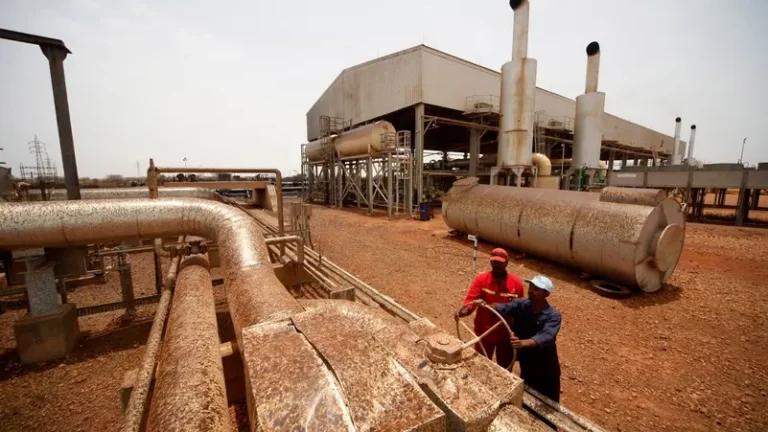
Sudan’s Rapid Support Forces (RSF) have seized control of the country’s largest oil field, halting production that is vital to both Sudan and neighbouring South Sudan, according to military and oil sector insiders.
The RSF announced on Monday that it had “liberated” the Heglig oil field near the southern border, describing the site as a major economic target.
An engineer at the field, who requested anonymity, told Radio Tamazuj that staff stopped production and evacuated to Unity State in South Sudan after RSF fighters overran the army’s base at the facility.
Heglig serves as a crucial processing centre for nearly all of South Sudan’s oil exports, which make up almost all government revenue in Juba. Sudan also depends heavily on the pipeline that transports this oil to Port Sudan.

The RSF’s takeover signals a major escalation in Sudan’s civil war. After pushing the army out of its final positions in Darfur in late October, clashes have shifted to the oil-rich Kordofan region. The Sudanese Armed Forces have been attempting to block the RSF’s push eastward toward Khartoum.
The war between the army and the RSF has killed tens of thousands, displaced around 12 million people, and destroyed critical infrastructure.
The capture of Heglig now casts uncertainty over when oil production can resume. South Sudan depends on oil for more than 90% of its national income.
“The restart of oil operations is now in the hands of the South Sudan government,” the engineer said, noting that most of the crude produced belongs to Juba.
Meanwhile, last week a drone strike in South Kordofan hit a kindergarten and a hospital, killing 114 people, including 63 children. WHO Director-General Tedros Adhanom Ghebreyesus condemned the attacks as “senseless.” Sudan’s government accused the RSF of carrying out the strike, an allegation the group has not directly denied.
Tedros said health workers and rescuers also came under fire while evacuating the wounded from the kindergarten.
The RSF already holds several major western oil fields previously operated by Chinese companies before the conflict forced them to shut down.
In a recent letter seen by Radio Tamazuj, the China National Petroleum Corporation (CNPC) notified Sudanese authorities of its decision to withdraw from the country entirely. The company has requested an urgent meeting with officials in Juba this month to finalize the termination of its Production Sharing and Crude Oil Pipeline agreements.
Despite the planned exit, CNPC expressed hope that cooperation could resume “once the conflict ends and security is restored.”
China has been Sudan’s main strategic partner in the oil industry since 1999.