

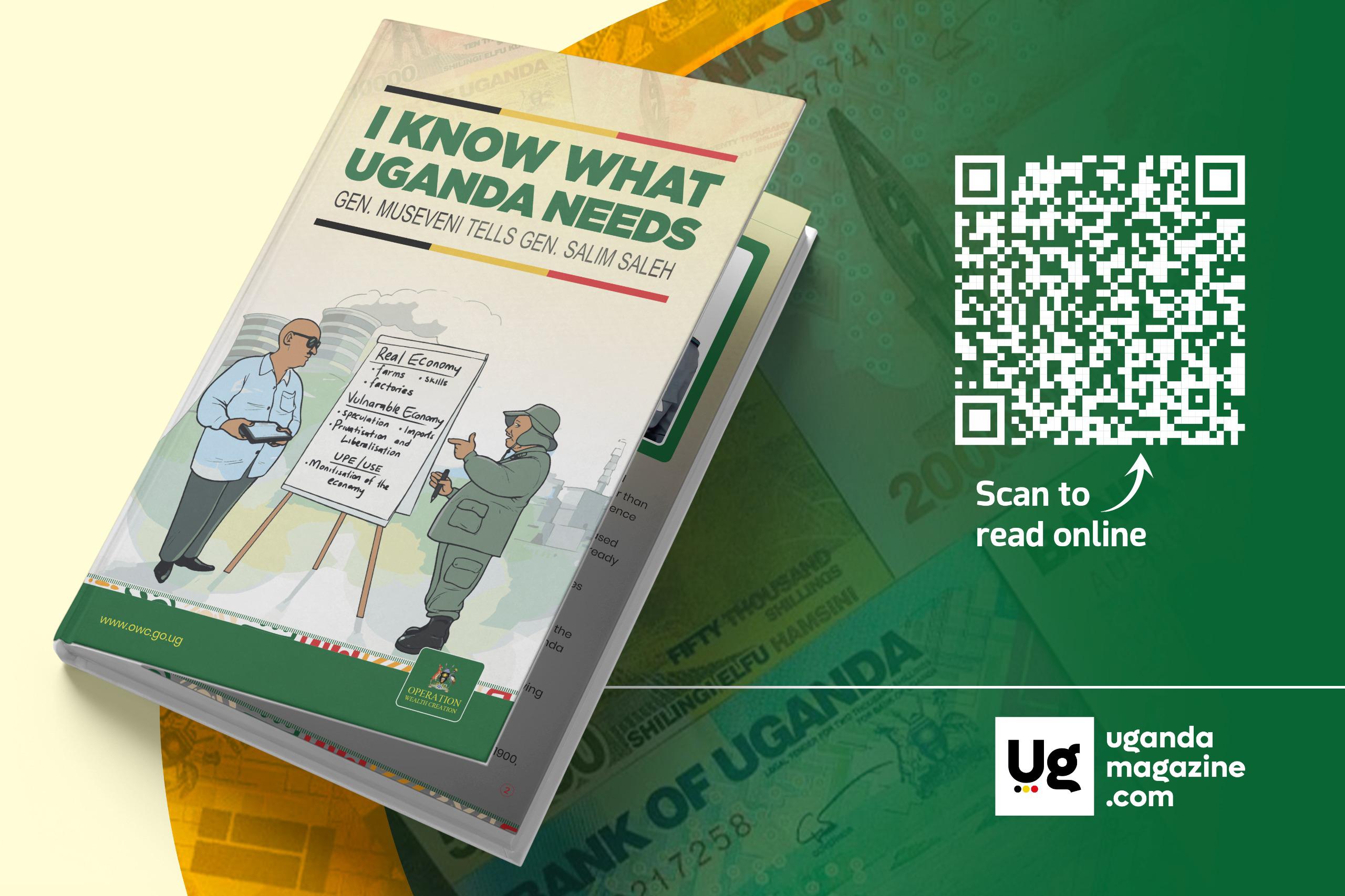
In the latest digital flipbook edition titled “I Know What Uganda Wants: Gen. Museveni Tells Gen. Salim Saleh”, readers are treated to an intimate and revealing exchange between two of Uganda’s most influential figures—President Yoweri Kaguta Museveni and his younger brother, General Caleb Akandwanaho (retired), better known as Gen. Salim Saleh.
This sleek, interactive flipbook presents what appears to be a featured article or special report based on a high-level economic discussion.
The centerpiece is Gen. Saleh’s comprehensive presentation of Uganda’s lingering challenges, framed around insights from the Third National Development Plan (NDPIII).
Saleh, ever the operational tactician, delivers a meticulous diagnosis: he maps out everyday bottlenecks like high costs of doing business, unskilled youth in a modern economy, limited value addition in agriculture and industry, restricted market access, and the persistent need for stability.

It’s the kind of detailed, technocratic analysis that resonates with ordinary Ugandans grappling with these issues, yet it’s rarely packaged so cohesively. Saleh’s recommendations aim to “unstick” the economy, emphasizing practical steps to transition from survival mode to sustained production.
President Museveni’s response, however, steals the show with its characteristic directness and confidence born from four decades in power.
“I know what Uganda wants,” he declares, cutting through the complexity with a clear roadmap: slash business costs, equip youth with relevant skills (especially for emerging sectors like oil and gas), prioritize value addition to turn raw materials into finished goods, broaden markets, and above all, maintain peace as the foundation for progress.
The piece portrays this sibling dynamic not as mere family ties but as a proven partnership—Museveni as the ideological navigator setting the long-term direction, and Saleh as the hands-on problem-solver clearing historical obstacles.
This “lived architecture” of Uganda’s recovery narrative adds depth, framing their interaction as a cornerstone of the nation’s post-conflict rebuilding.
Visually, the flipbook shines with a clean, modern layout: bold headlines, high-quality photos of the generals in discussion, infographics highlighting key economic points, and easy navigation that mimics turning physical pages.
The tone is patriotic and optimistic, blending reportage with subtle praise for the leadership’s continuity—typical of pro-government publications, yet balanced enough to acknowledge real challenges without defensiveness.
At its core, this flipbook isn’t just news; it’s a motivational manifesto for Uganda’s middle-income aspirations.
It argues that transformation won’t come from grand speeches alone but from turning farms into factories, land titles into loan collateral, and idle youth into skilled contributors.
For readers interested in Ugandan politics, economics, or the enduring Museveni era, this concise digital read is engaging and thought-provoking.
It captures a rare glimpse of behind-the-scenes strategy from the top, leaving one with cautious hope: if this vision is executed, Uganda’s household-level prosperity could finally accelerate.
Highly recommended for anyone tracking East Africa’s development trajectory. The book is ccessible online at here. it’s a quick yet impactful dive into what the country’s leaders believe it truly “wants.”