
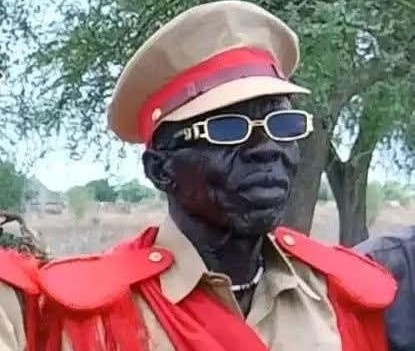
A prominent traditional leader on a peace mission was killed during renewed fighting between government and opposition forces in Jonglei State’s Uror County, local officials confirmed Tuesday.
Moses Machot Gierkuach, the head chief of Panyang Payam in neighboring Duk County, died on January 2 in Yuai town—the headquarters of Uror County—amid intense clashes between the South Sudan People’s Defence Forces (SSPDF) and the Sudan People’s Liberation Army-in-Opposition (SPLA-IO).
Duk County Commissioner John Chatim Ruei told local media that Gierkuach had traveled to Uror days earlier to mediate tensions between the Dinka community in Duk and the Lou Nuer in Uror.
“It’s likely that the chief was killed in crossfire. However, we can’t rule out the possibility of assassination,” Ruei said, describing the death as a “significant loss.”

Due to ongoing insecurity, the chief’s body was buried in Yuai and could not be repatriated to his home area.
Gierkuach, who had served as a peacemaker between rival communities for over a decade, was caught in the violence as SPLA-IO forces overran the SSPDF garrison in Yuai on January 2.
Opposition spokesperson Lt. Col. Khor Nyang Mabor confirmed the capture, stating that fighting began early that morning and ended with SPLA-IO control of the town by daybreak.
The fall of Yuai followed the recent seizure of nearby Waat, effectively diminishing government military presence in the predominantly Lou Nuer counties of Nyirol, Uror, and Akobo.
The SSPDF has not issued a detailed response to the latest territorial losses but previously ordered civilians to evacuate opposition-controlled areas in Jonglei, citing security risks amid escalating hostilities.
In South Sudan, traditional chiefs play a crucial role in local peacebuilding and dialogue, with their authority formally recognized under the Local Government Act of 2009. Their involvement often bridges ethnic divides in regions plagued by intercommunal violence.
The incident underscores growing instability in Jonglei as the 2026 dry season begins—a period historically marked by increased military mobility and conflict.
Civil society leaders have warned that without inclusive dialogue, confrontations could spread nationwide, further straining the fragile 2018 peace agreement.Neither the SSPDF nor SPLA-IO provided additional statements on civilian casualties or the chief’s death by press time. Local authorities continue to call for restraint and separation of armed forces from civilian areas to prevent further losses.