



As Uganda approaches its general elections on January 15, 2026, tensions are escalating over potential communication blackouts, with the Uganda Communications Commission – UCC issuing a stern warning about the use of BitChat, a Bluetooth-based messaging app promoted by opposition leaders.
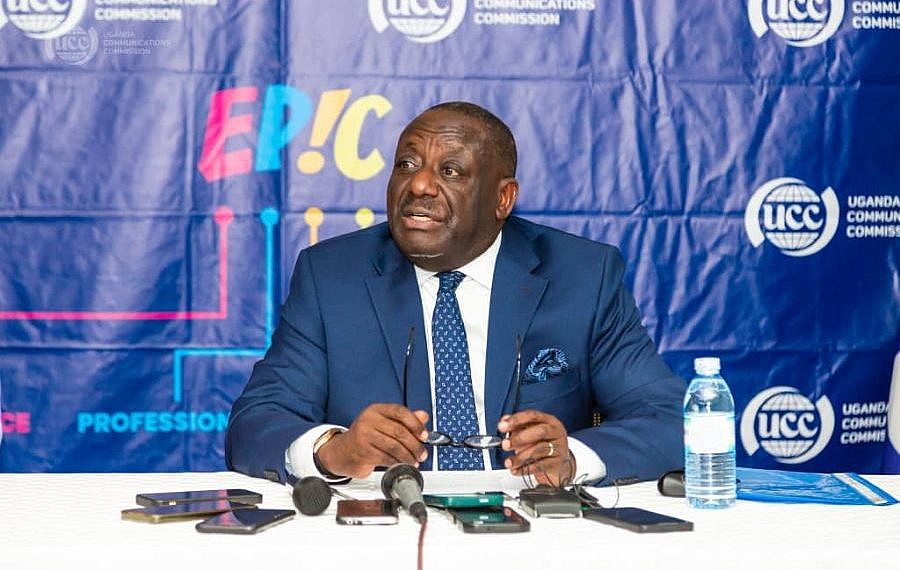
The UCC’s executive director, Nyombi Thembo, has asserted that the government possesses the technical capabilities to regulate or disable such platforms if they are used to disrupt peace.
Thembo emphasized the UCC’s readiness to counter any misuse of digital tools during the electoral period.
“We know BitChat more than anybody in this country. Government has facilitated the regulator. We have the highest concentration of software engineers in this country, paid by government for public good,” he said. “You can’t use BitChat to disrupt peace. If you are using BitChat for good, wonderful.”

This comes amid rumors of an impending internet shutdown, which the UCC has refuted, insisting no such plans exist for January 8 or any other date.
The warning directly addresses efforts by opposition figures, particularly Robert Kyagulanyi of the National Unity Platform – NUP.
Bobi Wine has been actively encouraging Ugandans to download BitChat as a safeguard against potential internet restrictions, drawing from experiences in the 2021 elections where social media and internet access were severely limited.
In his New Year’s address, he urged supporters to adopt the app, stating it would allow communication even if the regime switches off the internet.
“BitChat will enable you to communicate to thousands of people in record time. No internet connection is required. You will be able to send pictures of DR Forms and share any other critical information to specific or other users,” Bobi Wine explained in a widely circulated message.
The app operates on a decentralized Bluetooth mesh network, where devices connect peer-to-peer within a short range (typically tens of meters), allowing messages to “hop” from one phone to another without relying on cellular data or Wi-Fi.
This has sparked a surge in downloads, with search interest in the app exploding across Uganda as fears of censorship grow.
Bobi Wine’s supporters have re-echoed his call, highlighting the app’s offline functionality as a tool for sharing vote counts, tally sheets, and results on polling day.
“Incase the regime switches off the internet on 15th January. Download Bitchat App now, it works offline, no internet needed! Tell EVERYONE in Uganda to download it too – the more users, the wider the mesh spreads!” posted one activist on social media.
The opposition views BitChat as essential for maintaining coordination and transparency, especially in rural areas where internet access is already spotty.
However, critics and technical experts have questioned the app’s effectiveness on a national scale. While it excels in dense crowds, its reliance on physical proximity and human relays limits its reach in sparse or static environments, potentially leading to fragmented communication and delays in transmitting large files like election documents.
Additionally, the anonymity of users—without phone numbers or emails—raises concerns about verifying information and preventing misinformation during a high-stakes election.
The UCC’s threat to disable BitChat has intensified debates over digital freedom and government oversight.
Opposition leaders argue that such measures undermine democratic processes, while the government maintains they are necessary to preserve order.
As campaigns heat up, the clash over communication tools underscores deeper divisions in Uganda’s political landscape.
With just over a week until polls open, observers are watching closely to see if these warnings translate into action, potentially affecting voter turnout and information flow on election day.