



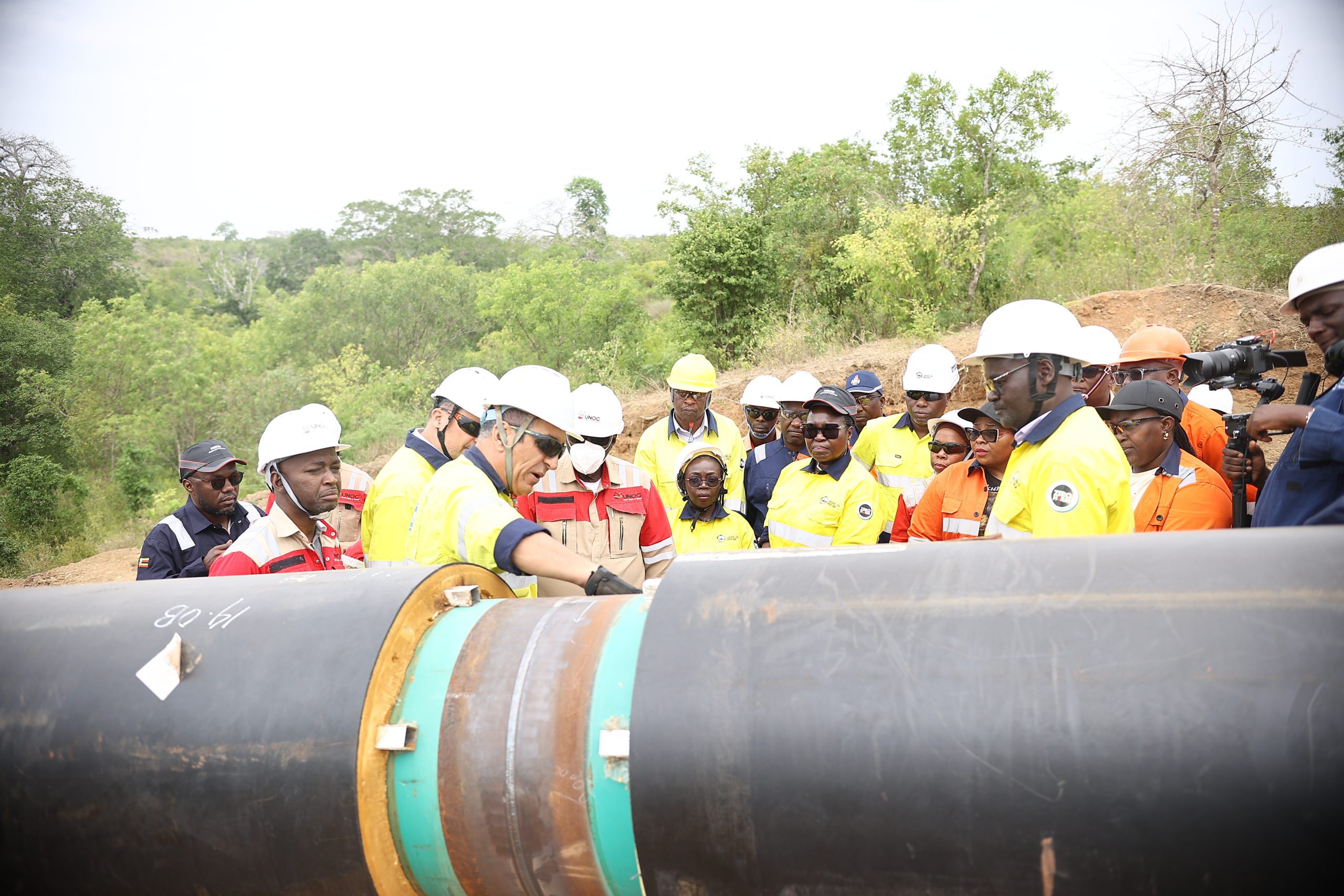
On the third day of her ongoing tour of the East African Crude Oil Pipeline (EACOP) route, Uganda’s Minister of Energy and Mineral Development, Dr. Ruth Nankabirwa, visited a key construction site where final line pipe welding is progressing on one of the project’s concluding segments.
The inspected location forms part of the last approximately 100 kilometres of the 1,443-km heated crude oil pipeline, which runs from Pump Station 1 at Kabalega Industrial Park in Hoima District, Uganda, to the Tanga Storage Terminal and Jetty at Chongoleani in Tanzania.
Once operational, the pipeline will enable the export of Uganda’s waxy crude oil from the Lake Albert basin to international markets via tanker loading at Tanga.
Accompanied by technical teams, the Minister received detailed briefings on construction advancements and the rigorous quality assurance protocols in place for welding and related activities in this critical final section.

These works represent a pivotal milestone, signaling the project’s shift from active construction toward commissioning and operational readiness.
“The successful execution of these final welding activities underscores the steady progress toward completing the physical link between Uganda and Tanzania,” Dr. Nankabirwa stated during the visit.
She commended the teams for upholding high standards amid the project’s advanced stage.
The EACOP, a joint venture involving TotalEnergies, the Uganda National Oil Company – UNOC, Tanzania Petroleum Development Corporation, and CNOOC, has already achieved significant overall completion—reported at 79% as of late December 2025—with construction activities at peak intensity across the route.
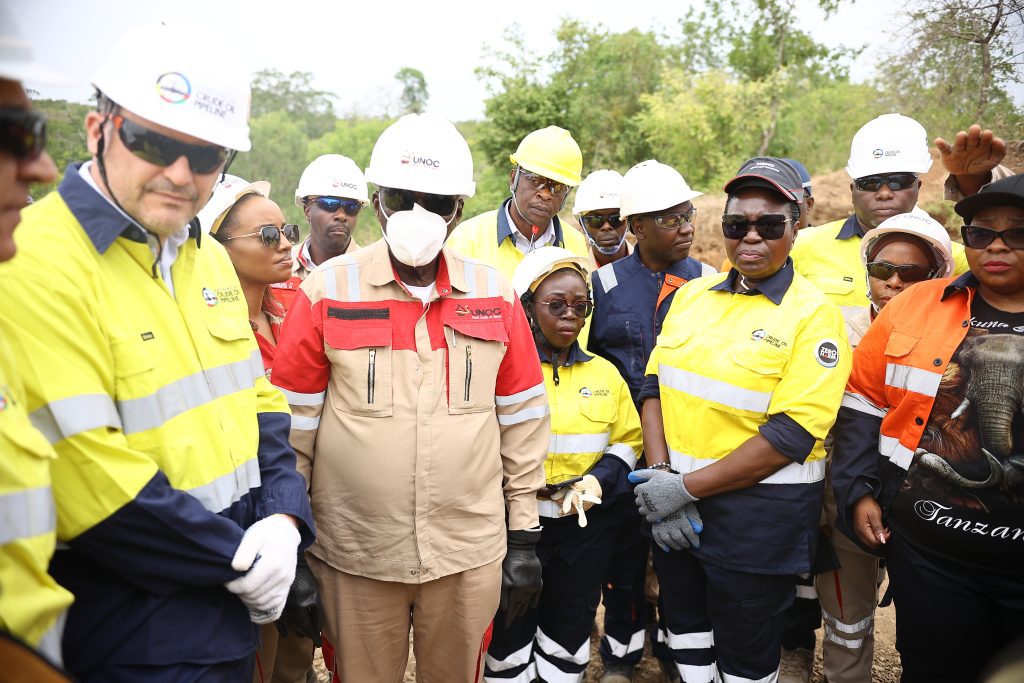
Beyond infrastructure, Dr. Nankabirwa spotlighted the project’s socio-economic contributions, noting that more than 12,000 local workers have been employed across Uganda and Tanzania throughout the development.
She stressed the importance of skills transfer, job creation, and community participation, describing these as enduring legacies that will benefit host areas long after pipeline operations begin.
“Through EACOP, we are not only building a pipeline but investing in people—equipping them with transferable skills and creating opportunities that extend far beyond this project,” the Minister emphasized.
The visit aligns with recent high-level bilateral engagements between Ugandan and Tanzanian officials, including a stakeholder meeting in Dar es Salaam earlier in the week, where both governments reaffirmed their commitment to timely delivery.
Targets remain on track for technical commissioning by July 2026 and first crude exports from Tanga in October 2026.
As one of Africa’s most ambitious cross-border energy initiatives, EACOP continues to advance toward unlocking Uganda’s oil potential while navigating environmental, social, and regulatory considerations.