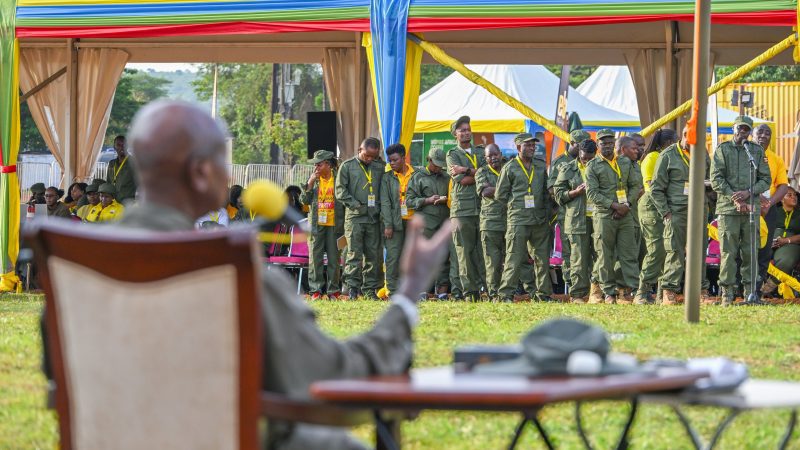
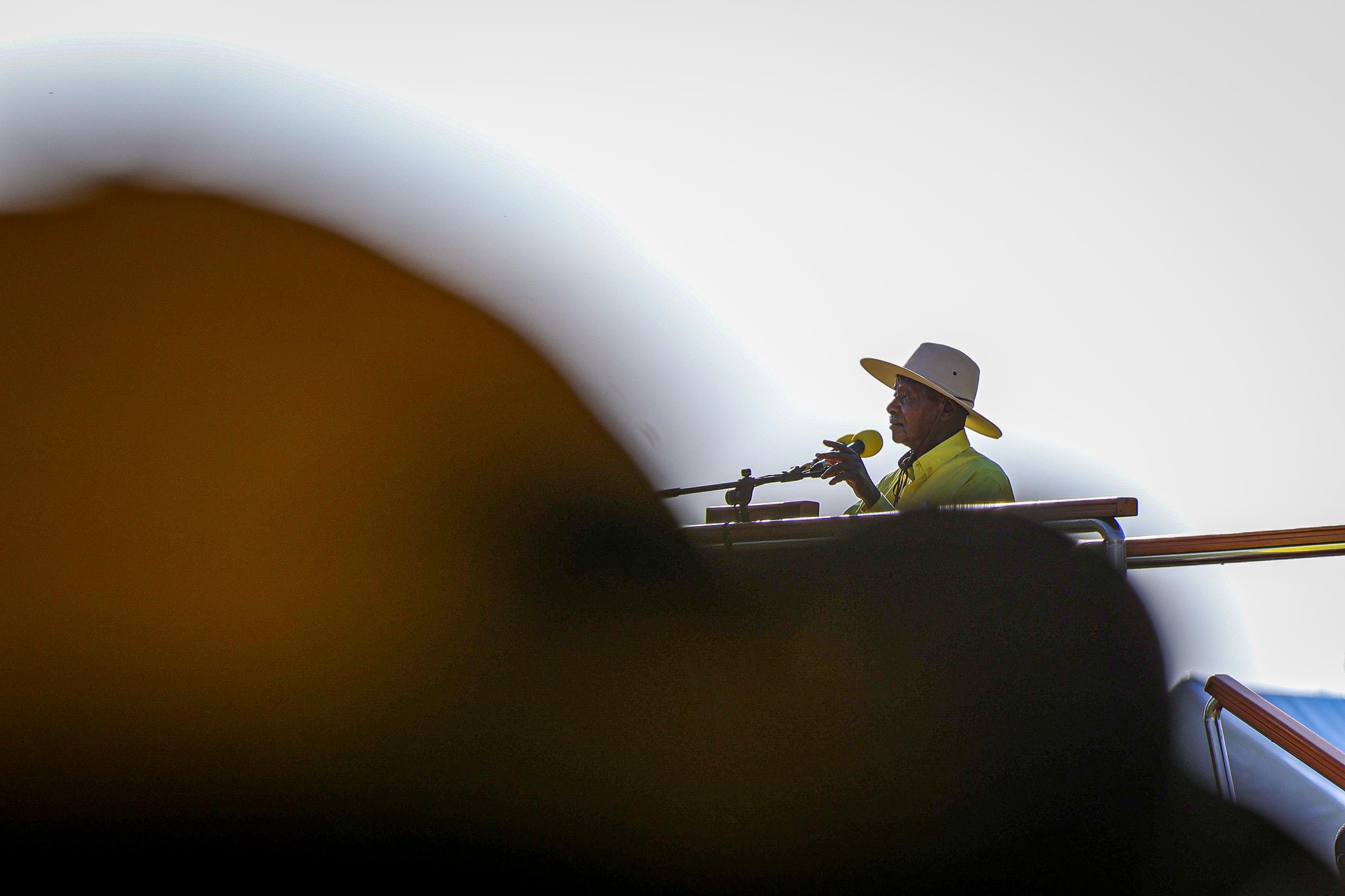
On Thursday, President Yoweri Kaguta Museveni campaigned in Kole District, highlighting the core priorities of the National Resistance Movement (NRM) for the upcoming 2026 elections.
He placed particular focus on generating household wealth through initiatives like fish farming, expanded irrigation, and renewed cattle restocking programs.
Speaking to local residents, the President explained that the NRM’s manifesto for 2026–2031 rests on seven foundational “bricks” that form the basis of Uganda’s progress. He described peace as the foremost and most critical achievement.
Museveni attributed Uganda’s earlier periods of turmoil to divisive politics rooted in identity, religion, and tribal affiliations.

Thanks to the NRM’s push for national unity, the country now has a unified political party and robust institutions—including a reliable army, police force, judiciary, and civil service—that safeguard ongoing stability.
The second key contribution, according to Museveni, has been widespread development. This includes major investments in infrastructure such as roads, electricity supply, educational facilities, and healthcare centers throughout Uganda, including the Lango sub-region.
Yet he stressed that stability and physical infrastructure fall short if families continue to struggle with poverty.
Museveni emphasized the urgent shift toward wealth creation, encouraging households to adopt income-generating activities that support both daily needs and long-term savings.
He highlighted fish farming as a particularly promising venture for Kole residents, urging productive use of wetlands in ways that protect the environment rather than harm it.
Drawing from personal experience in Lango, the President claimed that a single acre dedicated to a fish pond could yield up to Shs140 million in annual income. He noted that fish ponds also serve to conserve water, which can then support irrigation efforts.
Museveni pointed out that irrigation dramatically boosts agricultural output—for instance, banana farms under irrigation can produce up to ten times more than those dependent solely on rainfall.
He pledged that, following the elections and continued NRM support from the community, the government would provide equipment to aid fish farming initiatives.
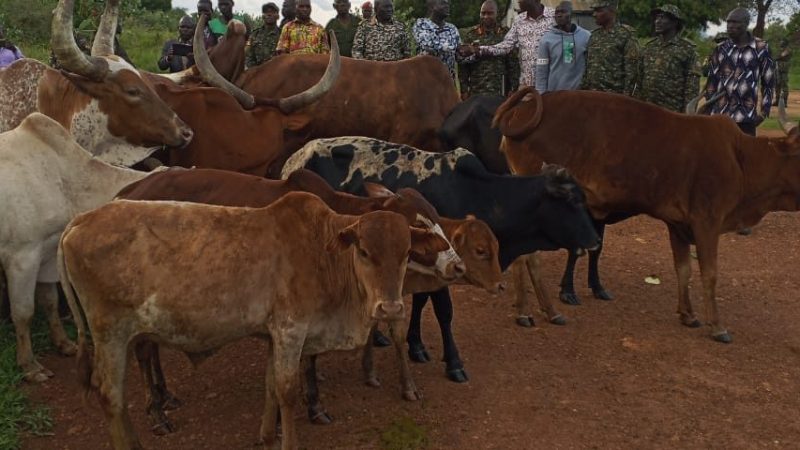
Regarding livestock, Museveni announced plans to restart cattle restocking across Lango as part of the broader wealth-building agenda.
He acknowledged that previous attempts faced setbacks from legal disputes and issues with direct cash distribution, leading to a revised strategy. Under the new plan, households would gradually receive three to five cows each.
“The funds are ready,” he assured, adding that implementation would occur through close collaboration with local leaders from Lango and adjacent sub-regions.
Speaker of Parliament and NRM Second National Vice Chairperson Anita Annet Among conveyed several requests from Kole residents, including assistance with irrigation projects, elevation of Aboke Health Centre IV to full district hospital status, and the establishment of a technical institute in Adidom.
Earlier in the event, NRM Vice Chairperson for the Northern Region Hamson Obua greeted the President on arrival in Kole. He told the crowd that choosing Museveni and the NRM equated to endorsing sustained peace and ongoing progress across Lango.
Museveni reiterated the NRM’s dedication to educating citizens and equipping them to escape poverty. He stressed that this would be achieved primarily through private-sector-led wealth creation efforts.