
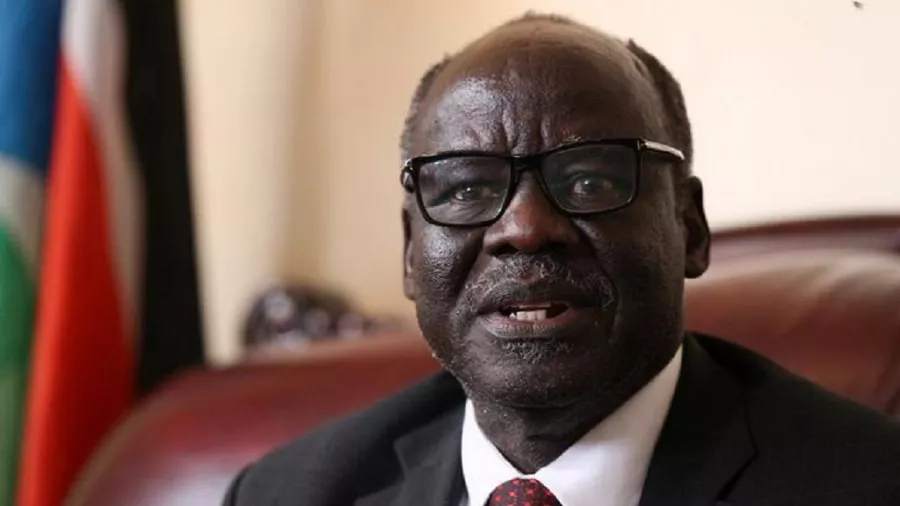
The opposition National Democratic Movement (NDM) has accused the state broadcaster South Sudan Broadcasting Corporation (SSBC) of breaching professional media standards after it failed to air a pre-recorded interview with party chairman Dr. Lam Akol Ajawin, despite a prior agreement.
In a statement dated February 20, the NDM—a member of the South Sudan Opposition Alliance (SSOA) and signatory to the 2018 peace agreement—said the interview, conducted on February 12, was scheduled to broadcast on February 17 at 9:30 p.m.
The programme covered the peace process, democratic transition, and upcoming elections.
“A failure to air the programme at the agreed time constitutes a breach of recognised professional media standards,” the party stated, demanding an official explanation from SSBC.

A senior NDM official said that the broadcaster gave no formal notice of cancellation.
“After Dr. Akol contacted Information Minister Ateny Wek Ateny, the minister reportedly assured him the interview had been reviewed and cleared by security authorities and would air on February 18 instead,”
“The interview was not broadcast on the rescheduled date. Subsequent attempts to reach the minister went unanswered,” the official said.
When NDM representatives inquired with SSBC staff who conducted the interview, they were told “the problem is from above,” according to the source.
Dr. Lam Akol, a veteran politician and long-time critic of President Salva Kiir’s leadership, was dismissed as transport minister in October 2025 after five months in the role.
He founded the NDM in 2016 following a split from the ruling SPLM.
Earlier, he led the SPLM-Democratic Change after breaking away from SPLM in 2009 and contested the 2010 presidential election against Kiir without success.
Before South Sudan’s independence, Akol served as Sudan’s foreign minister.
In its statement, the NDM reaffirmed respect for national media institutions but stressed that state-owned outlets belong to all South Sudanese and must guarantee equal access for political parties—especially with elections scheduled for December 2026.
The party vowed to continue using alternative media platforms to reach the public and called on SSBC to uphold transparency and impartiality toward all political actors.
South Sudan’s media landscape remains highly restricted and politically charged.
Rights groups and press freedom advocates have consistently documented government and security influence over media, including restrictions on news outlets, limited access to information, and fears of censorship, particularly in the lead-up to elections.