


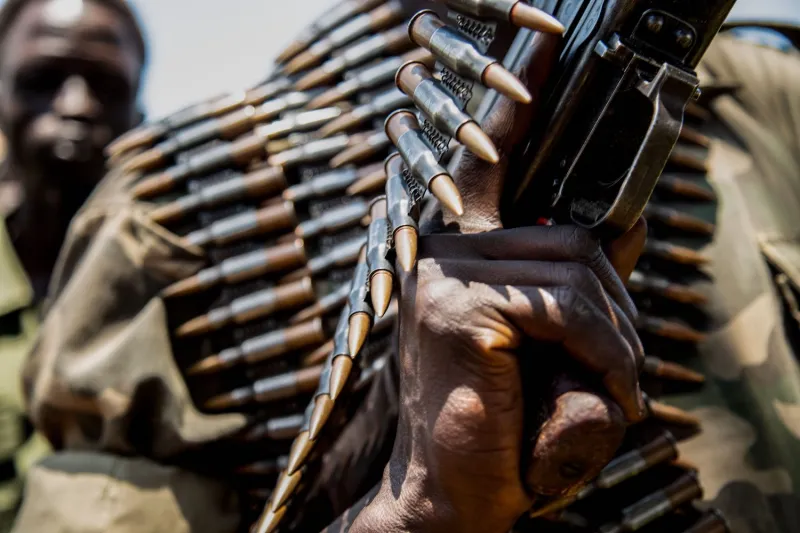
An officer with the National Security Service (NSS) was killed and four other security personnel wounded in a late-night attack on a joint security base in Malakal, Upper Nile State capital, authorities confirmed Thursday.
Gunfire erupted Wednesday night, causing widespread panic across the city.
The joint force — comprising SSPDF soldiers, national police, and NSS personnel — was established to maintain order in Malakal amid years of recurring instability.
State Information Minister Peter Ngwonjo Akwiny said that the identity of the attackers remains unknown.

“There was a skirmish in Malakal between joint security forces and armed assailants,” Akwiny said. “It occurred when armed assailants attacked the base of the joint operation force on Wednesday night.”
He confirmed the death of the NSS officer and injuries to members of the SSPDF and national police.
Security forces have since restored calm.
“We contained the situation and calm has been restored,” Akwiny added.
Authorities have launched a full investigation into the incident.
Three suspects have been arrested in connection with the attack, though further details were withheld pending the outcome of the inquiry.
When asked about reports that the government-allied Abushok militia carried out the assault, Akwiny neither confirmed nor denied the claim.
“Naming things by name will not help with anything,” he said. “The security committee is the one who can know the identity of the attackers.”
Tensions in Malakal have been rising since March 3. The friction reportedly stems from a group called Agrab, allied with the Abushok militia.
According to residents, joint security forces were deployed to the Saha residential area after fishermen complained of harassment by the Agrab group — a move that allegedly provoked the militia and led to the attack.
Malakal has long been a flashpoint for inter-communal violence, cattle raiding, and clashes between armed youth groups and security forces.
The joint base operation was intended to curb such incidents and protect civilians.
The incident underscores persistent security challenges in Upper Nile State, where armed groups, ethnic tensions, and competition over resources continue to threaten stability despite national peace efforts.
No group has publicly claimed responsibility for the attack at the time of publication.