Password-protected phones and laptops seized from suspended South Sudanese First Vice President Dr. Riek Machar and his co-accused are complicating the prosecution’s case, as a government-hired forensic expert admitted challenges in accessing key evidence during the ongoing high-profile trial.
In the 58th session of the special court on March 9, 2026, South African digital forensic analyst Ratlhogo Peter Calvin Rafadi testified that several encrypted devices—including one belonging to Machar—could not be unlocked due to missing passwords, limiting the depth of the investigation.
While investigators recovered some messages, photos, and videos from accessible portions, full extraction was not possible.
Rafadi explained that providing passwords could enable independent verification of the findings. He noted that hash values (digital fingerprints ensuring evidence integrity) had not yet been submitted to the court but could be shared with an independent expert while preserving the chain of custody.

“Another digital forensic expert will arrive at the same answers,” he stated.
Defense lawyers challenged the reliability of Rafadi’s report.
Counsel Gerry Raimondo Legge questioned whether hash values had been properly submitted, while Deng John Deng requested that one of the accused’s phones be opened in court during cross-examination to verify cited messages.
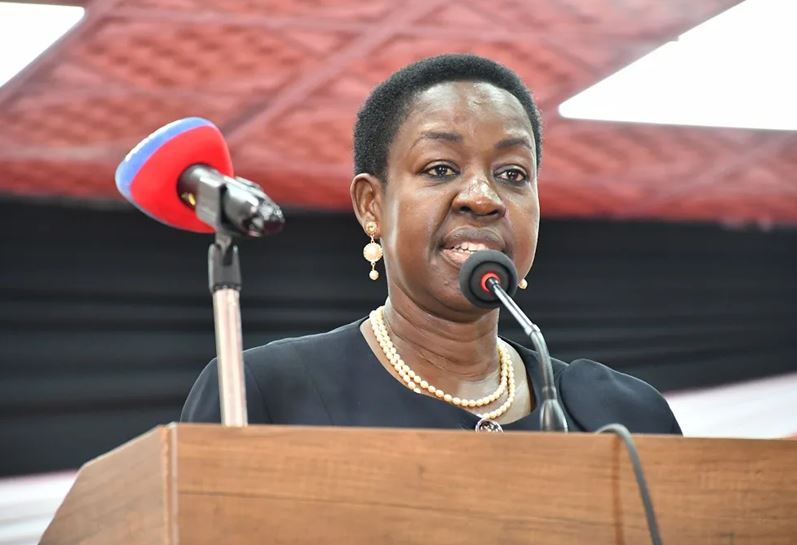
Prosecutor Ajo Onyo’Ohisa Issa opposed the request, arguing it risked tampering with evidence and causing delays.
“If the defense doubts the report, let them bring their own expert to examine all the phones and laptops, not just one device,” she said.
“Only an expert can challenge an expert.”
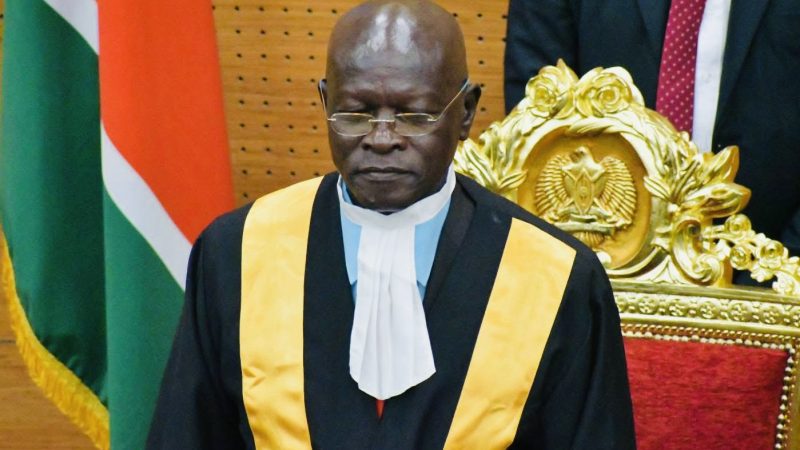
Presiding Judge James Alala Deng adjourned proceedings until Wednesday, March 11, 2026, to rule on the defense’s application for access to the devices during cross-examination.
Machar, along with seven co-defendants, faces serious charges including treason, murder, terrorism, destruction of public property, and crimes against humanity.
Prosecutors allege the electronic evidence links them to coordinating the March 2025 attack on the SSPDF garrison in Nasir, Upper Nile State, which killed 257 soldiers and involved the seizure or destruction of military equipment valued at approximately $58 million.
Machar has been under house arrest since March 2025 following his suspension, while co-accused remain detained by the National Security Service in Juba.
The trial, which has featured repeated disputes over forensic reports and evidence handling, is seen by many observers as politically charged and potentially damaging to the fragile 2018 Revitalized Peace Agreement.
The complications with encrypted devices could further prolong proceedings, raising concerns about evidentiary fairness and the broader implications for South Sudan’s stalled transition and peace process.