

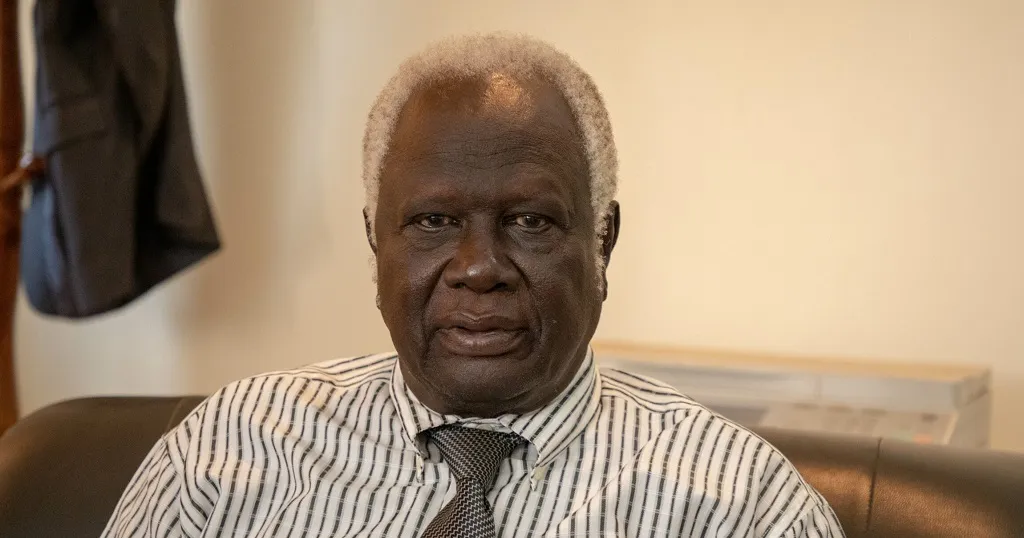
South Sudan’s National Elections Commission (NEC) Chairperson, Professor Abednego Akok, has reaffirmed that the country’s long-awaited general elections will take place as scheduled in 2026, despite ongoing security and logistical challenges.
Prof. Akok emphasized that the polls remain on track and urged citizens not to worry. He described the elections as “an important opportunity for citizens to elect leaders of their choice” and expressed optimism that improving peace and stability in the coming months would enable nationwide participation.
The NEC has already taken key steps to ensure progress.
On December 22, 2025, following an agreement among parties to the Revitalized Agreement on the Resolution of the Conflict in the Republic of South Sudan (R-ARCSS), the commission delinked the conduct of a new population census and the constitutional review process from the electoral timeline.

As a result, the NEC will revert to using the geographical constituencies inherited from the 2010 general elections (originally established under Sudan). Constituencies will be officially declared when 12 months remain before the polls, in accordance with Article 41 of the Elections Act.
Prof. Akok acknowledged the fragile security situation in parts of the country, noting that if insecurity persists in certain areas, they could be temporarily excluded from voting—as was done in previous elections before independence.
He remains hopeful that conditions will improve to allow full participation.
This assurance comes amid broader concerns about South Sudan’s transitional period under the 2018 peace deal, which has faced repeated delays in implementing key provisions, including elections originally envisioned to end the transition.
Recent reports from the African Union Peace and Security Council and UN experts have stressed the need for timely polls by December 2026 to conclude the transitional phase by February 2027, while calling for support to electoral institutions like the NEC.
The NEC’s decision to use 2010 boundaries aims to bypass delays in census and constitution-making, allowing preparations to advance.
Political parties and stakeholders are encouraged to gear up, with the commission highlighting elections as a sovereign right for South Sudanese citizens.