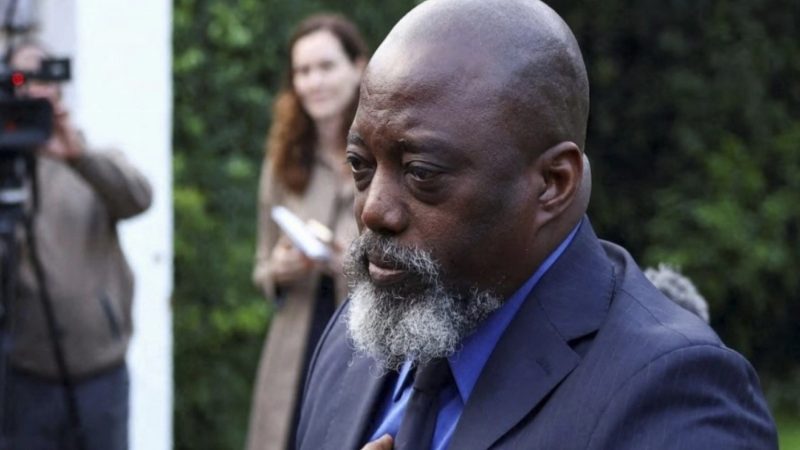
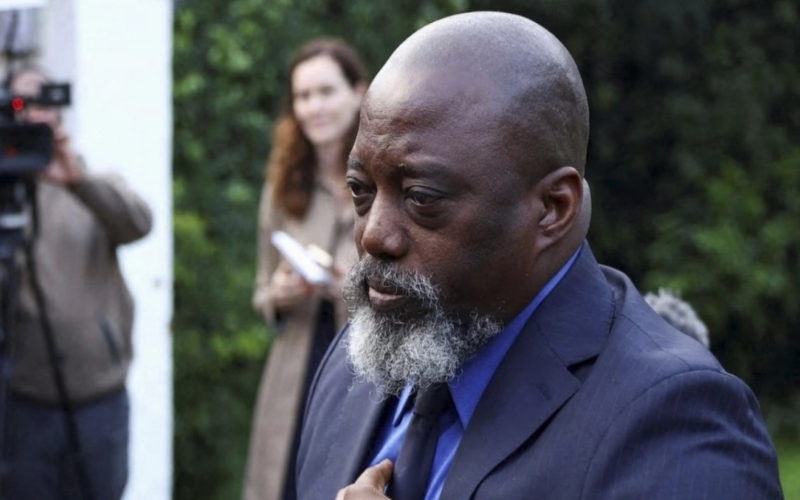
The political landscape of the Democratic Republic of the Congo has taken a dramatic turn as former president Joseph Kabila, once a dominant force in the nation’s leadership, now finds himself at the center of a high-stakes treason case that has shaken the country’s fragile stability.
Authorities say Kabila was convicted by a military tribunal in absentia in 2025, accused of backing insurgent groups responsible for ongoing violence in eastern Congo.
The court reportedly handed down a death sentence, though the former leader is believed to be outside the country and has not been apprehended.
Kabila has dismissed the accusations, insisting they are politically driven and aimed at dismantling his influence. His supporters argue that the case reflects a broader campaign to silence opposition figures tied to his long-standing political network.

The developments highlight a deepening rift between Kabila and current president Félix Tshisekedi. Once seen as uneasy partners following the controversial 2018 elections, the two leaders have since become fierce rivals, with their fallout reshaping alliances within the government and security forces.
Analysts note that the charges come against the backdrop of persistent unrest in eastern Congo, where armed groups continue to battle for control over territory and valuable mineral resources.
The region has long been a flashpoint, complicating governance and fueling accusations of external interference.
His eventual exit from office in 2019 marked the country’s first peaceful transfer of power in decades, but the transition did little to resolve underlying tensions. Instead, divisions have continued to widen, culminating in the current legal and political confrontation.
Observers warn that pursuing a former head of state on charges as serious as treason could have far-reaching consequences. While some view it as a step toward accountability, others fear it may inflame political divisions and destabilize an already volatile nation.
As uncertainty grows, the fate of Joseph Kabila remains unclear, but his case is rapidly becoming one of the most significant political developments in the region—one that could redefine power, justice, and leadership in the Democratic Republic of the Congo.