
South Sudan on Monday rejected criticism from the United States regarding its political leadership and renewed its appeal for the lifting of U.N. sanctions and the arms embargo.
The government argued that these measures are undermining the implementation of the 2018 peace agreement and the strengthening of state institutions.
In an official statement, the Foreign Ministry said comments made by U.S. Alternate Representative for Special Political Affairs Jennifer Locetta — following the renewal of U.N. sanctions — did not accurately represent the situation on the ground.
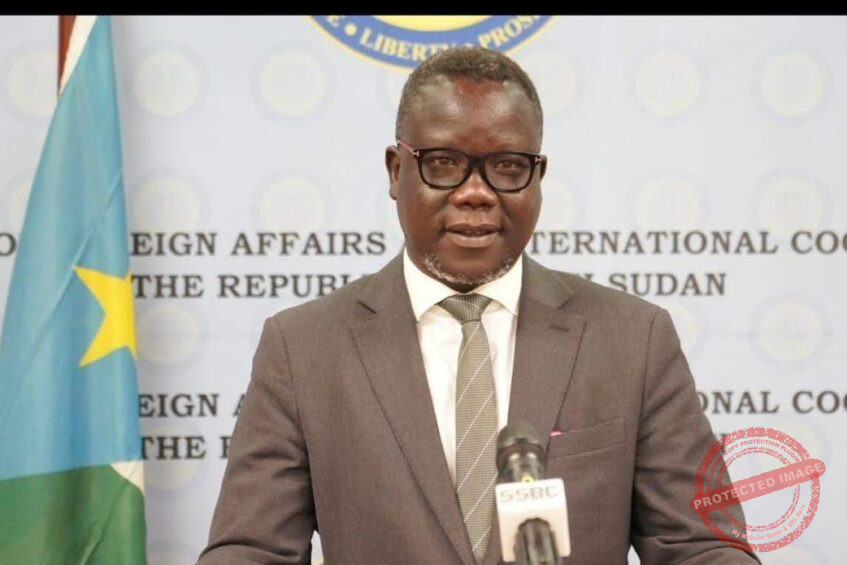
Foreign Ministry Spokesperson Ambassador Agok Anyar emphasized that South Sudan cherishes its longstanding ties with the United States, which backed the country’s independence and subsequent development.

However, he expressed disagreement with the U.S. assessment of President Salva Kiir’s leadership.
“President Kiir remains the principal implementer of the Revitalised Agreement on the Resolution of the Conflict in South Sudan and has shown unwavering commitment to national unity, inclusive peace, and reconciliation,” the ministry stated.
The government acknowledged ongoing economic, humanitarian, and institutional difficulties, noting that these challenges have been aggravated by regional and global factors.
It highlighted progress achieved in implementing the 2018 peace deal, particularly in security sector reforms, political consultations, and collaboration with regional partners.
The ministry strongly opposed the continued U.N. sanctions and arms embargo, stating that the restrictions are impeding the growth of state institutions and delaying critical security arrangements.
“The government holds a clear position that renewed sanctions and the continuation of the arms embargo are counterproductive,” it declared.
Juba urged Washington to adopt a more constructive stance centered on engagement, capacity building, and technical assistance instead of punitive actions.
The statement reaffirmed the government’s dedication to completing the political transition, enhancing accountability, and fully executing the peace agreement.
It also expressed readiness for continued diplomatic dialogue with the United States and other international partners.The response came after Locetta’s remarks at the U.N. Security Council on May 29, during which the council extended sanctions on South Sudan — including the arms embargo, travel bans, and asset freezes — for another year.
Locetta welcomed the renewal and expressed disappointment over the lack of progress toward meeting the benchmarks tied to the sanctions regime, as well as what she described as a worsening political and security environment.
She blamed the slow pace on insufficient political will among South Sudanese leaders, including President Kiir.
She also described the 2018 peace process as “farcical,” pointing out that one of the key signatories remains under house arrest and on trial — an apparent reference to First Vice President Riek Machar.
Locetta called on the transitional government to declare a national ceasefire, free detainees, reject political violence, and direct public revenues toward supporting citizens.
The U.N. Security Council first imposed sanctions on South Sudan in 2015 and introduced an arms embargo in 2018 due to persistent violence and delays in implementing peace accords.
The measures have been renewed every year despite Juba’s repeated requests for their removal.