


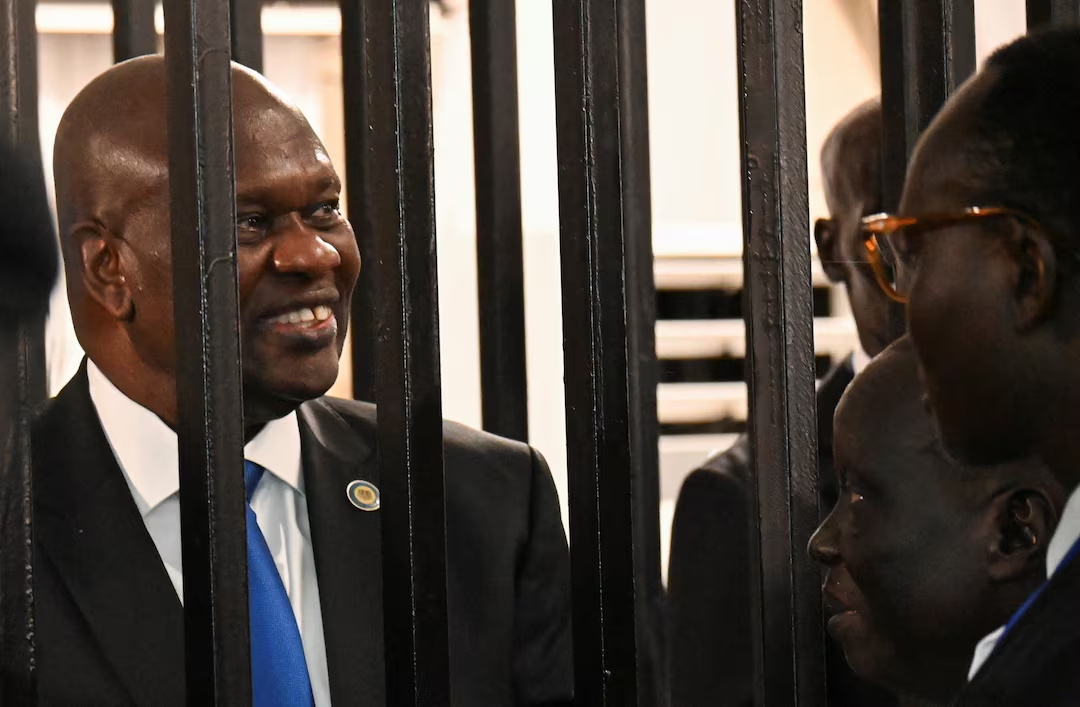
Prosecutors in the ongoing trial of suspended First Vice President Dr. Riek Machar and seven co-accused have presented a fresh batch of evidence to the special court in Juba, including autopsy reports, military documents, and a digital forensic report.
During Monday’s session, Advocate Dr. Sabri Wani Ladu, part of the prosecution team, tendered prosecution document number 5—an autopsy report and death certificate for the late Maj. Gen. James Majur Dak, one of 256 soldiers reportedly killed in Nasir County in March 2025.
The autopsy report, dated March 10, 2025, and signed by Dr. Akram Jibril, confirmed the cause of death. Wani said the prosecution had also submitted the death certificates of all 256 soldiers as prosecution document number 7, noting they were properly signed, stamped, and issued by the Ministry of Health in accordance with the law of evidence.
According to Wani, investigators gathered substantial corroborating evidence from eyewitnesses, survivors, and expert reports linking the accused to the killings.

He also presented a military administrative report on the Nasir incident containing 14 attachments, including:
- the SSPDF’s investigation committee formation;
- authorization for Maj. Peter Malual Deng to represent the army;
- documentation showing Col. Tor Gile Thoan was an SPLA-IO member before joining the White Army;
- lists of survivors and fallen soldiers;
- a presidential decree integrating Agwelek militia into the SSPDF; and
- a record of weapons destroyed by the White Army.
Other exhibits included a USB drive with videos and audio clips from the Nasir clashes, a March 1, 2025 letter from Machar, and a press statement by SPLM-IO spokesperson Pal Mai Deng on troop deployments in the area.
Wani said SSPDF representatives would testify about the military’s response measures and intelligence findings related to the attacks.
Digital Forensic Report and Defense Objections
The prosecution also introduced a digital forensic report prepared in South Africa, containing 15 attachments (A–O), under prosecution document number 9. The sealed bundle includes custody logs, diplomatic correspondence, and analyses of laptops and mobile phones seized from the accused.
Wani explained that the evidence was transported to South Africa through diplomatic channels, analyzed, and later returned to Juba. The report, dated August 26, 2025, is expected to play a critical role in connecting the accused to communications and planning around the Nasir assaults.
“These are official documents authenticated by the relevant authorities in both South Sudan and South Africa, fully compliant with the chain of custody and digital evidence standards,” Wani said.
He requested the court to admit the evidence under South Sudan’s Evidence Act, noting that the South African expert who prepared the report would testify to authenticate it.
However, Presiding Judge James Alala Deng deferred admission of the digital report and accompanying audio-visual materials.
“The court will mark all submitted documents but postpone marking the videos and audios until they are played in court,” he ruled. “For the forensic report, it will only be marked once the author testifies before the court.”
Defense lawyer Anis Tombe Augustino challenged the prosecution’s submissions, questioning the legality of South Sudan’s cooperation with South Africa in the investigation.
“We object to this evidence because the documents did not pass through formal diplomatic channels,” Tombe argued. He said the South African Embassy in Juba had not officially acknowledged receiving the correspondence, which he claimed undermined the evidence’s credibility.
Judge Deng adjourned the hearing to Wednesday, October 8, 2025, when forensic experts are expected to testify.
Machar and his seven co-defendants are facing charges of treason, crimes against humanity, mass murder, terrorism, and destruction of property.
The case stems from March 2025 attacks on an army base in Nasir County, during which Gen. David Majur Dak and scores of soldiers were killed. The government accuses Machar’s SPLM/A-IO forces and allied White Army militia of orchestrating the assault.