

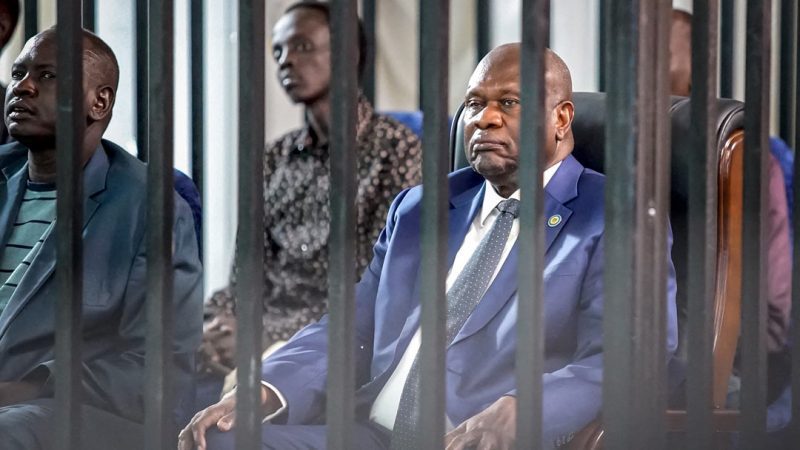

Parliamentary work in Juba has been thrown off schedule as the high-profile treason trial of suspended First Vice President Riek Machar continues to draw heavy security presence and road closures around the courthouse.
The special court, sitting at Juba’s Freedom Hall to accommodate large audiences, is hearing charges of treason, crimes against humanity, mass murder, and terrorism against Machar, 73, and seven co-defendants. The accusations arise from a March 2025 assault on an army base in Nasir County that left Gen. David Majur Dak and dozens of soldiers dead. The government blames Machar’s SPLM/A-IO forces and allied White Army militias for the attack.
The trial, which opened on September 22, now convenes three times a week — Monday, Wednesday, and Friday — under an order by presiding Judge James Alala Deng. Those are the same days the Transitional National Legislative Assembly traditionally meets, disrupting its regular timetable.
“Our normal sitting days have been affected,” Second Deputy Speaker Parmena Awerial Aluong told lawmakers on Thursday during a special session to pass the National Youth Policy 2025. “The court sessions have interrupted all our sittings, so we’re not following the usual procedures.”

He explained that tight security and roadblocks on Mondays and Wednesdays have made it difficult for lawmakers to access parliament, forcing them to move some sittings to Thursdays. “This session today is not a normal one,” he added.
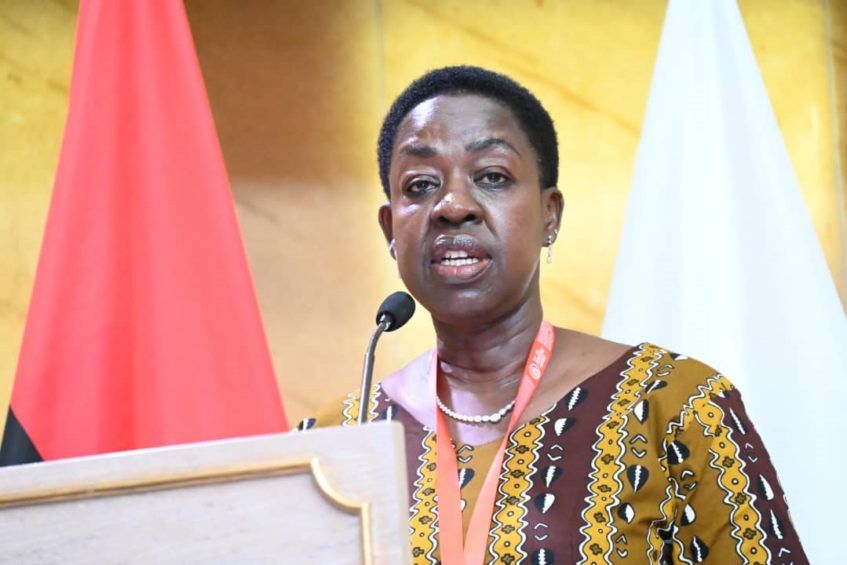
Speaker Jemma Nunu Kumba earlier voiced similar frustration, noting that the assembly has repeatedly failed to reach quorum due to delays caused by the security restrictions.
The disruption extends beyond parliament. Civil society activist Edmond Yakani said the heavy deployment “is fully affecting public mobility and regular business in Juba.” Yakani, who leads the Community Empowerment for Progress Organization, urged authorities to move the hearings elsewhere. “There are several other venues that can host the trial besides Freedom Hall,” he said.
Officials selected Freedom Hall — typically used for social functions — because the city’s main Mudiriya Court could not accommodate the large number of accused persons, their relatives, party officials, journalists, and diplomats.