


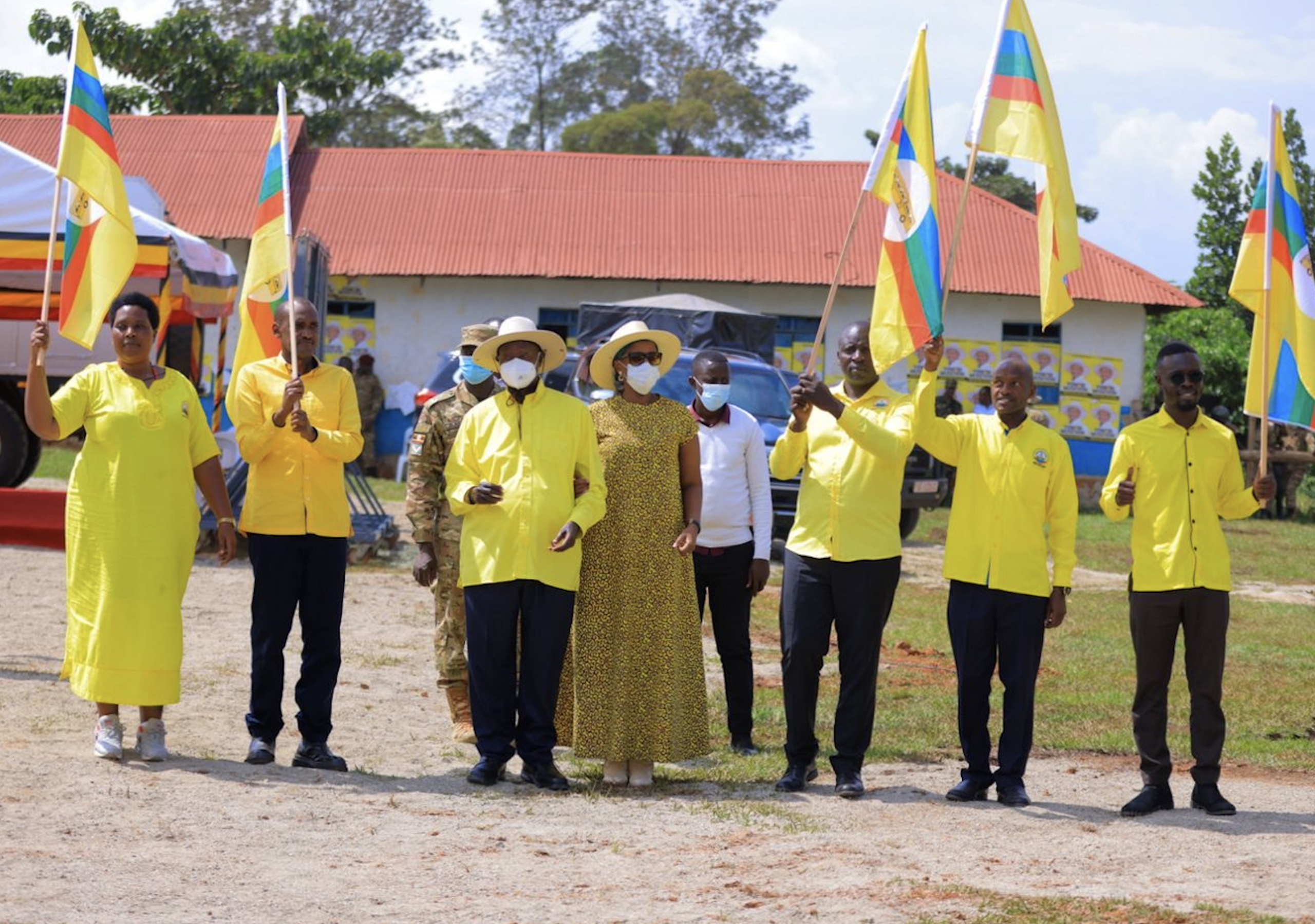
Leaders and residents in Kamwenge District have lauded President Yoweri Museveni for restoring enduring peace by defeating the Allied Democratic Forces (ADF), a rebel group that once endangered the area.
Frank Tumwebaze, the Agriculture Minister and NRM Chairperson for the district, said Kamwenge’s safety is a direct result of the President’s swift response when rebels attempted to penetrate the region.
“We thank the President for defeating the ADF rebels,” Tumwebaze said, noting that Museveni’s rapid deployment of troops helped neutralize the threat within hours.
He also credited Museveni’s firm stance against sectarianism for fostering unity in Kamwenge. Tumwebaze pointed out that the Batooro and other communities now coexist and work together harmoniously.

Tumwebaze further praised government programs such as commercial farming initiatives, the Parish Development Model (PDM), and infrastructure expansion for transforming livelihoods. He revealed that Kamwenge has so far received Shs 21 billion under the PDM, benefiting around 18,000 households.
According to him, the district is experiencing rising wealth levels, with residents now producing and selling more milk to increase their incomes. He added that construction of the long-awaited Kamwenge–Kihuura road is over 70% complete.
Tumwebaze also appealed to the President to set up a permanent military base along the forest belt to prevent future rebel activity.
Museveni Reassures Kamwenge on Security
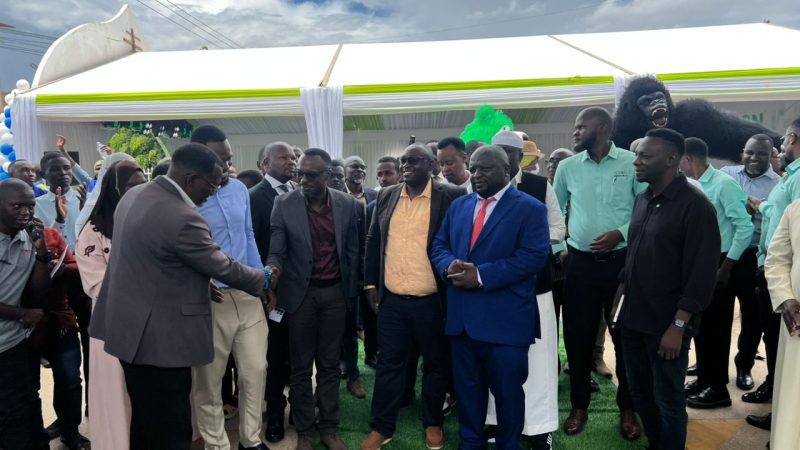
Speaking to crowds in Kamwenge Town Council, President Museveni reaffirmed that peace remains the NRM government’s biggest achievement, especially for border districts vulnerable to regional conflict.
“The people of Kamwenge understand the value of peace,” he said, referencing the ongoing instability in the Democratic Republic of Congo, which has forced many refugees to settle in Uganda.
Responding to Tumwebaze’s request, the President agreed to station a battalion near Kibale National Park and instructed leaders to allocate land for the facility.
Museveni also highlighted ongoing and upcoming infrastructure projects, including the Lyantonde–Ibanda–Kamwenge road and continued work on the Kihuura route.
Turning to wealth creation, he urged residents to adopt irrigation and engage more in commercial agriculture. He cited rising national production in coffee, maize, and milk as evidence of the benefits of market-oriented farming. The President also referenced the Presidential Banana Initiative in Bushenyi, where farmers using irrigation harvest up to ten times more bananas than those relying solely on rain.
“Do not work just to eat,” Museveni advised. “Work for both survival and income.”
He cautioned young people against relying too heavily on government jobs, saying that private-sector growth—through industries and tourism—offers far greater employment opportunities. He highlighted Mbale Industrial Park, which employs more than 40,000 people, compared to the government’s 480,000 jobs nationwide.
Museveni encouraged Kamwenge to tap into the tourism potential of Kibale Forest, arguing that the sector can create numerous service jobs.
Wrapping up his speech, he reminded residents that he is also a farmer: “I produce milk, beef, and bananas. That is my wealth and my contribution—and I also employ people.”