
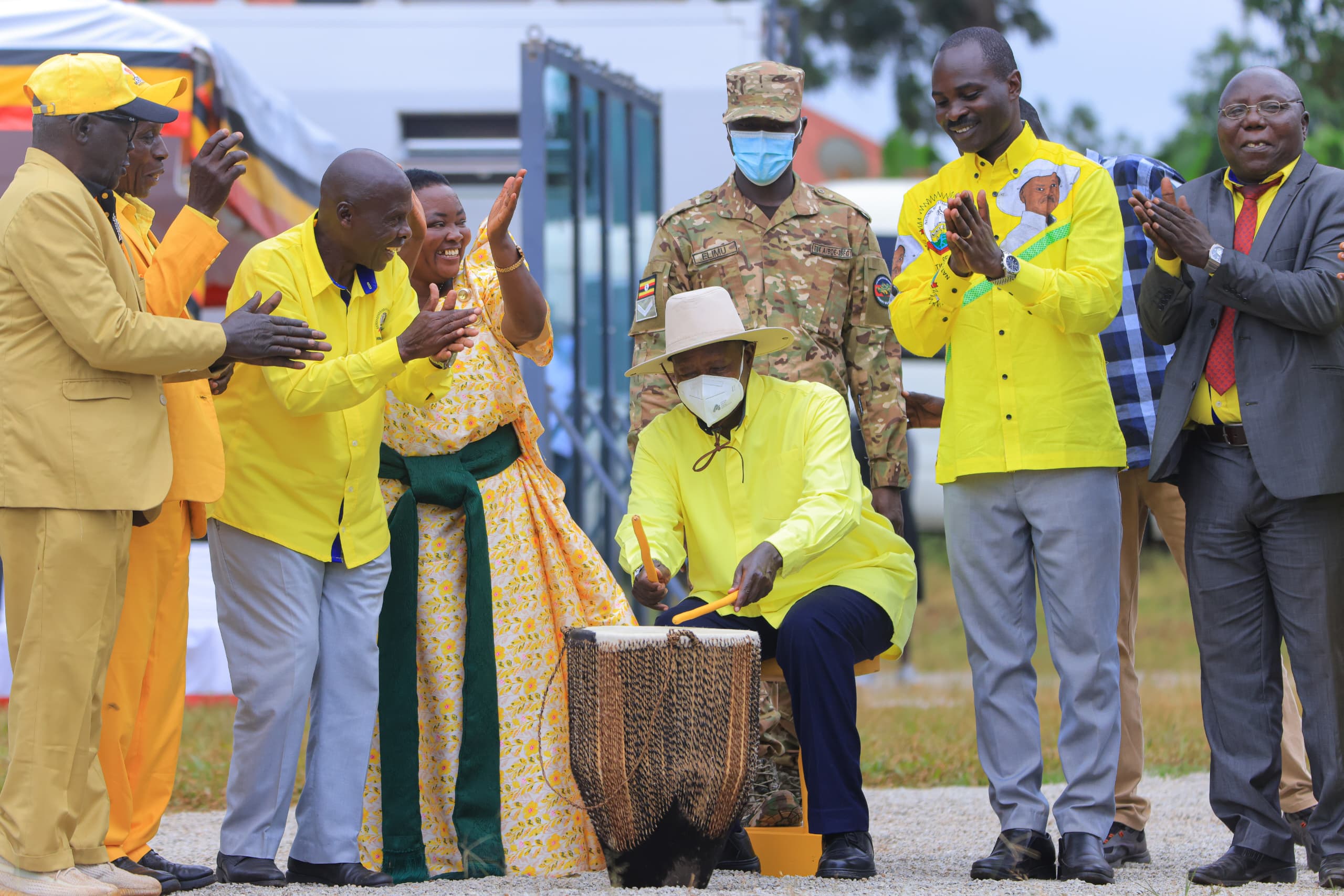
Kakumiro District has declared total backing for the National Resistance Movement (NRM) as President Yoweri Kaguta Museveni concluded his tour of the Bunyoro sub-region, underscoring peace, infrastructure development and wealth creation as the cornerstone achievements of his four-decade leadership.
Addressing supporters, Kakumiro NRM Chairperson Fred Byamukama praised Museveni for restoring stability after years of insecurity, including the 1986 war and the 2000 Allied Democratic Forces (ADF) insurgency. He said the prevailing peace had created a conducive environment for development across the district.
Byamukama highlighted major infrastructure gains, noting that 655 kilometres of roads have been tarmacked in Bunyoro. He rejected claims that road construction was driven solely by oil exploration, and commended the President for the establishment of Kabale International Airport and the commissioning of Kakumiro’s district administration block during the visit.
He also cited advances in agriculture and energy, revealing that Kakumiro has 80 irrigation schemes, with more planned to improve agricultural output. Electricity access in the district has risen to 66 per cent, he added.

Prime Minister Robinah Nabbanja said the district’s pledge of support reflected appreciation for its elevation to district status and sustained government investment in infrastructure. She pointed to the completed 107-kilometre Mubende–Kakumiro–Kagadi road and the planned Kakumiro–Nkooko–Kisiita road under the next development programme.
Nabbanja thanked the President for releasing Shs3.6 billion to construct the district administration block, which he officially commissioned during the tour. She also announced that Stecia Mayanja, leader of the National Peasants’ Party, had formally defected to the NRM, boosting the ruling party politically.
She observed growing public uptake of the Parish Development Model (PDM) but warned against corruption, saying some officials were demanding bribes from beneficiaries. Nabbanja called for increased funding for the land fund and urged protection of local manufacturers from unfair competition by cheap imports. She further disclosed that 45 factories have been set up under forest value-addition policies, creating hundreds of jobs.
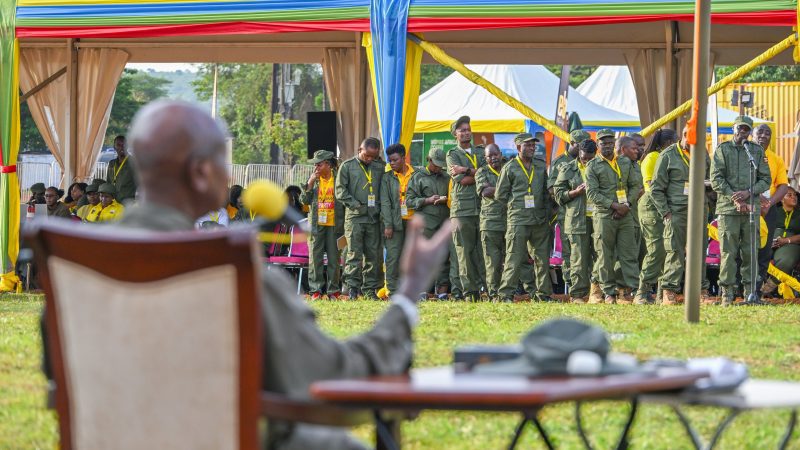
In his address, President Museveni said the Bunyoro tour was meant to account for the NRM’s achievements over the past 40 years, starting with the restoration of peace.
“Uganda was once unstable, but the NRM brought stability, which made development possible,” Museveni said.
He identified infrastructure development as the second major achievement, citing improvements in roads, electricity, water supply, telecommunications and internet connectivity. Museveni said access to clean water in Kakumiro stands at 92 per cent, while electricity has expanded to many sub-counties.
The President announced plans for additional road projects, including the Kazo–Burunga–Mpara–Hapuuyo road to Karuguuza and the Kisiita–Nkooko–Masode–Ntwetwe road linking to Kiboga, recalling that some of these routes were used during the liberation struggle.
On social services, Museveni said progress had been made in education and healthcare, with more than 300 private schools operating in the district. He also revealed plans to upgrade a Health Centre IV into a district hospital, noting that only five sub-counties are yet to receive Health Centre IIIs.
Museveni said wealth creation remains the third pillar of the NRM’s agenda, referencing past and current initiatives such as Bonna Bagaggawale, Entandikwa, Operation Wealth Creation and the Parish Development Model. He reiterated his call for commercial agriculture, including the four-acre model and fish farming, sharing his own fish project as a successful example.
He added that job creation through industrialization and private investment is the fourth key contribution of the NRM, emphasizing that government alone cannot absorb Uganda’s rapidly growing workforce.
On foreign relations, Museveni said Uganda had resisted external pressure, arguing that Africa’s main challenge is not lack of aid but underutilization of its resources.
The Bunyoro tour concluded with renewed commitments to infrastructure expansion, industrial development and wealth creation, as NRM leaders expressed confidence that the region would remain a stronghold for the ruling party.