



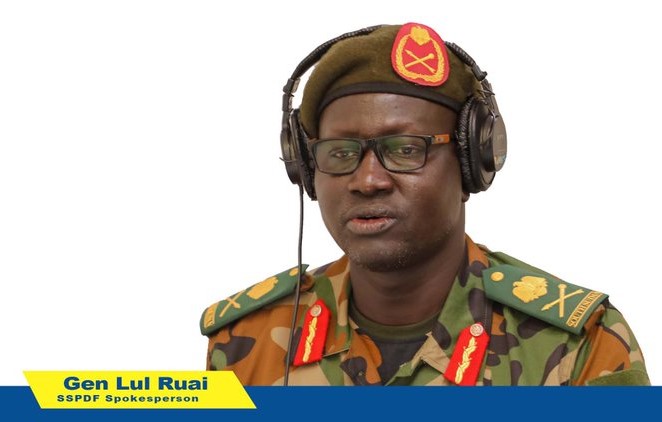
South Sudan’s military has issued a second, more direct evacuation order to civilians in opposition-controlled areas of Jonglei State, explicitly warning of an impending large-scale offensive.
In a directive dated January 25 and signed by South Sudan People’s Defence Forces (SSPDF) spokesman Major General Lul Ruai Koang, the army instructed residents of the Lou Nuer counties of Nyirol, Uror, and Akobo to “evacuate for safety to government-controlled areas within 48 hours.”
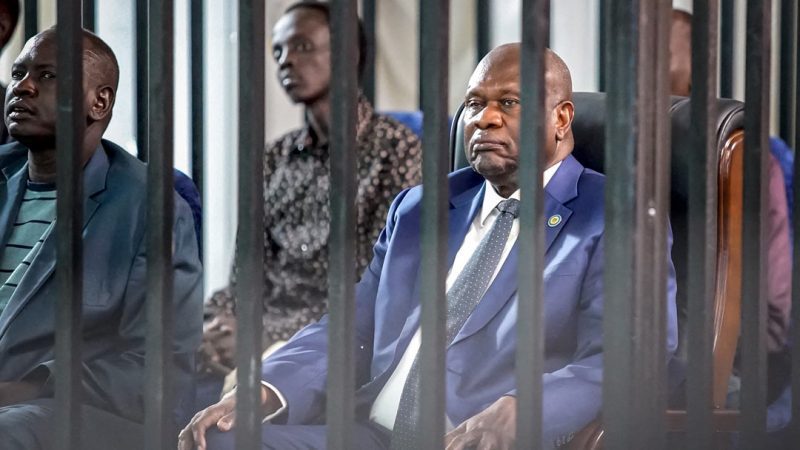
These three counties remain under the control of the Sudan People’s Liberation Army-in-Opposition (SPLA-IO), now led by First Vice President Riek Machar’s deputy, Oyet Nathaniel, following Machar’s detention.
The order announced that a military campaign named “Operation Enduring Peace” would commence shortly.

Clashes between forces loyal to President Salva Kiir and the SPLA-IO have escalated since December, especially in northern Jonglei.
The opposition has overrun several SSPDF positions, including garrisons in Waat, Yuai, and Pajut. In response, the government has reinforced its troops and advanced northward to reclaim lost ground.
Most SSPDF units are currently positioned in Poktap and Padiet in Duk County, just a few kilometres from SPLA-IO front lines near Pajut.
This marks the second evacuation warning in under a month. A wider directive issued on December 30 called on civilians to depart SPLA-IO-held zones to “avoid and minimise collateral damage.”
Subsequent air strikes followed, including an attack on Lankien town in Nyirol County that killed at least 11 people, according to local authorities.
The latest order is more specific: it targets armed civilians and humanitarian organisations. Civilians possessing weapons but not intending to engage government forces were told to surrender their firearms at the nearest SSPDF base.
Those found armed near SPLA-IO positions would be treated as “legitimate military targets.”
The directive further instructed unaffiliated youths—not part of the White Army militia—to relocate their families and livestock from the affected zones.
Non-governmental organisations operating in the three counties were given 48 hours to withdraw.
Analysts interpret the sharper language, the formal naming of the operation, and the rare ultimatum to aid groups as clear indicators of preparations for a major government assault.
The evacuation order follows heightened concern over inflammatory statements from senior commanders in northern Jonglei.
“When we arrive there, don’t spare an elderly, don’t spare a chicken, don’t spare a house or anything,” Olony declared.
“We are tired of problems every year until we have gotten old in problems.”
He presented the deployment as a national duty rather than a paid assignment, telling troops they were “defending the nation, not fighting for salaries.”
The Agwelek militia has been redeployed to strategic sites, including near the Heglig oilfields along the Sudan border, under a tripartite agreement between South Sudan and opposing Sudanese groups to secure oil facilities.
Olony was appointed to his current role by President Kiir in January 2025, despite a record involving repeated defections and accusations of serious human rights violations.
The Greater Upper Nile region—covering Jonglei, Upper Nile, and Unity states—has long been a hotspot for ethnically motivated violence, with civilians, especially women and children, suffering disproportionately in military operations.
The United Nations Mission in South Sudan (UNMISS) expressed deep alarm over General Olony’s calls for indiscriminate violence against civilians in northern Jonglei, where recent fighting has displaced more than 180,000 people.
“Inflammatory rhetoric calling for violence against civilians, including the most vulnerable, is utterly abhorrent and must stop now,” said Graham Maitland, UNMISS officer-in-charge.
He urged all leaders to cease hostilities and honour the 2018 peace agreement.
The UN Commission on Human Rights in South Sudan warned that such rhetoric from high-ranking officers, combined with fresh troop movements, heightens the risk of mass atrocities and renewed ethnic violence.