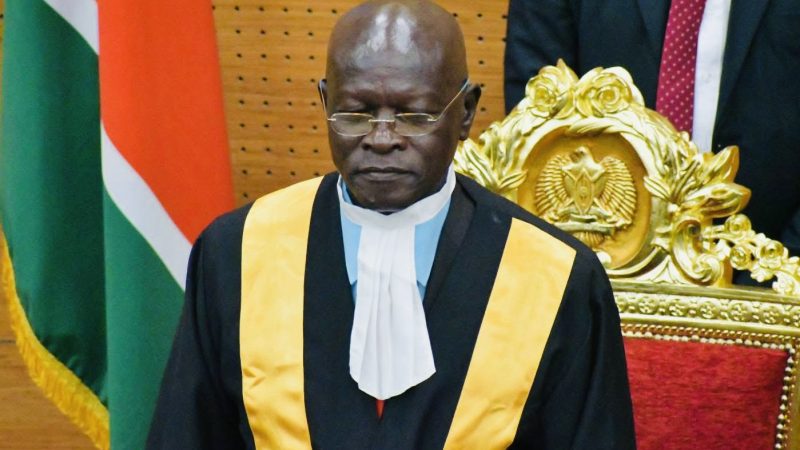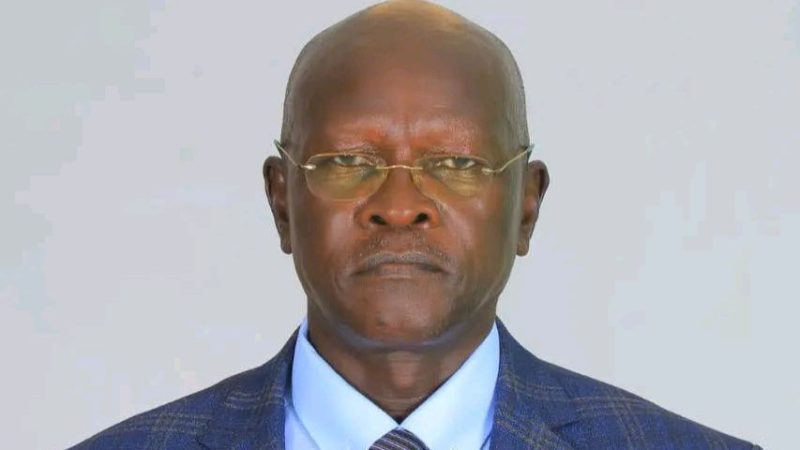


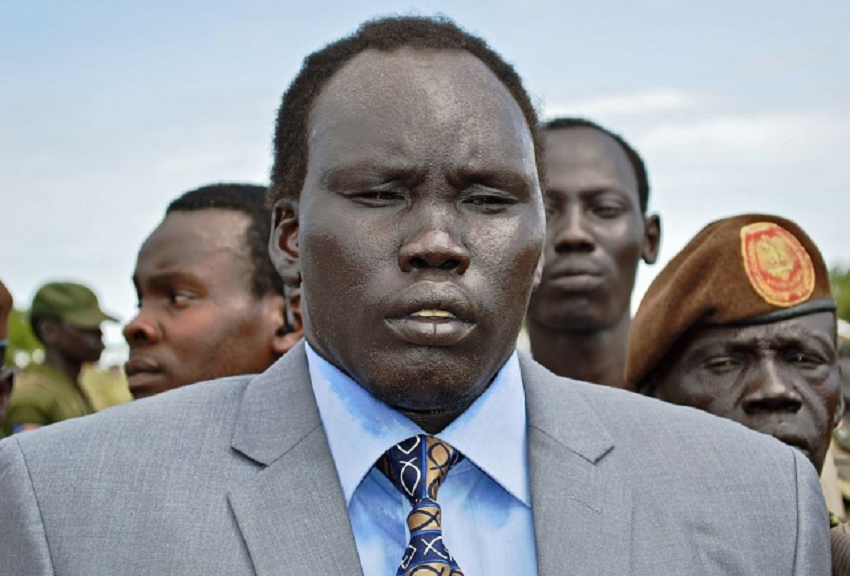
A senior South Sudanese official has sparked fresh concerns over press freedom after urging journalists to align their reporting with government language and become the “best friend” of authorities to steer clear of difficulties.
Speaking at a World Radio Day event in Juba on Friday, Deputy Minister of Information David Yau Yau told reporters and editors: “You don’t need to backbite the government. The best is you need to adopt the language that we want so that you become our best friend.”
He described the government as “one-way traffic,” warning that those who deviate from its direction should “prepare for problem.”
Yau Yau encouraged independent media to collaborate closely with the Ministry of ICT and the state broadcaster to pursue “shared national goals.”

He pressed Juba-based journalists to report from conflict zones, likening their role to military operations and calling it a necessary risk to deliver “the right information our people really need.”
However, he stressed strict limits on press freedom, stating authorities would guarantee expression only “up to the way that we want it” and cautioning against its “misuse.”
The remarks come amid South Sudan’s consistently poor rankings on global press freedom indices.
Rights groups have long documented harassment, arbitrary arrests, detention, and censorship of journalists, as well as attacks on media houses and internet disruptions during politically sensitive periods.
Yau Yau referenced the recently enacted cybercrimes and computer misuse bill as a mechanism to regulate online content.
On artificial intelligence in media, he said the government would “embrace” the technology but insisted it must be tightly controlled to promote national unity and prevent division.
Despite the warnings, he praised radio as the “heartbeat of South Sudan” and a critical bridge between the government and rural populations.
He advocated greater use of local languages in broadcasting—given the country’s more than 60 ethnic groups—and a reduced dominance of English.
“Together we build, together we inform, together we progress,” Yau Yau concluded, positioning the Ministry of ICT as a partner to the media sector.
World Radio Day, observed globally on February 13, was proclaimed by UNESCO in 2011 and adopted by the United Nations in 2012 to commemorate the founding of United Nations Radio in 1946.
The 2026 theme highlights radio and artificial intelligence, emphasising that AI is a tool—not a voice—and that trust is built by human broadcasters.
Radio remains the most accessible and cost-effective medium in South Sudan, reaching remote and marginalised communities where internet and television coverage is limited.