

The South Sudanese government has firmly rejected international demands for the immediate and unconditional release of suspended First Vice President Dr. Riek Machar, insisting that his fate lies solely with the judiciary and that the executive will not interfere in ongoing legal proceedings.
The statement came in response to a call by Nigeria during last week’s African Union High-Level Ad Hoc Committee for South Sudan (C5 Plus) meeting in Addis Ababa.
Nigeria urged the “immediate and unconditional release of the First Vice President, Riek Machar, as well as other detained opposition figures.
”The C5 comprises representatives from Algeria, Chad, Nigeria, Rwanda, and South Africa, chaired by South African President Cyril Ramaphosa.

The committee supports IGAD’s mediation efforts under the mandate of the AU Peace and Security Council.
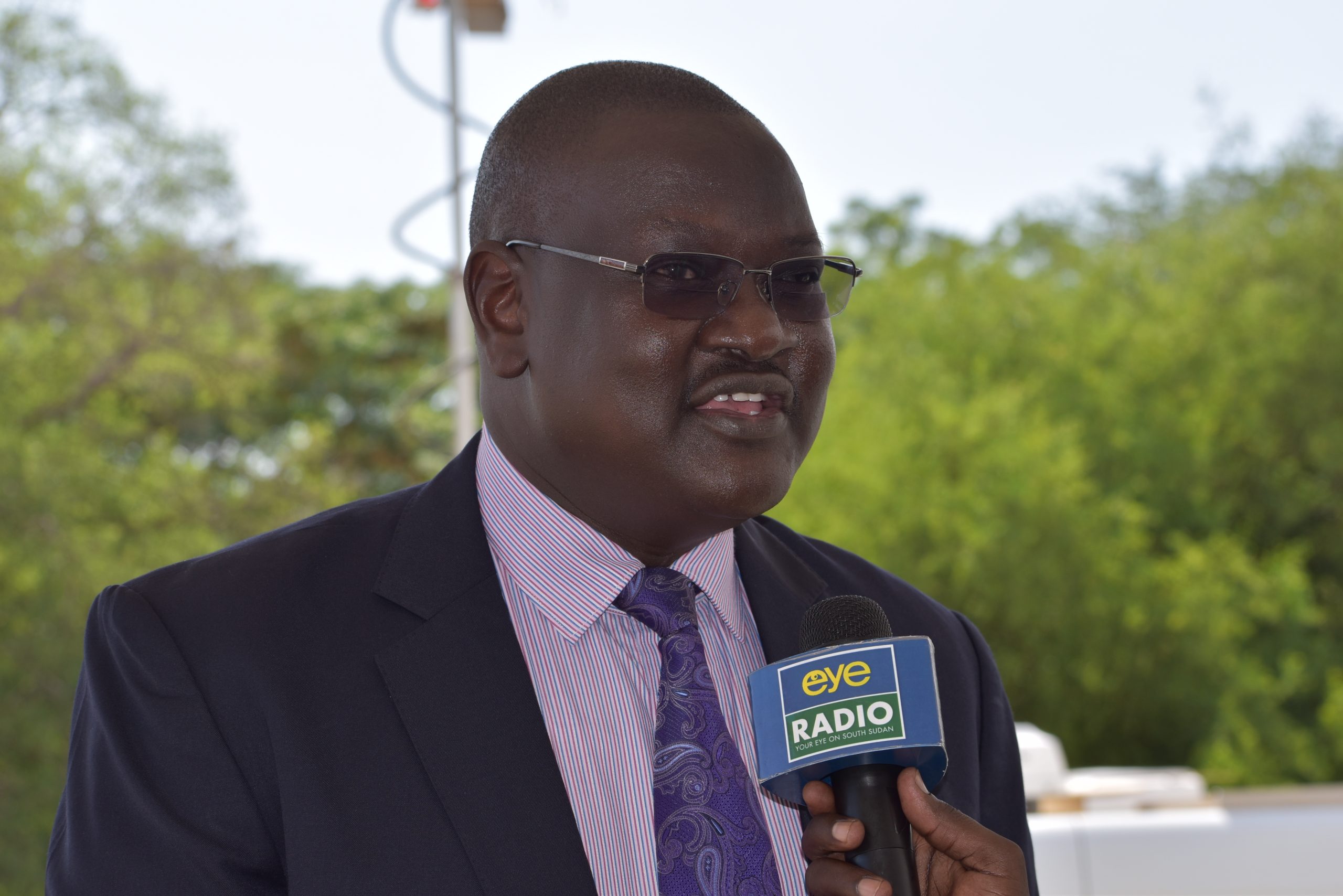
Minister of Information Ateny Wek Ateny told reporters in Juba that the government respects judicial sovereignty.
“The last recommendation is that nobody should interfere in the Republic of South Sudan’s sovereignty. That includes requests from other member states. Dr. Riek is under a competent court, and that court is the one trying him; the decision will come from that court,” Ateny said.
Machar, 73, has been under house arrest in Juba since March 2025 and has been on trial in a special court since September on charges of treason, murder, conspiracy, terrorism, and crimes against humanity.
Prosecutors allege he supported the White Army militia during clashes with government forces in Nasir, Upper Nile State.
The SPLM-IO denies any links to the militia.
His detention and prosecution have drawn criticism as potential violations of the 2018 Revitalised Peace Agreement, which reinstated him as First Vice President in a power-sharing arrangement.
The case has unfolded amid renewed violence and political deadlock.
Ateny dismissed Nigeria’s position as the view of “one individual member state” rather than an official AU stance.
“If I may tell you what transpired in Addis Ababa, you just quoted the view of one-member state. That was Nigeria’s view as part of the C5,” he said.
“One individual member state’s view cannot define the whole issue. The communique is about to be released, and I will not discuss its details before it is made public.”
Despite the crisis, Ateny affirmed that 13 of the 15 AU members support holding elections as scheduled in December 2026.
“All countries, except two of 15, have agreed that the South Sudan election must go on as planned. There is no other way for the government to draw its legitimacy,” he stated.
“Unless you are asking the government of South Sudan to step aside, which would invite anarchy, because the government controls the implementation of laws in the country.”
The government maintains that judicial independence must be upheld and that political disputes should be resolved through legal channels rather than external pressure.