



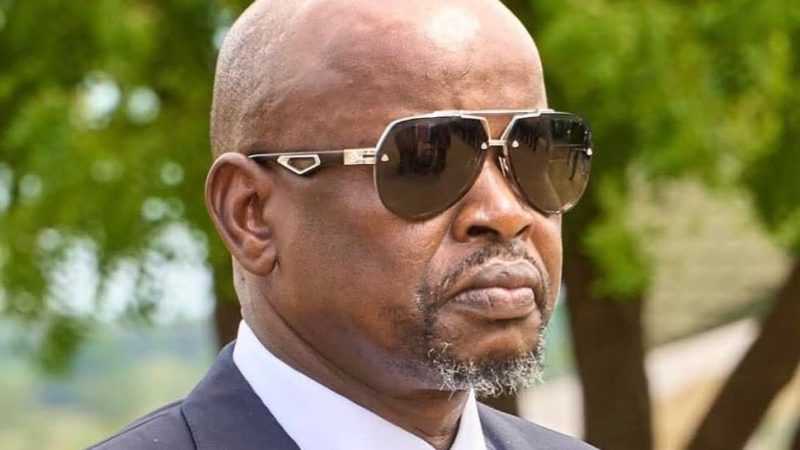


President Yoweri Kaguta Museveni has exercised his prerogative of mercy to pardon businessman Muhammad Ssebuufu, who was serving a prison sentence for his role in the 2015 murder of businesswoman Betty Donah Katusabe.
The pardon was confirmed by Uganda Prisons Service spokesperson Frank Baine in a WhatsApp message, stating it is contained in the President’s Communique dated February 21, 2026.
No further details on the rationale for the pardon were provided in the announcement.
Ssebuufu’s case dates back to October 21, 2015, when Katusabe was kidnapped from her home in Bwebajja along Entebbe Road and tortured to death at Pine Car Bond on Lumumba Avenue in Kampala.

The attack reportedly stemmed from a dispute over a Shs 9 million balance on a vehicle she purchased from Ssebuufu’s business.
The perpetrators also took her SIM cards and mobile phone valued at Shs 300,000.
In 2019, the High Court, presided over by Lady Justice Flavia Anglin Ssenoga (now retired), convicted Ssebuufu and seven others on charges including kidnapping with intent to murder, murder, and aggravated robbery.
Ssebuufu received 40 years in prison, while co-accused received sentences ranging from 7 to 40 years.
The court also ordered the convicts to pay Katusabe’s family Shs 100 million in compensation.
The convicted individuals were Ssebuufu, Godfrey Kayiza, Phillip Mirembe, Paul Tasingika, Yoweri Kitayimbwa, Damasseni Ssentongo, Shaban Odutu, and Stephen Lwanga (sentenced to 7 years as an accessory after the fact).
All except Lwanga appealed, arguing insufficient evidence and excessive sentences.
In 2021, the Court of Appeal — comprising Justices Fredrick Egonda-Ntende, Catherine Bamugemereire, and Christopher Izama Madrama — upheld the murder convictions for Ssebuufu, Kayiza, Mirembe, and Odutu but quashed convictions against Tasingika, Kitayimbwa, and Ssentongo due to lack of evidence placing them at the murder scene.
The Court also overturned the aggravated robbery and kidnapping convictions for the remaining convicts, citing insufficient proof of those elements.
Sentences were reduced: Ssebuufu’s term to 18 years, 1 month, and 9 days; Kayiza to 16 years, 10 months; Mirembe to 16 years, 11 months; and Odutu to 16 years, 5 months, after considering mitigating factors such as first-time offender status.
The Shs 100 million compensation award was upheld.
The prerogative of mercy, exercised under Article 121 of the Constitution, allows the President to pardon or commute sentences.
No official explanation for Ssebuufu’s pardon has been released by State House or the Prisons Service at the time of publication.
The decision has sparked mixed reactions, with some legal observers noting the rarity of such pardons in high-profile murder cases, while others await further clarification on the grounds for the exercise of mercy.