






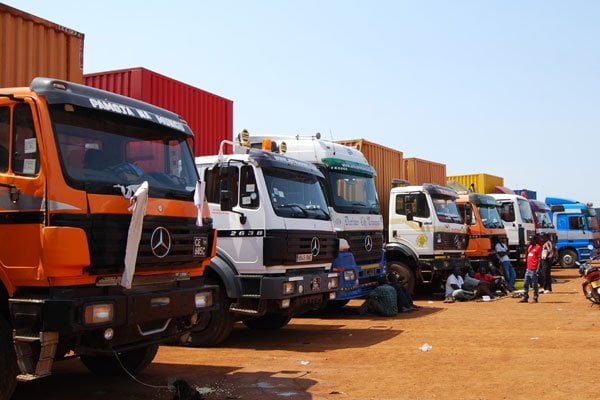
Uganda’s vital export corridor to South Sudan faces severe disruption after more than 1,000 trucks were left stranded at the Nimule border following South Sudan’s introduction of a new electronic permit levy ranging from $500 to $1,000 per truck or container.
Officials from the Ministry of East African Community Affairs described the situation as a “serious disruption” to cross-border trade when they appeared before Parliament’s Public Accounts Committee (PAC) on Thursday, February 26, 2026.
Leo Kizito Ojara, Commissioner for Economic Affairs, told MPs the e-permit requirement has triggered a near standstill in exports to Juba, South Sudan’s capital, and driven up commodity prices there.
“For the last couple of weeks, there has been an introduction of a new tariff by South Sudan called an e-permit,” Ojara said.

“One truck, one container, is expected to pay between 500 and 1,000 US dollars. The payment is excessive.”
South Sudan remains Uganda’s largest regional export market, receiving foodstuffs, construction materials, manufactured goods, and fuel.
Prolonged blockages at Nimule threaten export earnings, supply chains, and price stability in Juba.
Ojara reported sharp price increases in South Sudan’s capital, with sugar now retailing at UGX 10,000–15,000 per kilogramme due to shortages caused by the stranded trucks.
“There is a big problem at the border as supplies to Juba are in shortage,” he said, calling for urgent diplomatic intervention.
“In my view, we need a political solution. How quickly can you involve the Head of State in this matter? He should talk to his counterpart across the border.”
Permanent Secretary Edith Mwanje echoed the concern, warning that trade flows have slowed dramatically and essential goods prices are rising in Juba.
PAC Chairperson Gorreth Namugga described the levy as a major obstacle to regional integration, arguing it contravenes the spirit of the East African Community (EAC) Common Market Protocol, which promotes free movement of goods and services.
“This is a serious issue affecting our trade and economy,” Namugga said.
She criticised the ministry for not promptly communicating the crisis to exporters, noting many traders continued dispatching trucks to Nimule unaware of the standoff, risking avoidable losses.
Elijah Okupa (Kasilo County) urged immediate action, particularly for traders handling perishable goods vulnerable to spoilage.
The standoff comes amid broader regional integration challenges, including delayed EAC subscription payments by partner states and consultations on the draft EAC Political Confederation Constitution.
Under the EAC Treaty and Common Market Protocol, unilateral levies that sharply increase entry costs risk classification as non-tariff barriers, potentially triggering dispute resolution mechanisms within the bloc.
Trade experts warn that persistent barriers at key crossings like Nimule could erode business confidence and undermine efforts toward deeper EAC integration.