
Kampala has never lacked energy. On any given weekend, the city pulses with options; clubs, lounges, pop-ups, and parties competing for attention in an increasingly saturated nightlife ecosystem.
But every once in a while, something cuts through. Not because it is louder, but because it is sharper. More intentional. More in tune with where culture is moving. That, is exactly what unfolded at Muyenga Quarry on April 11th, when Club Canvas, an experience by Club Pilsener under Nile Breweries Limited in collaboration with TBWA Uganda and Swangz Avenue, transformed an unlikely location into one of the most talked-about cultural moments the city has seen in recent memory.
From a broader cultural standpoint, Club Canvas signals a shift away from transactional nightlife toward what can be described as experience-led cultural ecosystems. Today’s audiences, particularly urban youth, are no longer satisfied with passive consumption. They are seeking spaces that enable participation, identity expression, and social currency. In that context, the first edition of Club Canvas did not just respond to a trend; it anticipated a behavioral shift and built around it.
From the outset, the experience did not behave like a typical event. There was no oversaturation of messaging, no predictable rollout, no easy access. Instead, it leaned into intrigue. Invitations were earned, not bought but distributed through campus activations, nightlife touchpoints, and digital engagement. The result was a carefully built audience long before a single speaker was switched on at the Quarry. By the time the night arrived, the crowd was not just attending but invested.

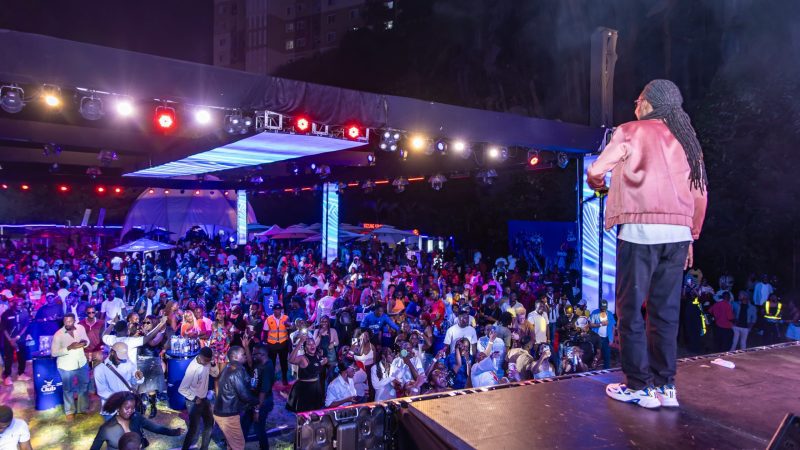
Muyenga Quarry is not where you expect to find a defining nightlife experience, but that was precisely the point. Club Canvas took a raw, industrial space and reimagined it completely, anchoring the experience around a striking visual statement, a glowing Hollywood-style sign stretching across the landscape, illuminating the night sky and signaling something cinematic, something larger than the ordinary. It was a bold gesture, one that immediately reframed expectations. This was not a party adapting to a venue, but a concept transforming it.
Inside, the Quarry became exactly what the name promised, a canvas. But not in the passive sense. This was a living, evolving canvas shaped by the people within it. Music, art, fashion, and technology did not exist as separate elements; they collided, overlapped, and fed into one another, creating an ecosystem of expression that felt fluid and immersive. This kind of multi-sensory convergence is increasingly becoming the benchmark for next-generation experiences, where the value lies not in any single element, but in how they interact to create meaning.
The experience began the moment guests walked in, and it never asked them to stand still. There were no fixed vantage points, no singular focal stage competing for attention. Instead, the space encouraged movement, exploration, and interaction. A tattoo station added an edge that felt both rebellious and personal. Live neon body art transformed guests into participants, turning skin into statement and the crowd into a moving gallery. This was not art confined to walls, as it lived, shifted, and responded to the energy of the night.
Technology played its role with equal intention. In a generation where moments are not just lived but shared in real time, Club Canvas leaned into that behavior without letting it dominate the experience. Content creation was seamless, almost instinctive. Lighting, installations, and spatial design worked together to create an environment where every angle felt deliberate. Every frame captured was part of a larger narrative. The result was immediate digital amplification which wasn’t forced, but organic. In many ways, this reflects a deeper shift toward what can be termed “co-created visibility,” where audiences are not just consumers of content but active distributors of brand and cultural narratives.
At the core of it all was the music. It did not sit in the background. It drove everything. From the early sets guided by MC Pest to the layered sounds of DJs Vanns and Trizzy, the progression felt carefully constructed. Each transition carried the crowd forward without disruption, building momentum in waves rather than spikes. Performances from Zagazillions, Fyno UG, XHAVI, and Aaronix added texture and variety, each act bringing a distinct energy that kept the experience dynamic.
Then came Kohen Jayce, whose set shifted the emotional register of the night. In a space defined by movement and intensity, his soulful RnB performance created a pause that felt almost cinematic. It drew the crowd inward, creating a shared moment that contrasted beautifully with the surrounding energy. It was a reminder that immersion is not only about scale but also about depth. That contrast was essential. And just as the night risked settling into that softness, MC Viana Indi and DJ Roja stepped in and reignited the room, lifting it back into a high-energy close that felt both earned and necessary.
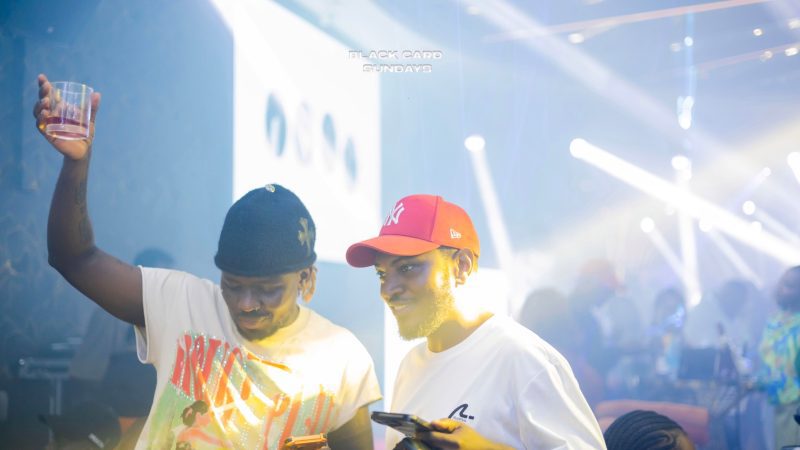
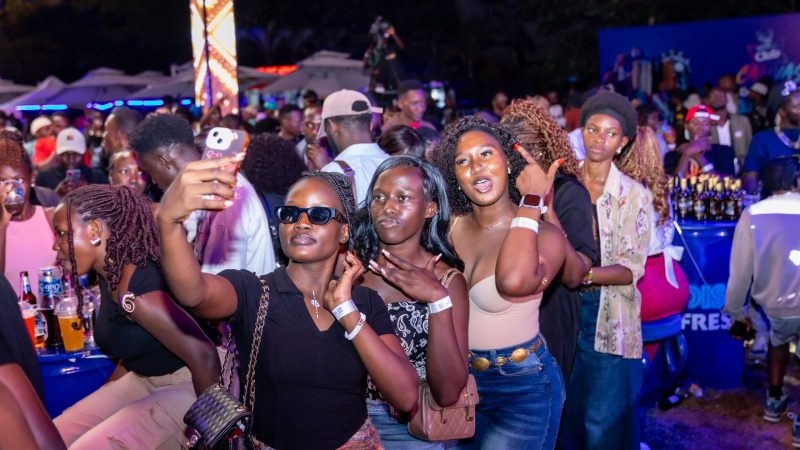
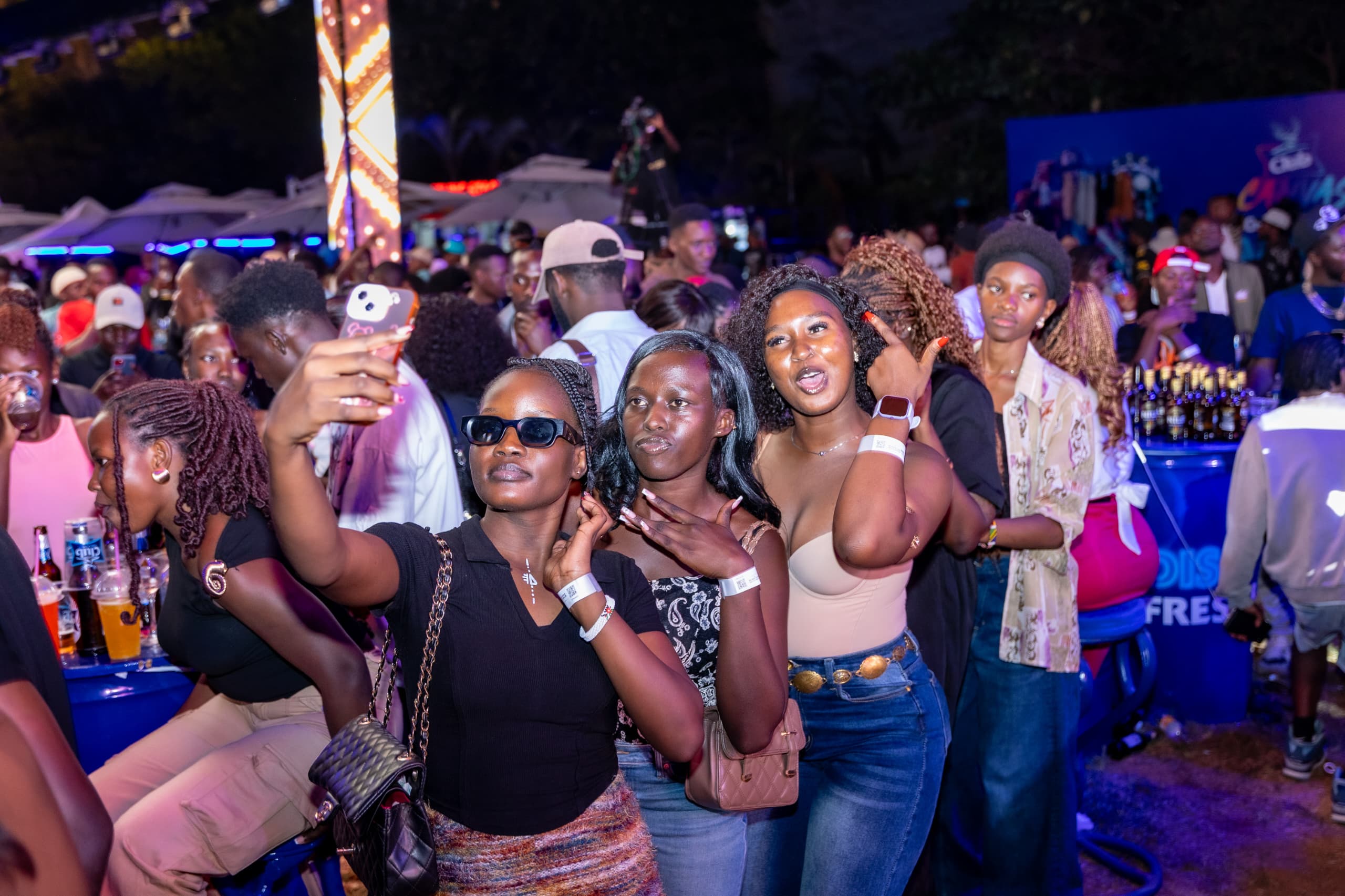
But perhaps the most defining element of Club Canvas was not the programming or the production. It was the people. This was never meant to be for everyone. And that was its strength. The guest list was intentionally curated; campus tastemakers, young professionals, creatives, and cultural drivers aged between 19 and 30. People who are not just consuming culture, but actively shaping it. The result was a crowd that did not need convincing. They arrived aligned with the experience, and in many ways, they completed it.
Style was not an afterthought, it was central. Collaborations with fashion platform Threaded and the presence of a curated pop-up fashion stall turned the space into a moving showcase of personal expression. Every corner became a moment. Every interaction, a statement. The Quarry was not just filled with people, it was animated by them.
This is where Club Canvas begins to move beyond the definition of an event and into something more significant. It represents a shift in how brands engage with youth culture. Rather than simply inserting themselves into existing spaces, platforms like Club Canvas are creating new ones. Spaces that enable discovery, visibility, and participation. Emerging artists, DJs, designers, and creatives are not just given a stage; they are integrated into an ecosystem that amplifies their presence organically.
In many ways, Club Canvas feels like a response to where Kampala is right now. A city with a young, expressive population that is increasingly confident in defining its own cultural identity. A generation that does not wait for validation, but creates its own moments. And a landscape where the lines between music, fashion, art, and technology are no longer fixed.
What happened at Muyenga Quarry was not just a successful night. It was a proof of concept. That exclusivity, when done right, does not alienate, it elevates. That audiences are willing to invest more deeply in experiences that feel intentional. That culture cannot be manufactured, but it can be curated.