







The 8th Annual Insurance Brokers Association of Uganda (IBAU) Conference in Mbarara convened at a defining moment for the country’s insurance sector, one marked by steady growth, yet persistent questions around relevance, accessibility, and, most critically, trust. Held under the theme “Trust Reimagined: Delivering on the Promise,” the gathering drew regulators, insurers, brokers, and regional players into a candid examination of the industry’s future. At the heart of the proceedings was Mirai General Insurance, whose role as platinum sponsor extended beyond visibility into shaping the tone and urgency of the conversation.
Mirai’s Chief Executive Officer, Joseph Nsubuga, delivered a message that cut through the optimism often associated with such forums. Trust, he argued, is not an abstract ideal but a measurable outcome, one that is earned or lost at the point of service delivery. His remarks placed particular emphasis on claims settlement, long regarded as the industry’s litmus test. By committing to a 24-hour claims payment benchmark, Mirai is seeking to reposition itself, and, by extension, the wider market, around speed, transparency, and accountability. In doing so, the company framed efficiency not merely as a competitive advantage, but as a prerequisite for restoring confidence in insurance.
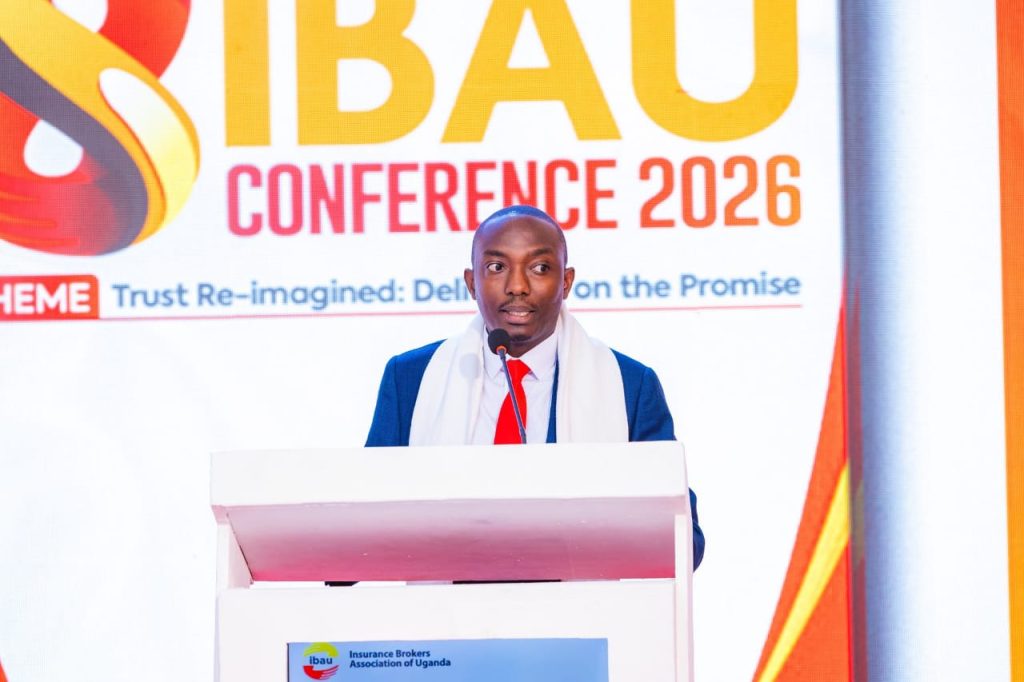
That argument found resonance across the conference, particularly as stakeholders reflected on Uganda’s enduring insurance penetration challenge. Despite gross written premiums rising to over UGX 2 trillion in 2025, uptake remains below 1% of GDP. The disconnect is stark: a sector demonstrating growth in financial terms, yet struggling to secure a place in the everyday economic decisions of households and small businesses. For many participants, this gap highlighted a deeper issue, not simply awareness, but credibility.
In his keynote address, Augustus Nwagaba, the Deputy Governor of the Bank of Uganda situated the insurance conversation within the broader architecture of economic stability. He described trust as the invisible infrastructure underpinning financial systems, noting that insurance, like banking, depends on public confidence to function effectively. While acknowledging improvements in claims ratios, now approaching 50% of premiums, he cautioned that incremental progress would not be sufficient. The sector, he argued, must pivot toward inclusion, designing products that speak to the realities of informal workers, small enterprises, and underserved communities. Simplification, innovation, and ethical conduct, he suggested, will determine whether insurance can transition from a peripheral service to a central pillar of economic resilience.

Regulatory direction, too, is evolving in response to these demands. IRA CEO, Alhaj Kaddunabbi Ibrahim Lubega outlined a framework that seeks to balance oversight with enablement, emphasizing risk-based supervision, strengthened conduct standards, and targeted support for microinsurance. His remarks signaled a regulator increasingly attuned to the need for flexibility, particularly in an era defined by technological disruption and shifting consumer expectations. The challenge, as articulated during the conference, lies in ensuring that innovation does not outpace safeguards, even as regulation avoids stifling progress.
Within this context, Mirai’s positioning appeared deliberate. Its emphasis on streamlined processes, digital integration, and broker collaboration mirrors many of the priorities identified during the conference. More notably, its messaging aligned closely with the event’s central theme, reinforcing the notion that trust must be operationalized rather than merely invoked. By engaging directly with brokers and committing to faster turnaround times, the company is effectively testing whether performance-led strategies can begin to close the industry’s credibility gap.
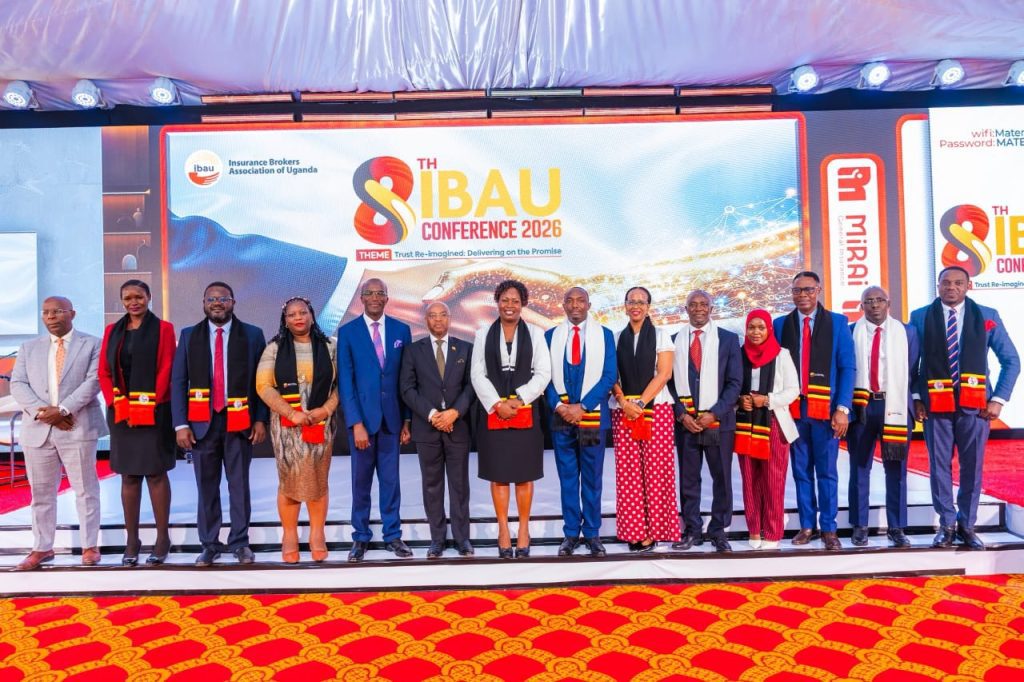
Regional perspectives added further depth to the discussions. Contributions from across East Africa highlighted the uneven nature of insurance development, with more mature markets demonstrating higher broker participation and stronger penetration levels. These comparisons served less as benchmarks than as indicators of what is possible, particularly when trust, professionalism, and consumer understanding are effectively aligned.
The role of brokers emerged as one of the clearest through-lines between past and present conversations. Building on themes from the 7th IBAU Conference in 2025, this year’s deliberations reinforced their status as more than intermediaries. Brokers are increasingly seen as custodians of trust, responsible for translating complex products, advising clients, and ensuring that policies deliver as promised. Their influence, participants noted, will be central to any meaningful expansion of insurance beyond corporate clients into the broader economy.
What ultimately distinguished the 8th conference was its shift in tone. Where previous engagements leaned heavily on identifying trends such as digital transformation, ESG integration, regulatory reform, this year’s discussions were more pointed, more practical. The emphasis moved from what the industry could become to what it must now do. Trust, in this framing, is both the objective and the measure of success.

As proceedings drew to a close, a cautious sense of direction emerged. Uganda’s insurance sector, buoyed by macroeconomic stability and regional integration, is not short on opportunity. Yet its trajectory will depend less on ambition than on execution. Delivering on promises, consistently, transparently, and at scale remains the industry’s most pressing task.
For Mirai General Insurance, the conference provided a platform to articulate that challenge, but also to position itself within the solution. In a sector where perception has often lagged behind potential, the company’s approach suggests that restoring trust may ultimately depend on something far simpler: doing what is promised, and doing it well.