



A growing disagreement has emerged between South Sudan’s transitional government and the Reconstituted Joint Monitoring and Evaluation Commission (R-JMEC) over proposed amendments to the 2018 Revitalised Agreement on the Resolution of the Conflict in South Sudan (R-ARCSS).
R-JMEC, a 43-member body established under the 2018 peace deal, is responsible for monitoring the implementation of the agreement that ended a five-year civil war.
It includes representatives from the transitional government, opposition groups, civil society, regional guarantors, and international partners such as the African Union, IGAD member states, and the United Nations.
The commission is structured to balance domestic and international stakeholders, with voting membership drawn from signatory parties, South Sudanese non-state actors, regional representatives, and international partners.

At the heart of the dispute is the government’s decision to proceed with amendments to the peace agreement without what R-JMEC describes as its mandatory approval under Article 8.4 of the R-ARCSS.
The coalition government, now largely controlled by groups aligned with President Salva Kiir’s SPLM party, maintains that all parties to the 2018 agreement have already endorsed the need for amendments to facilitate long-delayed elections scheduled for December 2026.
It accuses R-JMEC of overstepping its mandate and obstructing preparations for the polls.
R-JMEC, however, insists it is simply enforcing compliance with the peace agreement and that its endorsement is a required procedural step.
Dispute Over Procedure
Under Article 8.4 of the R-ARCSS, any amendment to the agreement must be approved by at least two-thirds of the Council of Ministers of the Revitalised Transitional Government of National Unity (RTGoNU) and at least two-thirds of R-JMEC’s voting members, before being ratified by the Transitional National Legislature (TNL).
Parliamentary documents show that Justice and Constitutional Affairs Minister Michael Makuei Lueth submitted the proposed amendments to R-JMEC on January 15, 2026.
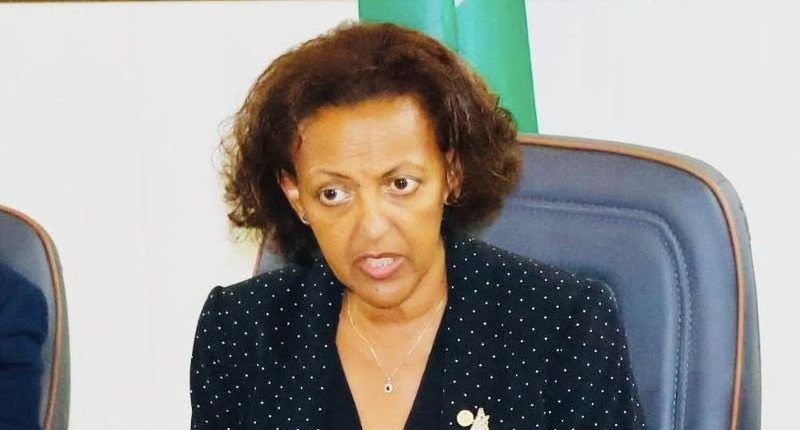
In a response dated February 26, 2026 (Ref: R-JMEC/C/2026/1/065), R-JMEC interim chairperson George Owinow raised “very serious concerns,” stating that consultations indicated a majority of commission members opposed the proposed amendments.
Makuei told parliament on April 21 that the R-JMEC leadership’s position amounted to obstruction.
He argued that the commission lacks a dispute-resolution mandate and cannot block government policy decisions.
He also described the peace agreement as “originally defective” because it does not provide arbitration mechanisms to resolve institutional deadlocks.“
The conduct of the chair is a mere obstruction and a clear violation of the provisions of Article 8.4 of the Agreement,” Makuei said in his submission to lawmakers.
R-JMEC has previously warned, in correspondence cited by government officials, that bypassing established procedures could undermine trust among signatories and weaken the legal framework of the accord.
Proposed Amendments
The government’s proposal seeks to amend three chapters and one annex of the 2018 peace agreement, using terms such as “delete,” “repeal,” and “substitute” to revise provisions related to elections, constitutional sequencing, and the legal hierarchy of the accord.
Key changes include:
- Amending Article 1.2.5 to require completion of amendments to the Transitional Constitution before the end of the transitional period, effectively separating elections from the permanent constitution-making process.
- Deleting Article 1.2.14.
- Revising Article 1.20.5 to require the National Elections Commission (NEC) to conduct elections 60 days before the end of the transitional period under the amended Transitional Constitution.
- Repealing Article 6.4, which requires completion of a permanent constitution within 24 months and guides the conduct of elections.
On voter registration, Article 1.20.10 would be amended to reduce the deadline for publishing the voter register from six months to three months before elections.
In a significant legal shift, Articles 8.2 and 8.3 in Chapter VIII — which establish the supremacy of the 2018 peace agreement over national laws and the Transitional Constitution in case of conflict — would be deleted.
The chapter title would also be revised to remove reference to supremacy, leaving only “Procedures for Amendment of the Agreement.”
Provisions in Annex D linked to the Elections Act would be revised to align with the amended Transitional Constitution rather than a future permanent constitution, with several implementation timelines shortened from six to three months.
The government argues that the peace deal is structurally flawed due to the absence of arbitration or enforcement mechanisms, which has led to repeated institutional deadlocks.
A cabinet resolution dated April 17, 2026 (Resolution No. 12/2026) authorised the Ministry of Justice to submit the amendments directly to parliament after R-JMEC declined to endorse the changes.
The plan also draws on earlier decisions, including an Expanded Presidency meeting in December 2025 and Council of Ministers Resolution No. 15/2025, both of which supported holding elections in December 2026 even if constitution-making remains incomplete.
The government maintains that stakeholders agreed elections should proceed “with no further extension,” with outstanding constitutional issues to be addressed after the vote.
R-JMEC, however, insists that Articles 1.9.4 and 8.4 of the agreement require full consultation, consensus, and approval among all signatory parties before any amendment can proceed.
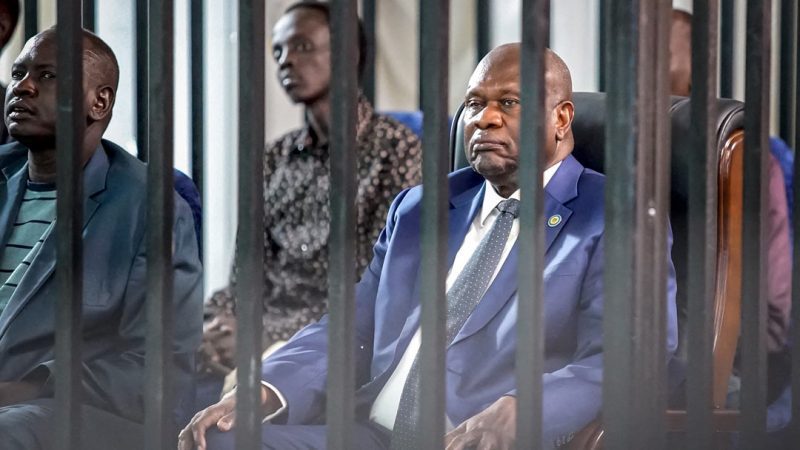
Opposition officials aligned with detained First Vice President Riek Machar, who faces treason charges, claim they were not consulted in the process.
Machar is a key signatory to the 2018 peace agreement.
The cabinet’s decision to authorise direct submission to parliament has raised concerns among peace stakeholders that core safeguards in the 2018 agreement are being weakened.
South Sudan has repeatedly missed electoral deadlines since gaining independence in 2011.
The 2018 peace agreement ended a conflict that killed an estimated 400,000 people, but implementation has been slowed by delays, mistrust, and disputes among the parties.
With elections scheduled for December 2026, the widening rift between the transitional government and R-JMEC highlights continued uncertainty over whether the country’s long-delayed democratic transition will proceed as planned or face further delays.