

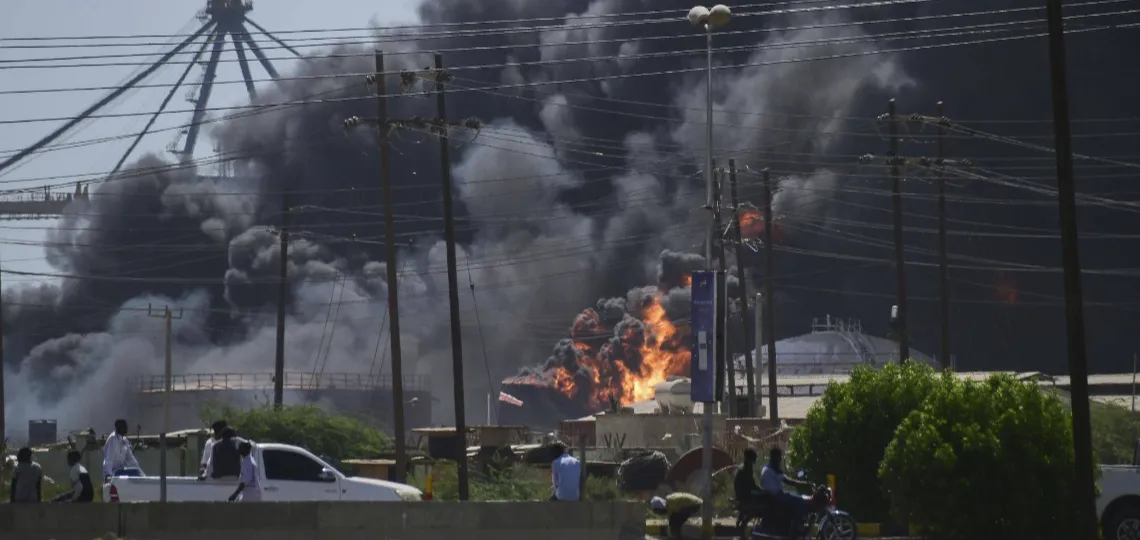
At least seven South Sudanese soldiers were killed in a drone strike by the Sudanese army at the Heglig oilfield, officials confirmed, despite a tripartite agreement granting South Sudan’s forces responsibility for securing the site following its capture by the Rapid Support Forces (RSF) earlier this week.
The RSF seized Heglig, Sudan’s largest oilfield, on Monday as the paramilitary group continued to advance against the Sudanese Armed Forces (SAF) in the country’s oil-rich south. After the takeover, South Sudan’s state television aired footage showing SSPDF soldiers alongside RSF fighters in Heglig, as well as Sudanese army troops moving into South Sudanese territory after withdrawing from the oilfield.
Heglig, a small town on the border between Sudan’s South Kordofan state and South Sudan, contains some of Sudan’s most critical oil facilities, including approximately 75 wells, storage tanks, and processing stations. The field produces between 80,000 and 100,000 barrels of oil daily for both Sudan and South Sudan. A pipeline to Port Sudan passes through the area, meaning that the loss of Heglig poses a serious blow to the Sudanese government’s revenue, including fees collected for the transit of South Sudanese oil.
The oilfield is a key point along the 1,600-kilometer Greater Nile Oil Pipeline, which transports crude from South Sudan’s Unity oilfield to Port Sudan for export.

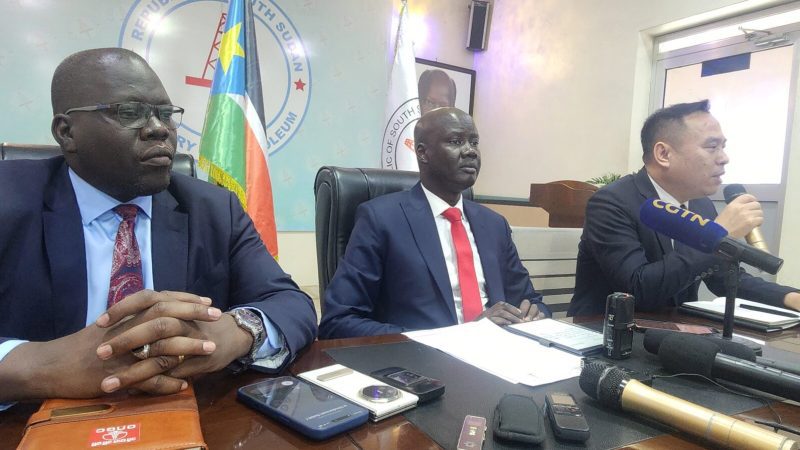
Senior SSPDF officer Santo Domic told reporters that Tuesday’s drone strike killed seven South Sudanese soldiers and destroyed a vehicle mounted with a heavy machine gun. He also said that 10 rifles belonging to the fallen troops were damaged.
Domic stressed that the attack occurred despite an agreement reached between Sudanese army leader Gen. Abdel-Fattah al-Burhan and RSF commander Gen. Mohammed Hamdan Dagalo. RSF forces had reportedly withdrawn from Heglig on Monday. He added that the incident would be addressed by leadership from both countries.
SSPDF Chief of Defence Forces Gen. Paul Nang Majok visited Heglig and confirmed the tripartite agreement, which places primary responsibility for the oilfield’s security on South Sudan’s forces amid rising instability.
“The agreement was reached by the leadership of South Sudan, led by Gen. Salva Kiir, Sudanese army leader Gen. Abdel Fattah al-Burhan, and RSF leader Gen. Hemedti,” Majok said. “They agreed that this oilfield must be protected due to its strategic importance to both Sudan and South Sudan.”
Under the arrangement, both the Sudanese army and RSF are required to withdraw from Heglig, leaving the SSPDF solely responsible for its protection. Gen. Majok noted that the deal is part of broader efforts to stabilize the border region and safeguard critical oil infrastructure.