
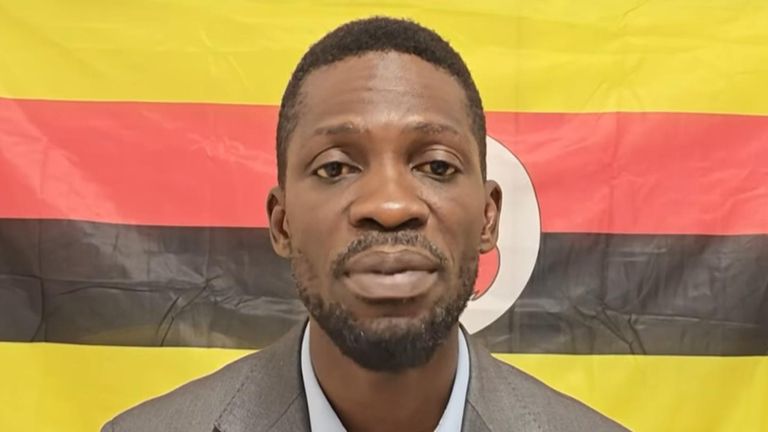
Uganda’s opposition figure Robert Kyagulanyi, widely known as Bobi Wine, has informed the BBC that he will not pursue a legal challenge to Thursday’s presidential election outcome in court. He expressed deep distrust in the judiciary’s independence and instead encouraged his backers to organize peaceful street demonstrations.
In the interview conducted while in hiding, the 43-year-old former musician affirmed his resolve to keep opposing President Yoweri Museveni, even amid fears for his personal safety.
“The judiciary in Uganda is captured and we encourage Ugandans to use any legal means to fight back and protect their democracy,” stated Wine.
President Museveni, secured a decisive victory and has labeled the opposition’s efforts to dispute the outcome as attempts to incite violence, branding them “terrorists.”

Official results from the Electoral Commission showed Museveni receiving 71.65% of the votes, while Kyagulanyi, his primary rival, obtained 24.72%.
Kyagulanyi insists the figures are fabricated and has referenced instances of ballot stuffing, though without offering specific proof.
In the BBC discussion, he criticized security personnel for blocking food deliveries to his family residence in a Kampala suburb, where his wife and relatives remain effectively confined under house arrest.
He explained that he escaped the property on Friday night amid a security forces operation.
“We reject those results because they are fake and they don’t in any way reflect the voting pattern. They are completely different from the results in the electoral on the polling stations and on the declaration forms,” Wine told the BBC from an undisclosed site.
The Uganda Human Rights Commission (UHRC) noted that while certain “technical and procedural” issues occurred on election day, these did not compromise the vote’s overall credibility.
African Union (AU) election monitors reported observing no signs of ballot stuffing but strongly criticized the prolonged internet blackout, which was lifted only hours after Museveni’s victory was proclaimed on Saturday.
Following his defeat to Museveni in 2021, Kyagulanyi initially filed a petition contesting the results but later withdrew it, pointing to perceived judicial prejudice and lack of neutrality.
Having now lost his second presidential attempt, he has also claimed an ongoing “silent massacre” involving crackdowns on political activists.
In a social media update, he asserted that election-related violence had claimed over 100 lives, without presenting supporting evidence.
On Monday, via a post on X, Uganda’s army chief General Muhoozi Kainerugabastated that security forces had killed 22 opposition supporters in violence tied to the polls.
Gen. Kainerugaba issued a direct warning to Kyagulanyi, granting him “exactly 48 hours to surrender himself to the police.”
“If he doesn’t we will treat him as an outlaw/rebel and handle him accordingly,” he declared.
During his BBC conversation, Kyagulanyi recounted fleeing after receiving intelligence that security operatives intended to “attack” him.
“They jumped off my fence and cut off my electricity and the surveillance cameras. I saw it dangerous for me to stay around,” he described, noting he has avoided public appearances for several days.
“You have heard Museveni’s son promising to harm me. He has promised to harm people and… he has delivered to it. You have read his recent tweets. That’s why I have to be careful with myself,” he added.
Although internet access resumed late Saturday, Kyagulanyi reported being unable to contact his wife due to signal interference devices operating near the home.
Police have refuted claims of raiding the opposition leader’s residence, maintaining that any security presence was intended to safeguard him in his capacity as a presidential contender.
Kyagulanyi advocated for a “peaceful change” in leadership, stressing that demonstrations represent a constitutional entitlement.
“We encourage Ugandans to evoke any constitutional means to fight back,” he emphasized.
On Tuesday, Kampala Metropolitan Police Chief Liaison Officer SSP Donald Muhwezi informed local media that authorities have no interest in tracking Wine’s location, “as long as he is safe.”
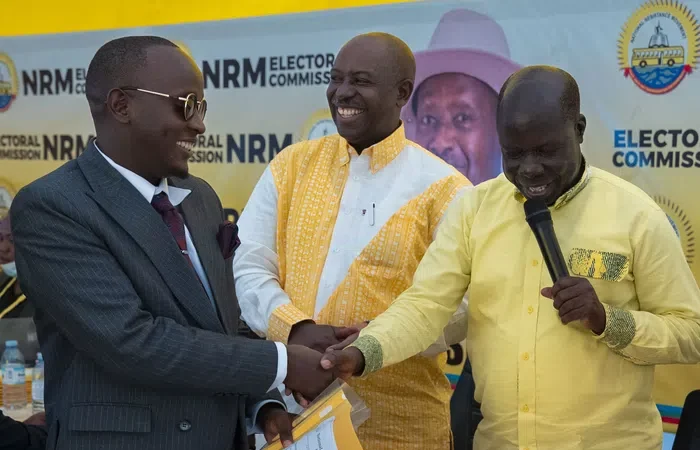
In his victory address on Sunday, Museveni highlighted the triumph as evidence of his National Resistance Movement (NRM) party’s enduring strength.