
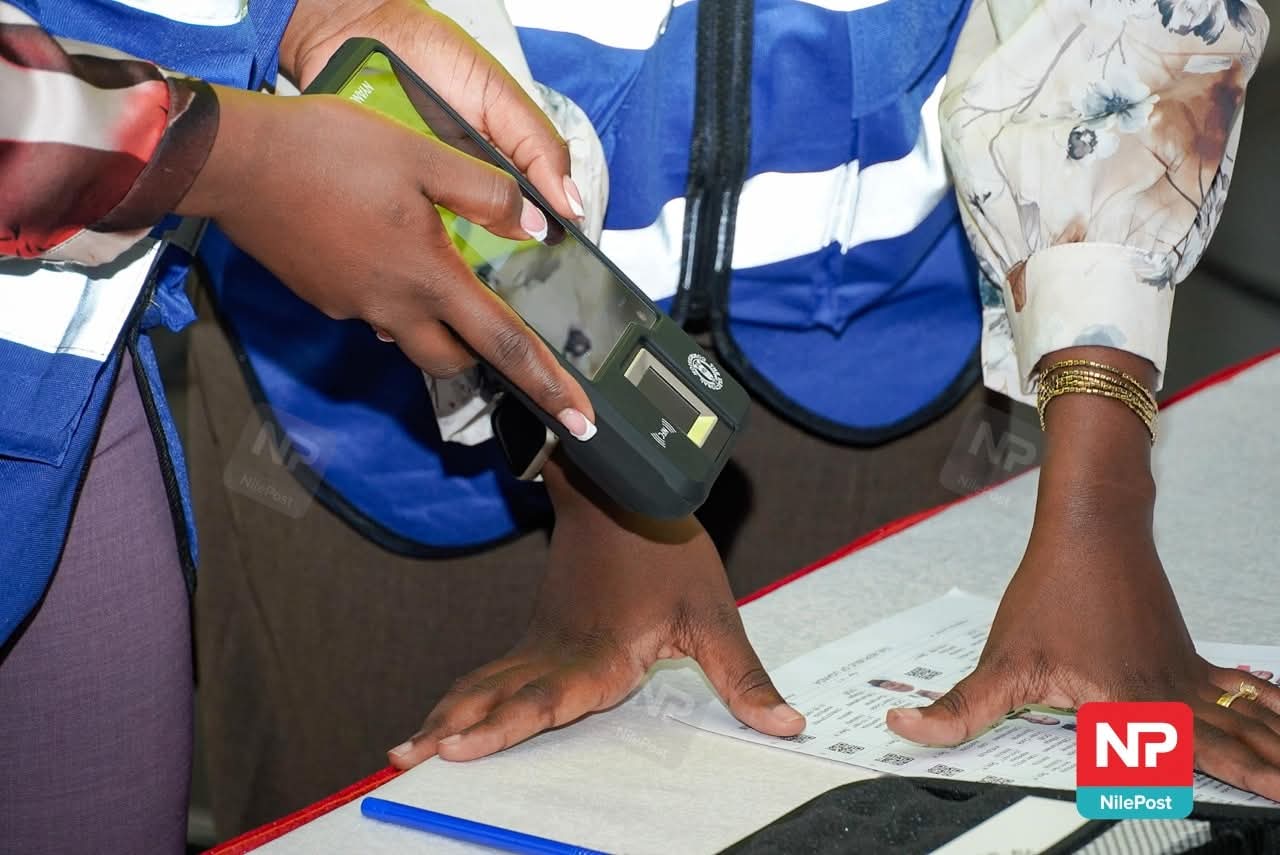
As Uganda heads into the next phase of voting this Thursday, the Electoral Commission (EC) has moved to clarify public concerns around the performance of the Biometric Voter Verification Kits (BVVKs), stating that the machines worked successfully wherever they were deployed correctly.
According to the information obtained by this website from sources that prefer to stay anonymous, BVVKs were operational in 16 districts, where they verified voters smoothly and securely, with no technical failures recorded.
“The BVVK machines worked. Where they were used, they verified voters successfully. Challenges experienced were not technical failures, but administrative and logistical gaps,” a source confirmed.
Demonstrated to Parties, Media and Observers Before Voting Day

In an effort to build confidence and transparency ahead of voting, the EC successfully demonstrated operational BVVK machines multiple times to political parties, members of the media, and election observers, a move meant to assure stakeholders that the technology was functional, secure, and ready for use.
The demonstrations showcased the kits’ ability to authenticate voters using biometric data and confirmed that the machines were capable of supporting a smooth verification process when operators, access credentials, and logistical deployment were properly coordinated.
What Caused the Gaps?
The gaps experienced in some areas have been attributed to administrative and logistical challenges, rather than machine failure.
These included:
• Delayed deployment of operators
• Late delivery of access codes required to activate the kits
Where these issues occurred, the Commission said polling officials relied on manual voter registers as a contingency measure to ensure that eligible voters were not turned away.
Manual Registers Were a Backup, Not a Breakdown
The Commission emphasised that manual registers were only used in situations where operators or access codes were unavailable in time, and not because the kits were defective.
In districts where the machines were fully supported with trained operators and proper activation credentials, biometric verification reportedly proceeded as designed, verifying voters efficiently and reinforcing the credibility of the process.
Same Machines to Be Used Again This Thursday
The EC has confirmed that the same BVVK machines will be used again this Thursday, noting that the kits are not a one-off procurement but a long-term national investment.
The Commission says the BVVKs are designed to serve Uganda’s elections for some time, making them a critical asset for future electoral cycles.
Rebuilding Public Trust Through Facts
With misinformation and speculation spreading rapidly on social media, the Commission says it is prioritising factual clarity and public reassurance through coordinated media engagement and stakeholder communication.
The message, officials insist, remains clear: the BVVK technology is reliable, and where challenges occurred, they were due to logistical gaps that are being addressed ahead of Thursday’s vote.
Bottom line: BVVKs worked where deployed correctly and Uganda’s electoral process is expected to benefit even more as administrative coordination improves.