

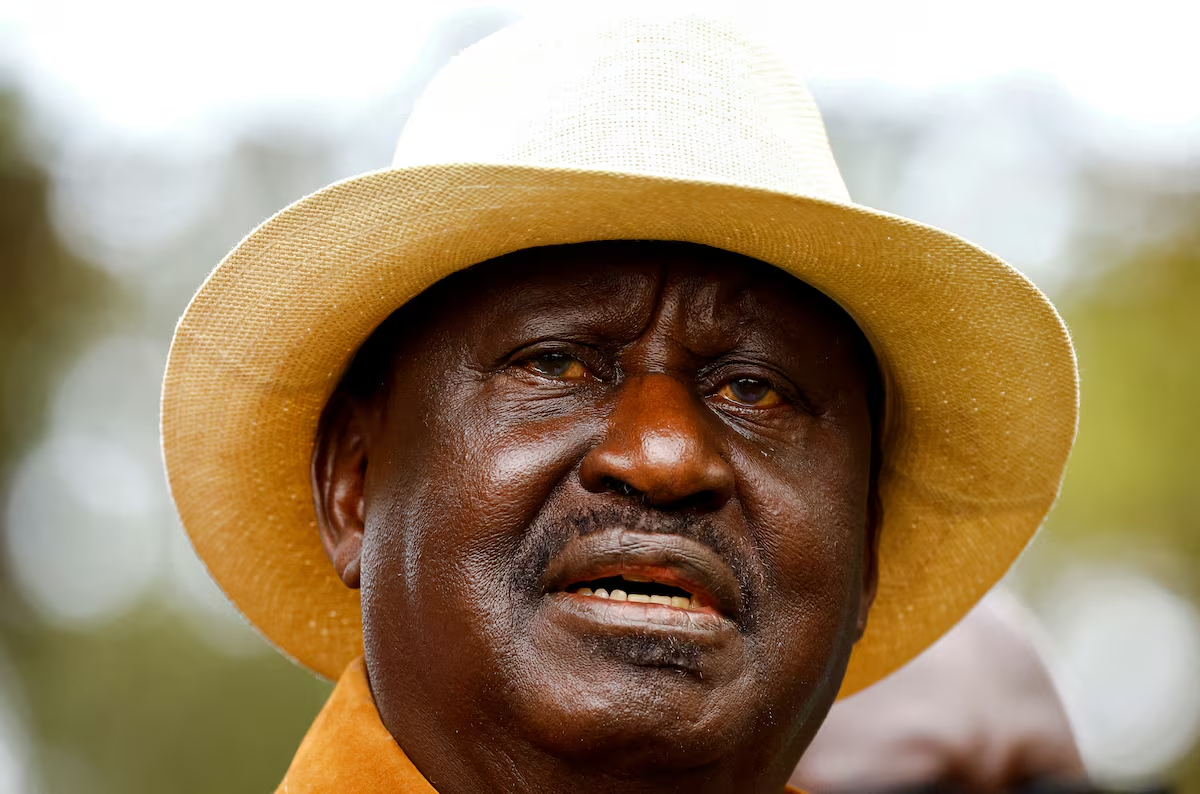
Kenya is in mourning following the death of former Prime Minister and veteran opposition leader Raila Amolo Odinga, who passed away in India, where he had been receiving medical treatment. He was 80.
According to a statement released by his family early Wednesday, Odinga died at a hospital in New Delhi after suffering a cardiac arrest. The family said he had been admitted for a routine check-up but developed complications on Tuesday evening.
“It is with profound sadness that we announce the passing of our beloved father, husband, and patriot, the Right Honourable Raila Amolo Odinga,” the statement read. “He dedicated his life to the struggle for democracy, justice, and equality for all Kenyans. We ask for privacy as we mourn this immeasurable loss.”
The Kenyan government has declared a seven-day period of national mourning, during which flags will fly at half-mast. President William Ruto, in a televised address, paid tribute to Odinga as “a towering statesman whose contribution to Kenya’s democracy will never be forgotten.”

“Even when we disagreed politically, I respected his courage and deep love for our country,” Ruto said. “Kenya has lost one of her greatest sons.”
A Lifetime of Political Struggle
Raila Odinga was one of the most influential and controversial figures in Kenya’s modern history. The son of independence hero and Kenya’s first vice president Jaramogi Oginga Odinga, Raila spent decades in the trenches of opposition politics, fighting for multiparty democracy and good governance.
He was detained several times during the one-party rule of President Daniel arap Moi in the 1980s, emerging as a national symbol of resistance. After Kenya transitioned to multiparty democracy in 1992, Odinga became a central figure in shaping the opposition and later served as Prime Minister in a power-sharing government with President Mwai Kibaki between 2008 and 2013, following the disputed 2007 elections that plunged the country into violence.
Odinga unsuccessfully contested the presidency five times — in 1997, 2007, 2013, 2017, and 2022 — but remained a key political force and an enduring advocate for democratic reforms across Africa.
Tributes Pour In
Tributes have poured in from across the continent and beyond. Former Nigerian President Olusegun Obasanjo, a close ally of Odinga, described him as “a true Pan-Africanist whose courage inspired millions.” Uganda’s opposition leader Robert Kyagulanyi, also known as Bobi Wine, called Odinga “a father figure to freedom fighters across Africa.”
In Nairobi, Kisumu, and other towns, supporters gathered in public squares waving flags, chanting his name, and lighting candles in his honor. “Baba has left us, but his spirit will live on,” said Millicent Onyango, a supporter in Kisumu.
A Nation in Grief
Plans for Odinga’s repatriation and state funeral are underway. The family is expected to issue details later this week.
For millions of Kenyans, Odinga’s death marks the end of an era — the passing of a man who, despite never occupying the presidency, shaped the nation’s political destiny more than most who did.
As one mourner in Nairobi put it, “Raila Odinga may be gone, but Kenya’s democracy stands today because of him.”