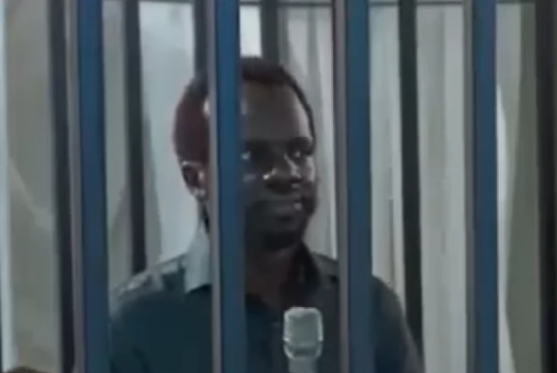
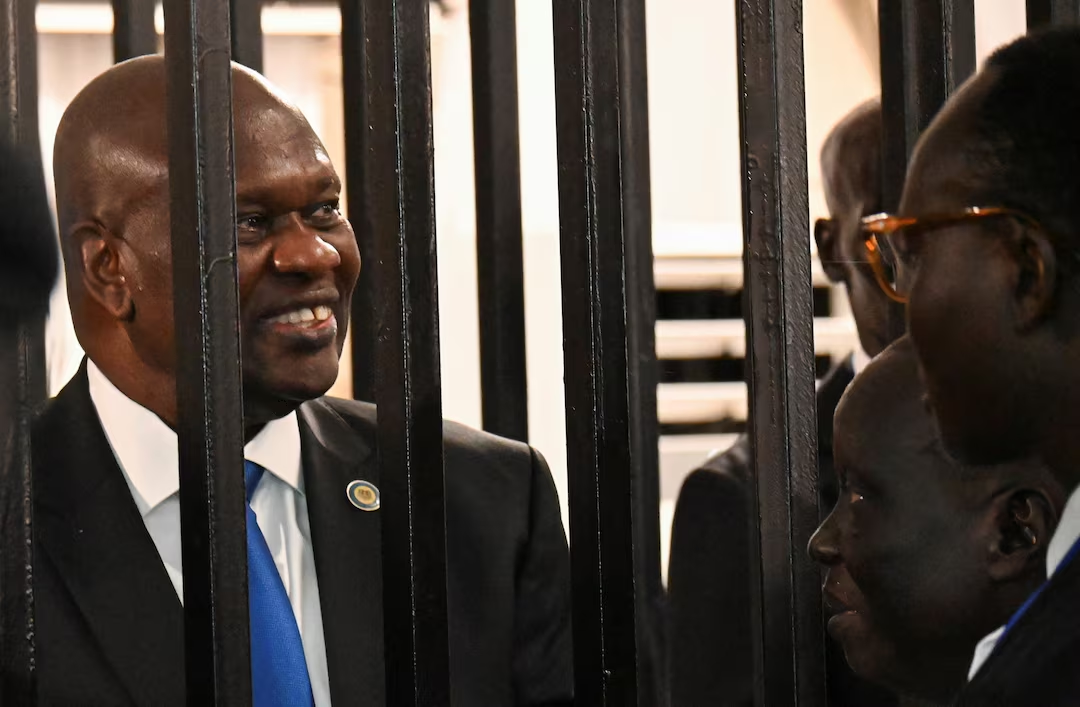
Journalists have been allowed back to cover the ongoing trial of South Sudan’s suspended First Vice President Riek Machar and seven of his co-accused, following a brief ban prompted by a leaked courtroom recording.
Independent reporters were blocked from entering the Freedom Hall in Juba last Wednesday, where the special court is hearing the high-profile case, without any official explanation. Previous sessions had been open to both the public and the media.
Oyet Patrick Charles, president of the Union of Journalists of South Sudan (UJOSS), told Radio Tamazuj that the restriction came after a journalist shared an audio clip from the October 3 court session online, sparking security concerns.
“The issue started when one of our colleagues uploaded an audio recording from the court,” Oyet said. “Security personnel saw it and became alarmed, leading to the restriction. But the matter has now been clarified and resolved.”

He attributed the confusion to poor coordination between security agencies, the judiciary, the Ministry of Justice, and the Media Authority.
“The court might declare proceedings open to the public, but sometimes the security officers at the entrance are not informed,” Oyet explained.
Following the ban, UJOSS engaged both the Media Authority and the Justice Ministry to address the misunderstanding. Oyet said the Media Authority has since deployed a permanent representative at the court to facilitate communication and prevent similar issues.
“As things stand now, journalists are free to cover the sessions unless new developments arise,” he said.
Oyet reaffirmed the media’s right to access the proceedings but urged reporters to follow court regulations regarding recordings. “If the court says no audio or video recording, we must comply. You can take notes and write your story accordingly. The court has its own official recording equipment,” he added.
The leaked audio featured Machar questioning the court’s legitimacy. In the recording, Machar, 73, argued that he did not recognize the investigating committee because it was established by the National Security Service and the Ministry of Justice rather than the Ceasefire and Transitional Security Arrangements Monitoring and Verification Mechanism (CTSAM). He also asserted that, as First Vice President, he is immune from prosecution.
During Monday’s session, Machar’s defense team argued that the special court’s one-month legal mandate—granted by the Ministry of Justice—had expired, rendering its proceedings unlawful. The prosecution requested additional time to organize witnesses and evidence.
The next hearing is scheduled for Wednesday, October 15.
The trial, which began on September 22, involves Machar and seven allies accused of treason, crimes against humanity, mass murder, terrorism, and destruction of property. The charges stem from a March 2025 attack on a military base in Nasir County that killed Gen. David Majur Dak and dozens of government soldiers. Authorities allege the assault was carried out by Machar’s SPLM/A-in-Opposition forces alongside the allied White Army militia.