


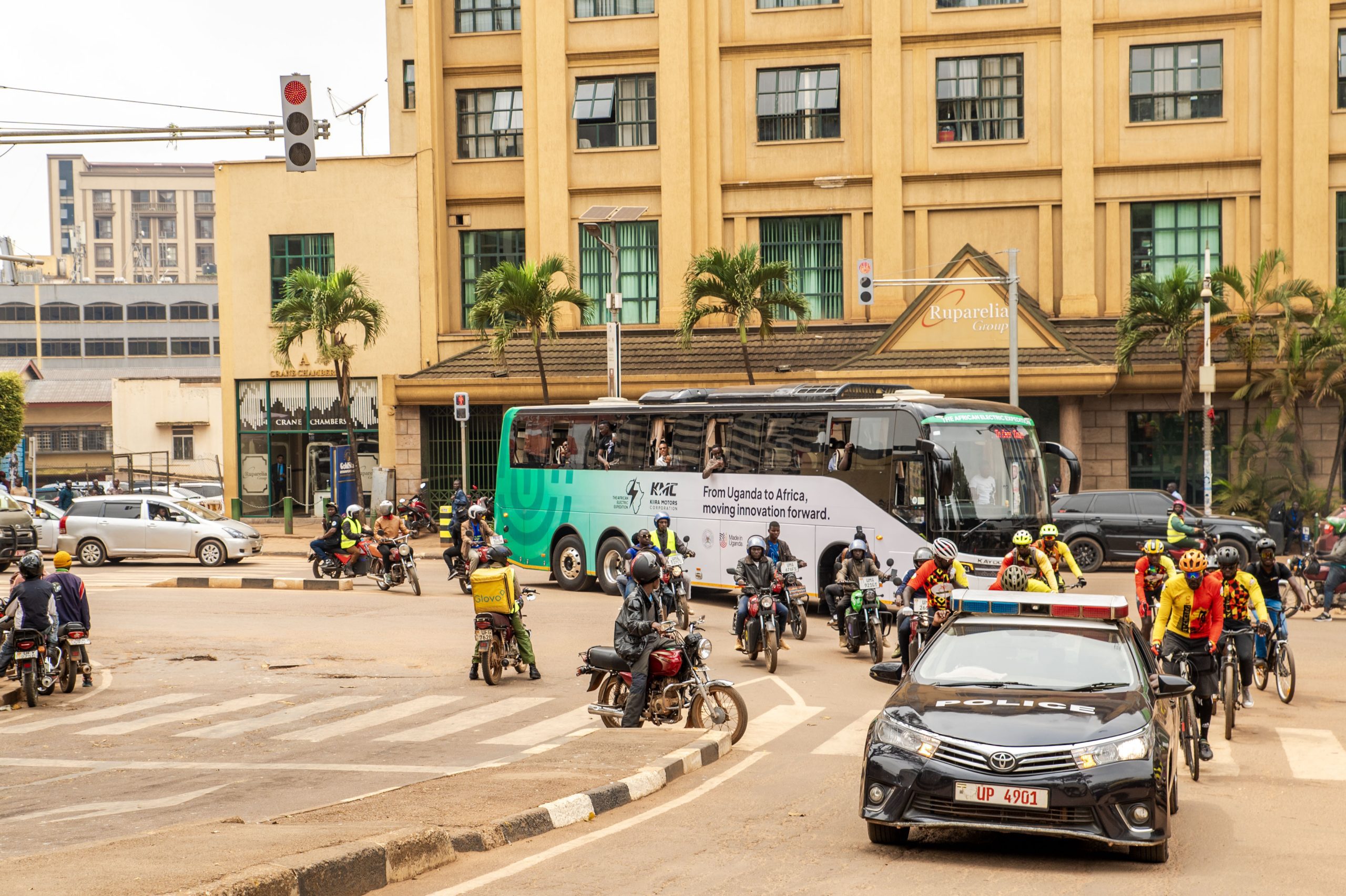
After 39 days on the open road, over 13,600 kilometres crossed, and borders seamlessly connected through technology, the Grand Electric Trans-African Expedition officially came to a triumphant close as the expeditioners returned home to Kampala on Sunday, aboard Kiira Motors Corporations’ (KMC) flagship bus, the 13M Kayoola EV Model 2025, enabled by MTN’s connectivity and digital solutions.
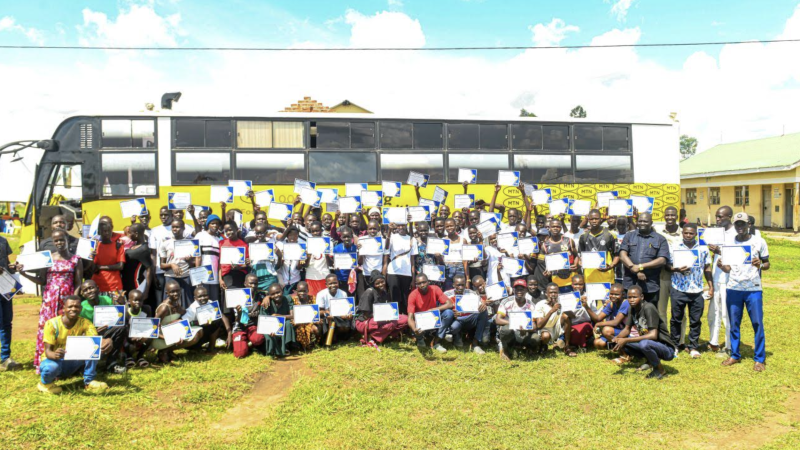
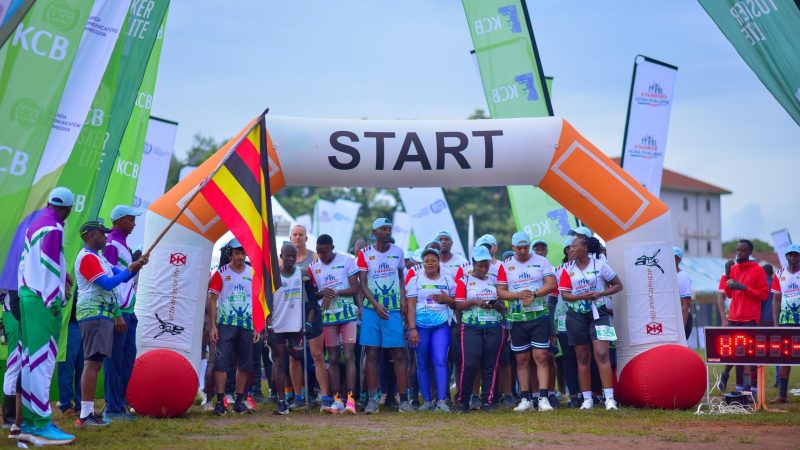
Yesterday, the 48-member expedition team was welcomed in grand style at Metroplex Mall, Naalya, in a celebration that marked not just the end of an extraordinary journey, but the beginning of a new chapter for Africa’s electric mobility future, one where technology and transport move as one.
The expedition, spearheaded by the Secretariat of Science, Technology and Innovation – Office of the President (STI-OP), had departed Kampala on Thursday, 20 November, embarking on an ambitious electric journey from the Pearl of Africa to Cape Town and back. Driven by the Uganda-manufactured Kayoola electric bus and powered by MTN’s resilient cross-border connectivity, the mission set out to prove that long-distance electric mobility in Africa is not only possible, but practical, scalable, and sustainable.
The return was met with national pride and continental significance. Presiding over the reception was the Minister of Works and Transport, Hon. Gen. Edward Katumba Wamala, who praised the expedition as a living demonstration of the power of science, technology, and innovation in addressing Africa’s development challenges.

“This journey affirms that Africa’s solutions can be designed, built, and deployed here at home,” Hon. Katumba said. “Electric mobility is not a future concept; it is a present opportunity, and Uganda has shown leadership in turning vision into action.”
Also in attendance was Prof. Sandy Stevens Tickodri-Togboa of Makerere University, who planted the original seed of this dream, championing the idea that Uganda could design and manufacture its own electric vehicles. From early academic concepts to a 13,000-kilometre continental proof-of-concept, the expedition stood as a testament to what sustained investment in local innovation can achieve.
Technology on the Move
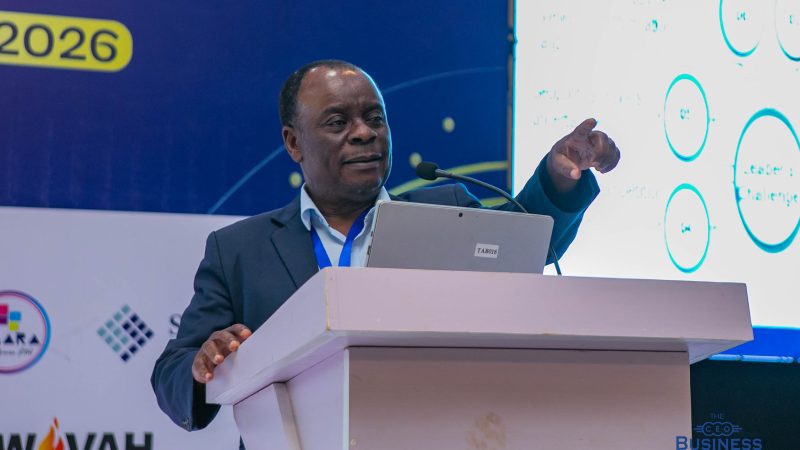
At the heart of the expedition’s success was the seamless integration of technology and mobility. Representing MTN Uganda, Ibrahim Senyonga, General Manager, Enterprise Business Unit, underscored the critical role of connectivity throughout the journey.
“For 39 days, MTN’s digital solutions ensured that the people on board were safe, the vehicle systems were monitored in real time, and the bus remained connected across borders, thanks to our partners at MTN Zambia, Eswatini and South Africa,” Senyonga said. “E-mobility is inseparable from technology. Without data, connectivity, and intelligent systems, electric transport cannot scale, and this expedition proved that Africa is ready for smart, connected mobility.”
Using MTN’s digital infrastructure, the expedition continuously monitored energy consumption, vehicle performance, safety systems, and route efficiency across multiple countries.
By the journey’s end, the Kayoola electric coach had consumed 5,189.66 kWh of energy, substituted 5,941.76 kilograms of CO₂ emissions, and replaced 5,189 litres of fossil fuel, delivering estimated cost savings of UGX 14.4 million. The expedition maintained an average consumption rate of 0.79 kWh per kilometre, with an average daily distance of 390 kilometres.
Remarkably, the entire journey recorded just one safety incident, reinforcing the reliability of both the vehicle and the connected monitoring systems that supported it end to end.
“When you travel over 13,000 kilometres across borders, terrain, and climates and come back with only one incident, you know something worked exceptionally well. This journey was about trust in African innovation, trust in technology, and trust in the people who made it happen.” Said Elias Bwambale, KMC’s head of legal who served as the expedition project lead.
Made in Uganda, For Africa
Beyond the data and distance, the expedition carried a powerful industrial message, Uganda is currently the first and only country on the continent manufacturing electric buses at scale. KMC’s buses, designed, engineered, and assembled locally, served as rolling ambassadors of African industrial capability, made smarter and safer through connectivity.
The success of the expedition translated into tangible market confidence. Along the route, the team received over 400 expressions of interest and preliminary orders for electric buses from institutions, cities, and transport operators across the continent, clear evidence that Africa is ready to transition toward cleaner, connected, and smarter public transport systems.
Catherine Muwumuza, the Support Superintendent from STI-OP welcomed the team back with visible pride, celebrating the expedition as a milestone in the country’s science, technology, and innovation agenda.
“This journey proves that when policy, innovation, and partnerships align, Africa can lead the global sustainability conversation,” she said.
A Continental Statement
As the celebrations concluded, the significance of the moment lingered. What began as an ambitious experiment had become a continental statement, Africa can power its future sustainably, using homegrown innovation, digital infrastructure, and bold partnerships.
From Kampala to Cape Town and back, the MTN-enabled expedition rewrote assumptions, built confidence, and ignited momentum. And as the electric bus finally came to rest at home, one message rang clear, Africa’s electric future is no longer on the horizon. It is connected. It is homegrown. And it has arrived.