



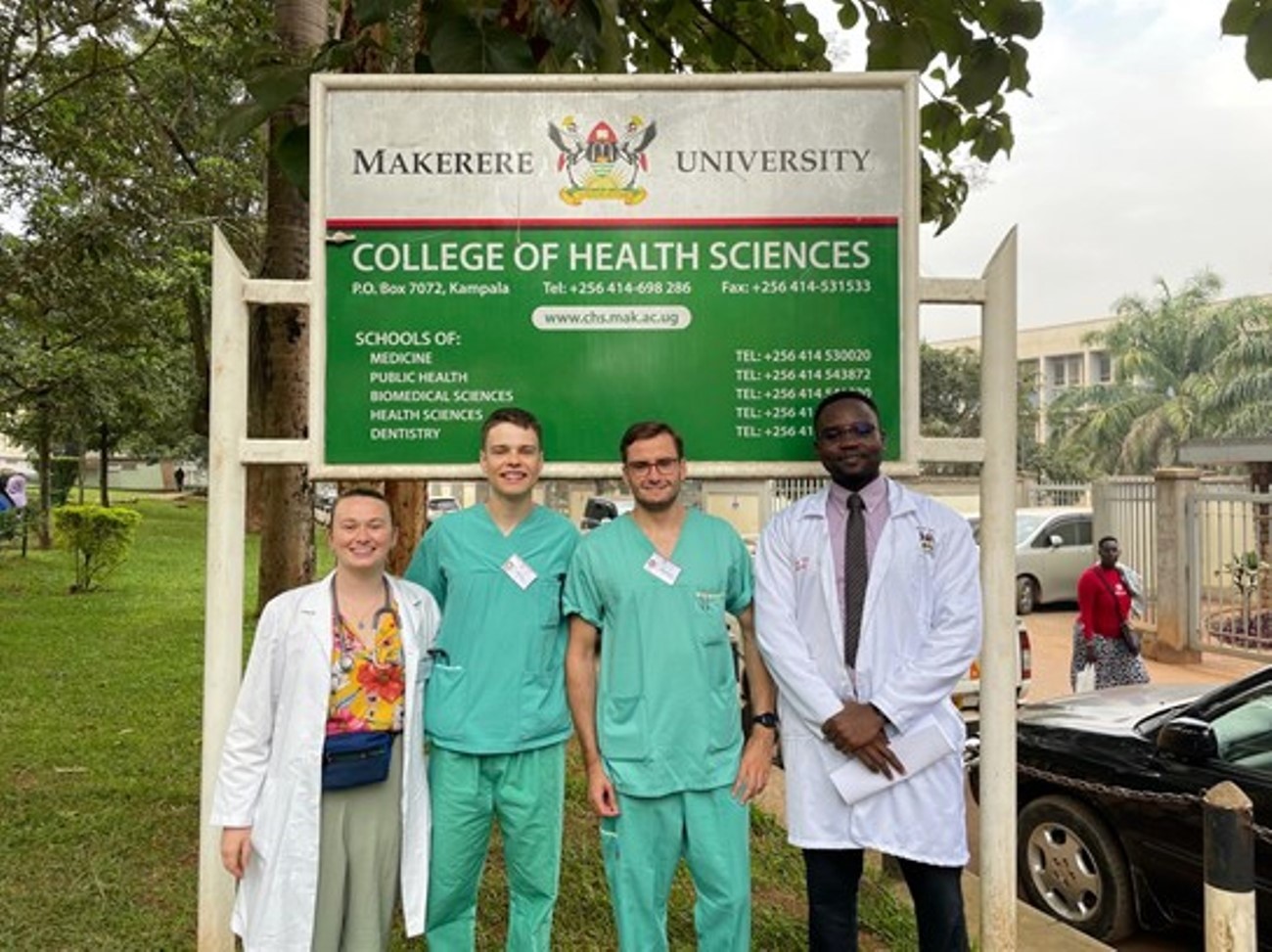
Makerere University College of Health Sciences is intensifying its international collaborations by broadening student and staff exchange programs and strengthening ties with overseas universities. The College has recently entered into fresh cooperation agreements with institutions such as the University of the Western Cape in South Africa, the Medical University of Graz in Austria, and Universitas Syiah Kuala in Indonesia.
These partnerships emphasize collaborative research and the training of medical and dental students.From July to September 2025, the College welcomed 86 international exchange students.
The largest contingent came from Europe, primarily Norway, Italy, and the Netherlands via affiliated universities. Most of these visitors received training in Paediatrics at Mulago National Referral and Teaching Hospital, as well as in Emergency Medicine and Obstetrics and Gynaecology at Kawempe National Referral Hospital.
The Medical University of Graz facilitated a reciprocal exchange by both sending its students to Makerere and receiving Makerere students, even without Erasmus Mundus Plus funding. College leaders described this as evidence of robust mutual dedication.

Outgoing mobility for Makerere students also increased, with placements in the United Kingdom, the United States, and Austria. For instance, two students undertook haematology and oncology rotations at Addenbrooke’s Hospital in Cambridge, while others gained experience in plastic and reconstructive surgery at the University of Minnesota Medical Center–Fairview.
Additional students pursued advanced specialties—including paediatric surgery, orthopaedics, neurosurgery, and cardiac surgery—at the Medical University of Graz.Staff exchanges took place as well.
Lecturers and graduate students from Makerere participated in the Annual Global Health Conference organized by NUVANCE Health, where they delivered presentations and contributed to panel discussions on issues like decolonisation in global health, adolescent health, and mental health.
Officials noted that the conference enabled staff to network with international funders and collaborators. The College emphasizes that these global initiatives enhance educational quality, provide richer clinical exposure, and allow trainees to experience sophisticated healthcare systems.
Leaders stressed that such international partnerships are essential for advancing medical training and research within Uganda’s health sector.