
The United States has sharply criticised South Sudanese President Salva Kiir, accusing his government of actions that are driving the country toward renewed civil war.
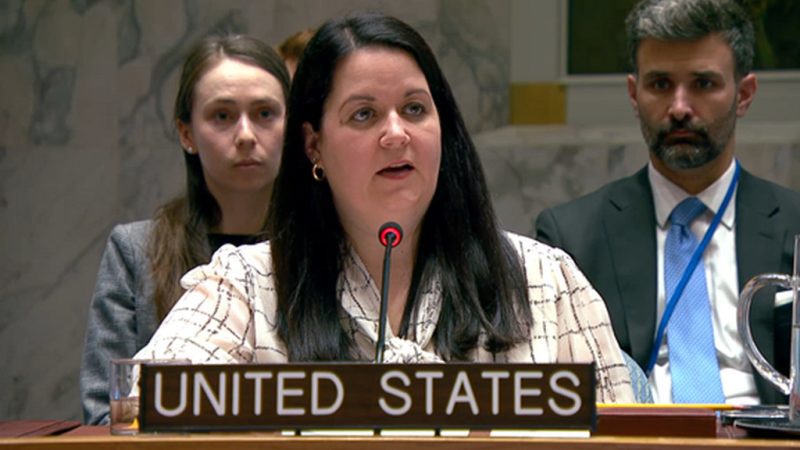
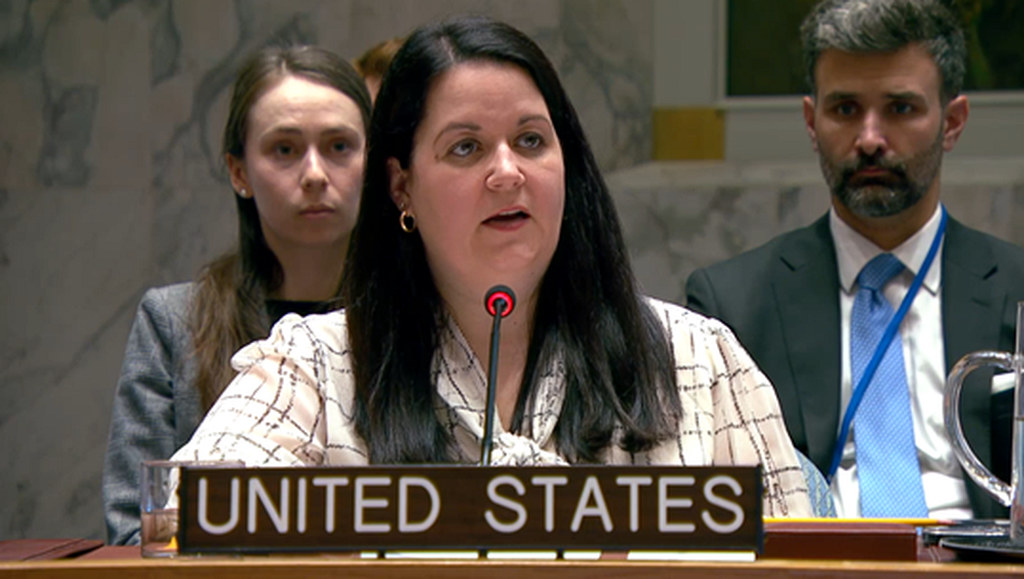
Speaking at the United Nations Security Council on Friday, U.S. Ambassador Jennifer Locetta said the crisis in South Sudan stems not from a lack of peace agreements, but from a lack of political will to implement them.
“The tragedy of South Sudan is not a lack of agreements, it is a lack of political will to implement them,” she said, quoting the late UN official Nicholas Haysom.
Locetta highlighted recent violence and forced displacement, particularly the March 6 evacuation orders in Akobo and surrounding areas, which affected around 270,000 civilians.

She alleged that uniformed troops burned entire settlements, contaminated water sources, and used sexual violence as a weapon of war.
“Families fled with nothing. Their water sources were contaminated. Women and girls were subjected to violence as a weapon of war,” she said.
The U.S. diplomat strongly condemned the government’s actions, stating they could not be justified as legitimate security operations.
“We unequivocally condemn President Kiir’s course of action and the transitional government’s March 6 evacuation orders,” Locetta said.
She further accused South Sudanese authorities of systematically obstructing the work of the United Nations Mission in South Sudan (UNMISS), citing over 80 violations of the mission’s status-of-forces agreement between January and March, and more than 400 incidents in the final quarter of last year.
Locetta described these restrictions — including limits on movement, blocked repatriation flights, and the forced closure of at least three UNMISS bases — as part of a “broader, deeply troubling pattern of obstruction.”
She warned that President Kiir’s policies were prioritising unilateral control over peace, civilian protection, and national stability.
The U.S. called for a narrower and more focused UNMISS mandate centred on civilian protection, humanitarian access, human rights monitoring, accountability for obstruction, and greater transparency.
Locetta also criticised the mission’s operational posture, citing a June 2025 UN report that found 80 percent of UNMISS patrols remained within five kilometres of their bases.
“That’s not peacekeeping. That’s bench-warming on our dime,” she said.
The statement comes as the UN Security Council prepares to renew the UNMISS mandate.
The U.S. urged the Council to demand greater accountability from both the South Sudanese government and the mission itself.
“The people of South Sudan do not need another year of process,” Locetta concluded. “They need protection and leaders who will actually work for them.”