



Uganda is taking steps to develop Excelsa coffee, an underutilised species with strong potential for climate resilience, biodiversity conservation, and market diversification in the country’s coffee sector.
The National Agricultural Research Organisation (NARO), through its National Agricultural Research Laboratories (NaRL) at Kawanda, is leading efforts to organise the Excelsa value chain.
This includes generating scientific evidence on the crop’s performance, quality, and commercial potential.
“Excelsa coffee presents an important opportunity for Uganda, but we must approach it carefully and scientifically,” said NARO Director General Dr. Yona Baguma during a recent visit to trial fields at Kamenyamiggo in Lwengo district.

He emphasised the need to combine farmers’ indigenous knowledge with rigorous research on conservation, planting materials, quality profiling, and market positioning.
Farmer-Scientist Engagement
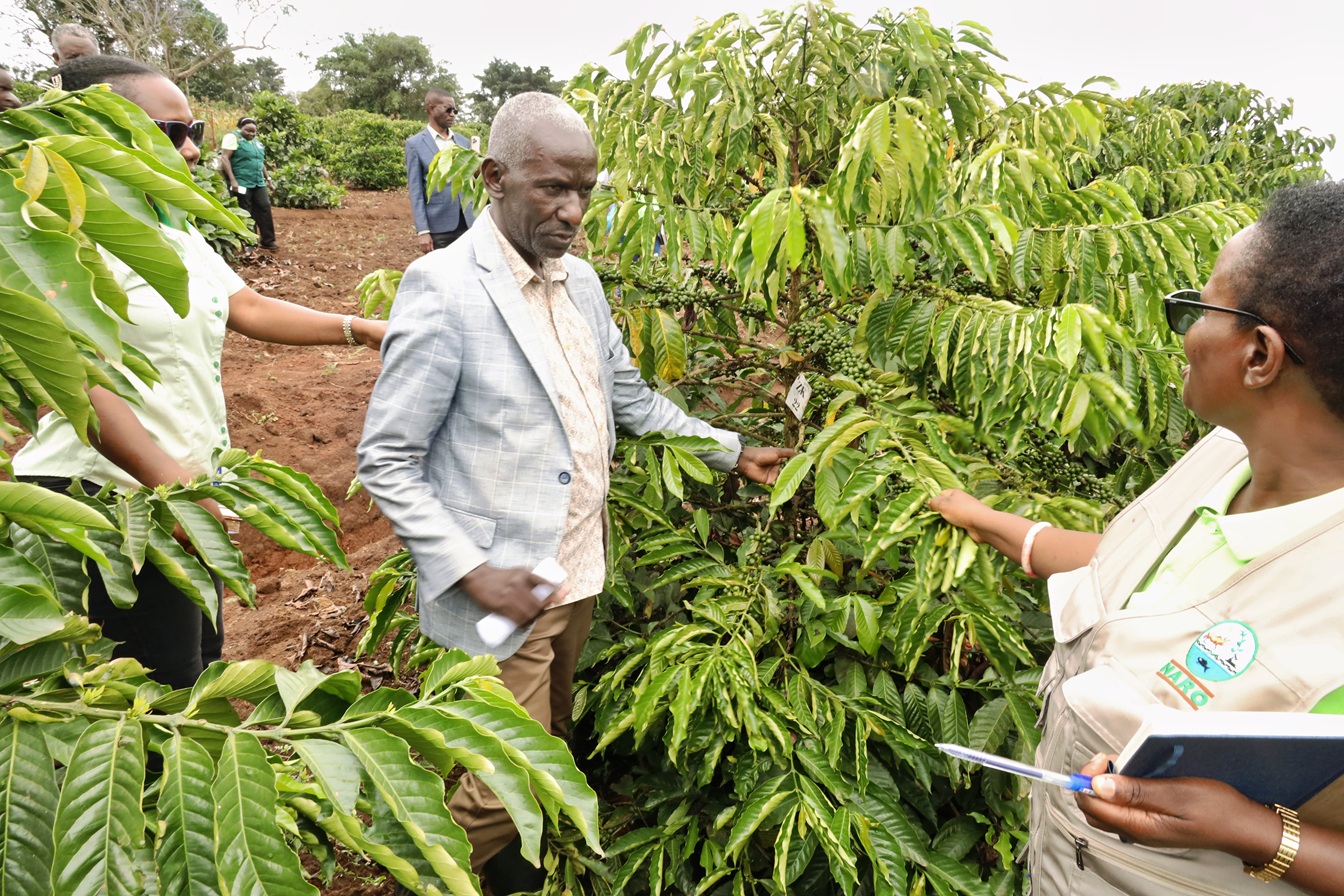
On Thursday, NaRL and partners held a focused engagement with farmers at Kawanda, which included a field visit to on-station Excelsa trials.
Farmers shared practical insights on tree growth, flowering, fruiting, management practices, challenges, and advantages of the crop, locally known as “Kisansa”.
Dr. Catherine Kiwuka, NARO’s lead scientist on the “Development of Excelsa Coffee under Global Change” project, said the initiative is being implemented in partnership with the Royal Botanic Gardens, Kew; Makerere University; Kyagalanyi Coffee Limited; and farmers, with funding from the Calleva Foundation.
Excelsa coffee (Coffea dewevrei) is naturally found in areas such as Zoka Central Forest Reserve in Adjumani district and Semuliki National Park in Bundibugyo.
Although it remains largely undeveloped and genetically diverse, researchers see it as a valuable addition to Uganda’s dominant Robusta and Arabica varieties.
Researchers noted that Excelsa’s high variability currently limits commercial consistency in quality and supply.
Immediate priorities include documenting farmer knowledge, selecting promising genetic materials, characterising varieties, assessing cup quality, and strengthening planting material systems.
Dr. Robooni Tumuhimbise, Director of Research at NARO-NARL, said the engagements are crucial for building a practical agenda that brings together farmers, scientists, and private sector players.
The initiative forms part of a broader strategy to conserve germplasm, support evidence-based development, and explore new market opportunities for Uganda’s coffee industry.
NARO said feedback from farmers will guide future activities, including further evaluation of superior materials and engagement across the value chain.