



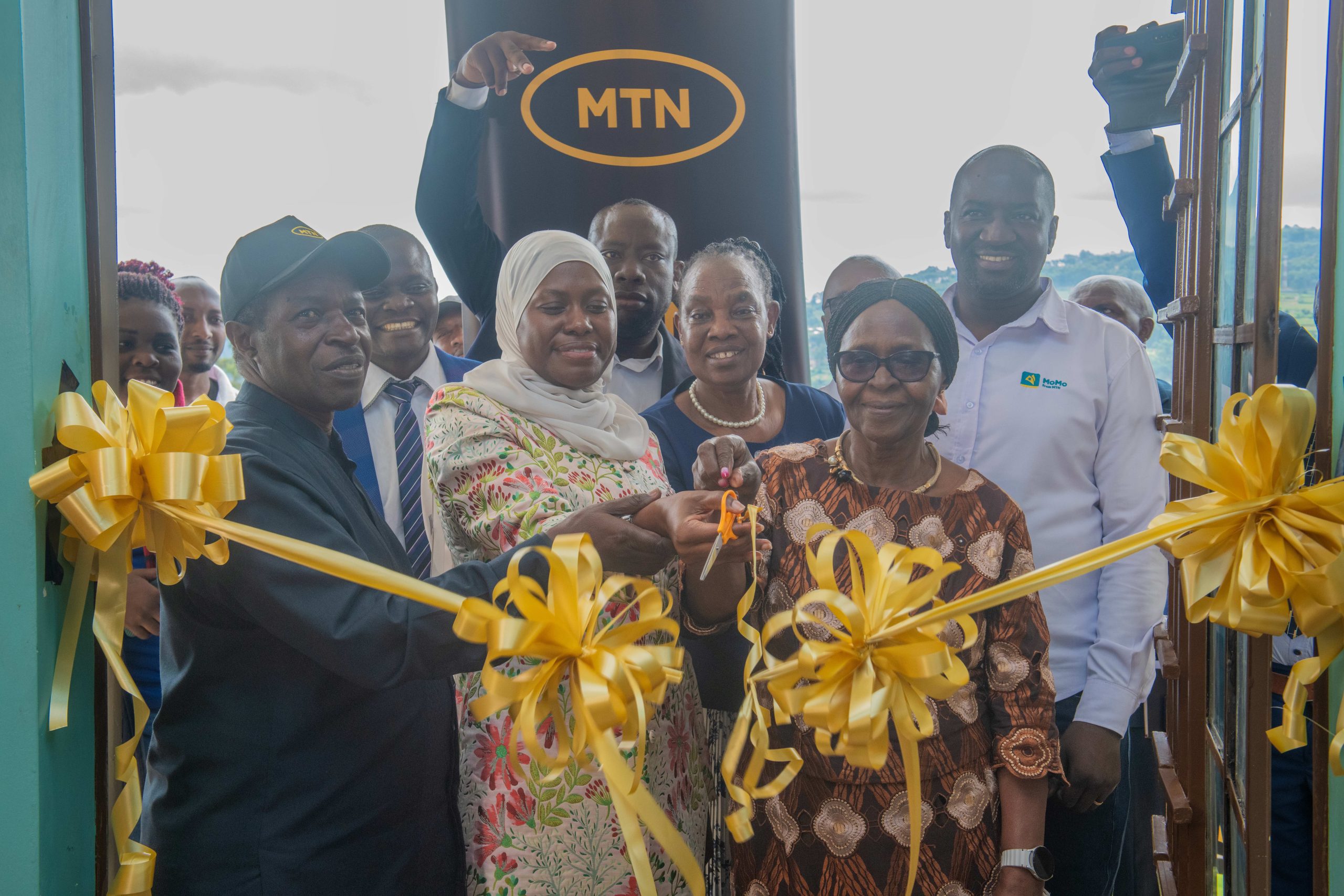
MTN Uganda, through its corporate social responsibility arm, MTN Foundation, in partnership with the Ministry of ICT and National Guidance and Centenary Technology Services, has handed over a regional innovation hub to Kabale University, stepping up efforts to expand digital skills and entrepreneurship among young Ugandans.
The Kabale Spark Hub is the first of four regional hubs under the MTN ACE Programme’s expansion phase. The next handover is planned for Busitema University in eastern Uganda in May 2026, with additional hubs at Gulu and Soroti universities to follow in the coming months. Once the full network is operational, it is expected to serve more than 20,000 students and community members across Uganda.
The initiative responds directly to one of Uganda’s most pressing realities: more than 75% of the country’s population is under 30, and youth unemployment; standing at 16.1% according to the 2024 National Census, continues to outpace the economy’s capacity to absorb new entrants. Uganda’s Digital Transformation Roadmap (2024–2028), developed by the Ministry of ICT and National Guidance, places innovation hubs and digital skills infrastructure at the centre of the country’s strategy for reversing this trend and the Kabale Spark Hub is a direct expression of that strategy made physical.
Dr. Aminah Zawedde, Permanent Secretary at the Ministry of ICT and National Guidance, framed the handover as a critical step in translating Uganda’s Digital Transformation Roadmap from a policy document into lived infrastructure, particularly for young people outside the capital.

“Uganda’s Digital Transformation Roadmap is clear: we need innovation and digital skills infrastructure that reaches every region of this country, not just Kampala. The Kabale Spark Hub is exactly what the roadmap calls for, a facility that gives young Ugandans the tools, the connectivity, and the environment to become creators and innovators rather than job seekers. The Ministry is committed to supporting every initiative that turns that vision into reality.” – she commented during the event.
Zawedde noted that the roadmap targets 90 percent broadband coverage and positions youth digital skilling as one of its five core pillars; with innovation hubs explicitly identified as delivery vehicles.
Prof William Bazeyo, Trustee of MTN Uganda Foundation Board, described the Kabale handover as a deliberate act of decentralisation — a recognition that the country’s digital ambitions will only be realised if the infrastructure that enables them is distributed as widely as the talent it is designed to serve.
“At MTN Uganda, we believe that everyone deserves the benefits of a modern, connected life. Through the MTN ACE Programme, we are expanding access to digital skills and opportunities so young people across Uganda can innovate and shape their future. Talent is widely distributed, even where access is not, and by investing in digital infrastructure, skills development, and collaborative spaces, we are enabling young people to turn ideas into viable solutions, businesses, and jobs that drive economic growth” Prof William Bazeyo, Trustee, MTN Uganda Foundation Board.
Bazeyo added that the Shs. 4 billion investments across four regional hubs reflects MTN Uganda’s long-term commitment as a sustained infrastructure player aligned with Uganda’s Fourth National Development Plan (NDP IV), which targets the creation of nearly 885,000 jobs annually and positions the knowledge economy as a primary growth engine.
Joy Kwesiga, Vice Chancellor of Kabale University, welcomed the facility as a transformative addition to the institution’s capacity, one that closes the gap between academic learning and practical, market-relevant skills development.
“Kabale University has always been committed to nurturing talent that serves not just the institution but the wider community. The MTN Spark Hub gives our students and the communities around us something we have not had before: a physical space designed for innovation, equipped with the tools to make ideas real, and connected to the global digital economy through high-speed LAN and internet access. This facility will strengthen our ability to translate ideas into practical solutions and to produce graduates the economy needs.” Joy Kwesiga remarked.
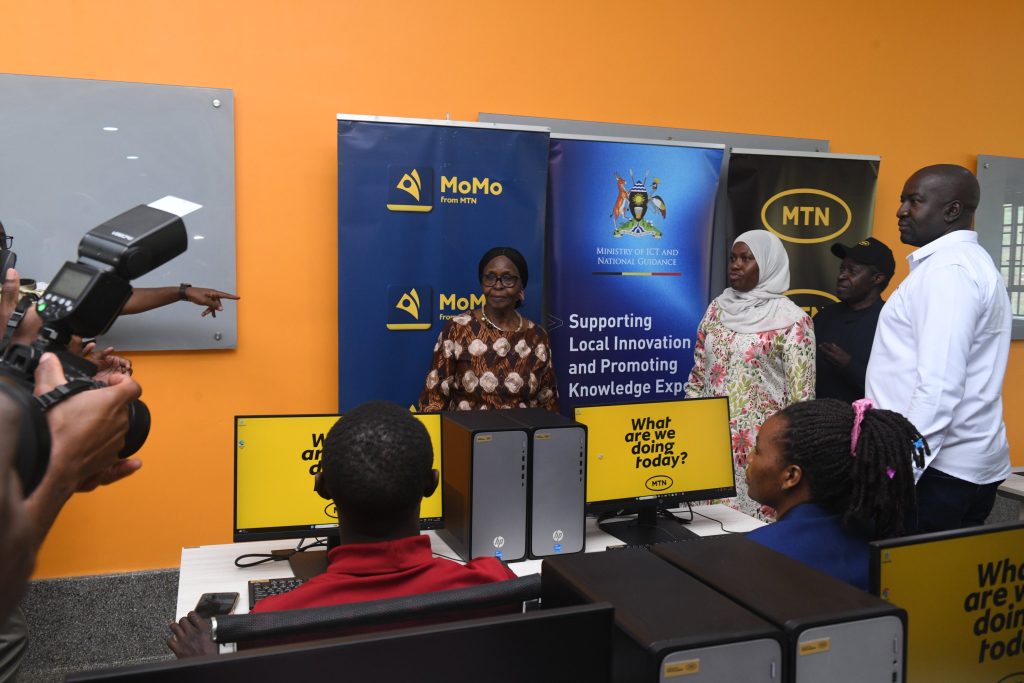
The Kabale MTN Spark Hub was designed and delivered by Centenary Technology Services (Cente-Tech), the implementing partner of the MTN ACE Programme. Cente-Tech’s Chief Technology Officer, Peter Kahiigi, spoke to the philosophy behind the Hub’s design, one that goes beyond equipping a room with computers and deliberately engineers an environment that spurs creativity and unconventional thinking. “We made a deliberate decision not to build another computer lab. The Kabale MTN Spark Hub has been designed as a creative ecosystem, LAN-connected workstations sit alongside open collaborative zones, flexible breakout spaces, and visual environments that break every convention of what a learning room is supposed to look like. The air conditioning and CCTV give it comfort and security. When a young person walks into this space, the room itself tells them: think differently. Build something. The world is waiting.”
The facility has been equipped to serve both Kabale University students and the surrounding community. Its design is defined by two principles: connectivity and creativity. Every workstation is LAN-connected for reliable, high-speed network access removing the bandwidth bottlenecks that have historically made digital work in regional Uganda frustratingly slow. The collaborative zones are open, flexible, and intentionally non-institutional built for the kind of lateral thinking that does not happen in rows of desks facing a whiteboard.
Uganda’s Digital Transformation Roadmap (2024–2028) is built on five pillars: digital infrastructure and connectivity, digital services, cybersecurity and data protection, digital skilling, and innovation and entrepreneurship. The Kabale MTN Spark Hub addresses all five providing the connectivity infrastructure, building the skills pipeline, fostering innovation, and doing so within a framework that takes data security seriously through CCTV systems and the programme’s embedded data protection training.
The roadmap sets a target of 90 percent of Uganda’s SMEs and private institutions connected to internet by 2027 and explicitly calls for innovation ecosystems that extend beyond Kampala. The MTN ACE regional hub network — of which Kabale is the second node — is among the most concrete private-sector responses to that call.
The regional hub network is the programme’s next chapter: taking that model out of Nakawa, Kampala and embedding it in university communities across Uganda, where students and surrounding communities will have, for the first time, a creative space with the tools, the connectivity, and the atmosphere to build something that matters.